
Commenting he said:
“We welcome the publication of today’s Industrial Strategy and support the strong focus on growing the economy, investing in transport and increasing trade.
The Strategy rightly recognizes that ports are hubs for employment and it includes a welcome suggestion that improving connections to ports can help to promote trade and create jobs.
For our own sector we would also encourage measures that enable ports to develop and grow to be included in the Strategy. These include fast track planning and consenting, and protection from development conditions that we have suggested previously in our ‘Port Zones’ concept.”
UK ports collectively employ around 120,000 people, handling 500m tonnes of freight each year which represents over 95% of UK trade.
Port zoning is the BPA’s new concept that would see port areas classified as areas for growth, enabling fast track planning and marine consents and safeguarded against unintended restrictions created by environmental and planning designations.
Government strategy needs to focus on port connectivity and planning says BPA CEO Ballantyne
Transport and Logistics Infrastructure strengthen the investment landscape in West Africa
Commenting on the project, José Filomeno dos Santos, Chairman of the Board of Directors, FSDEA stated, “Investments in the industrial sector and infrastructure support trade in the sub-Saharan region have shown high rates of profitability and resistance to the risks associated with the countries on our continent. Allocating capital to maritime infrastructure and logistical and industrial support in Angola allows diversifying other investments in the international financial markets present in FSDEA’s portfolio. Through this project, in particular, we aim to create more than 20,000 jobs and add value to our national growth”.
This investment will create the first deep sea water port in Angola and it will be built in two phases. Phase 1 will result in a terminal of 630 meter length connected to the shore via a two kilometer long connection bridge. The access channel will be 15 meter deep and the terminal will benefit from a water depth of 14 meters. Port facilities will include a free trade zone, state-of-the-art ship repair, storage and unloading.
The FSDEA also released its second and third quarter investment update for 2016 that covers the periods from 1st of April to the 30th of September 2016. At the end of this period, the total assets of the Fund were valued at $4.755 billion and the highlights were as follows:
Bonds and Securities total at $1.833 billion;
Fixed Income Assets stood at $1.179 billion representing 64.3% of the liquid investment portfolio;
16.4% of the $1.1 billion infrastructure fund committed to a maritime project to support logistics and industrial infrastructure;
14.8% of the $220 million timber fund capital allocated to a large-scale eucalyptus concession;
7.3% of the $250 million agriculture fund committed to seven large-scale farms covering an area of approximately 72,000 hectares in Angola.
Specifically, $32.5 million was committed towards developing large-scale wood fiber plantations spread over 80,000 hectares in the Planalto region of Angola. This investment aims to achieve economic and also social goals in 2016. Its implementation has promoted sustainable practices and offers skills development programs for the local community that will lead to enormous community benefits through the delivery of job security and economic activity for the region.
Additionally, $18.2 million were dedicated to seven agricultural projects, located in Angola. The country’s public investment in agriculture infrastructure has been amongst the fastest growing across Africa in the last decade. It is therefore expected that future yields from this sector can be strengthened by a more commercial management and the usage of more efficient production techniques in the medium term. Fostering agriculture is indispensable for Africa’s food security, for the intra-continental trade and for the establishment of sustainable sources of income for the countries based on international commodity markets and agribusiness.
While discussing the Fund’s private equity investments, dos Santos reiterated, “We have been materializing the purpose of the sovereign wealth fund to invest in the strategic sectors for the national development, through the seven private equity funds that we have established in 2014 to 2015. Together with the investment in international markets, these allocations allow us to preserve the FSDEA’s capital while generating new sources of income for the country and creating infrastructure for the benefit of national citizens. All investments made in Angola aim to generate high financial returns for the institution, as well as new jobs and business opportunities for the national private sector.”
Ports America and Sydney Harbour Investment Partners Agreement on Marine Container Facility in Port of Sydney, Nova Scotia
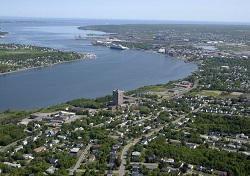
SHIP has exclusive development rights to approximately 500 acres in the Port of Sydney and, with the support of Ports America and a specially formed development group, will build a dedicated, semi-automated, deep-water marine container facility capable of handling 18,000+ TEU vessels. Building will commence after establishing sufficient customer volume commitments. Construction, once initiated, is expected to take approximately two years to complete. Ports America’s highly experienced management team will apply its proven business development and growth strategies while marketing the Novaporte terminal as a Ports America-managed facility to attract new customer and investor relationships. It also will advise on the operational configuration of the terminal to maximize efficiency. Ports America will manage and operate the terminal for 40 years, providing services such as full stevedore and terminal labor management, terminal operating systems, and maintenance and repair. Peter Ford, Chief Strategy Officer at Ports America, commented, “Novaporte is a uniquely located deep water port able to handle the largest of the next generation of ultra-large container vessels.
Geographically, it is the first stop for vessels on the Great Circle Route from Europe and Asia via the Suez. It has abundant land, an adjacent 1,200-acre logistics park and is located in a foreign trade zone. Add to that abundant power, road and rail, as well as a skilled work force, and you have the makings of an East Coast gateway for the next generation of super ships.” He added that Novaporte will employ the latest technology to become the greenest, most cost efficient port on the continent. Albert Barbusci, founding partner of SHIP, said, “We are excited about partnering with Ports America, the largest terminal operator and stevedore in the United States. In all our partnerships including financial, construction, engineering, marine equipment and technology relationships, we have looked for industry leaders. Ports America fits this description exactly. Its experience covers all aspects of marine operations from containers, to bulk, – breakbulk, world-class cruise terminals, intermodal and RoRo facilities. We couldn’t ask for a stronger, more experienced operating partner.”
About Ports America: Ports America is the largest U.S. terminal operator and stevedore with operations in 42 ports and 80 terminals. With a highly skilled and trained labor force, Ports America has the experience and expertise to manage all types of cargo handling. Handling more than 13.4 million TEUs, 2.5 million vehicles, 10.1 million tons of general cargo and 1.7 million cruise ship passengers in 2015, Ports America has operations ranging from pure container terminals to under-the-hook stevedoring. Operations also include bulk and breakbulk facilities, world-class cruise terminals, intermodal facilities, maintenance and repair and quality care auto/ro-ro handling.
Container traffic of Valenciaport improves its best historical record with 4.72 million TEU in 2016
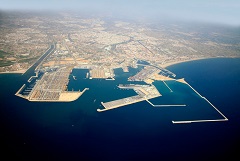
These positive figures were due to an increase in foreign container traffic, which rose by 4.99%, consolidating the site as the best platform for Spanish foreign trade by sea. Specifically, containerized exports increased by 4.96% with a total of 1,105,438 TEU while imports went up by 5.03% to 1,105,978 TEUs. Container transit traffic has ended the year with a light increase of 0.08%.
In terms of total traffic, the three ports managed by the Port Authority of Valencia (Valencia, Sagunto and Gandia) increased by 1.71% over the previous year, with a total of 71,280,984 tonnes handled. Foreign trade increased with import-export rising by 1.93% to a total traffic of 21,434,954 tonnes. Exports recorded a rise of 0.61%, to a total of 13,738,607 tonnes, thanks to good registrations of countries such as China (+ 7.22%), United States (+ 9.96%) and Morocco (+ 1.43%). Meanwhile, imports rose by 4.39% to 7,696,347 tonnes due to the results of countries such as France (+ 2.14%), the United States (+ 8.18%) and India (+ 29.82%) stand out. In terms of transit traffic, figures went up by 1.38% during 2016.
Containerised general cargo recorded a rise of 2.91%, with total traffic standing at 53,786,327 tonnes. This growth is motivated by goods such as the construction materials which rose by 2.29% to 5.33 million tonnes; other goods which went up by 4.76% to 2.11 million tonnes; and chemical products which increased by 9.47% to 1.81 million tonnes.
Conventional general cargo decreased by 0.78% in 2016. In total, during this year, 10,749,993 tonnes of this type of goods has been handled. This decrease is mainly due to the decline in steel products, which fell by 4.57% to 1.84 million tonnes. Conversely, cars and their parts registered and increase of 10.69% to 1.54 million tonnes. A breakdown of this traffic revealed that the ports of Valencia and Sagunto handled 774,708 vehicles in 2016, up 12.37% on the previous year. These figures consolidate Valenciaport as one of the main logistics platforms in Spain for the automotive sector. Similarly, ro-ro traffic grew by 4.33% to 8,914,957 tonnes.
Liquid bulk, meanwhile, closed the year with a decrease of 0.30% and a total traffic of 3,803,068 tonnes. This heading includes movements of goods such as natural gas (+ 2.82%) to 2.30 million tonnes; gas oil (+ 0.72%) to 481,000 tonnes; and chemicals (-1.73%) to 336,000 tonnes.
Solid bulk also fell by 7.67%, to a total traffic of 2,478,928 tonnes. This decrease is mainly motivated by goods such as cereals and flours which decreased by 9.66% to 897,000 tonnes; natural and artificial fertilizers which fell by 3.94% to 491,000 tonnes; and cement and clinker which went down by 34.64% to 472,000 tonnes.
Passenger traffic
According to data from the statistical bulletin of the Port Authority of Valencia, in 2016 403,264 people arrived in Valencia aboard one of the 181 tourist cruise calls that have arrived at the port, representing an increase of 7.66% over the previous year. Meanwhile, 504,881 passengers used regular line services, an increase of 35.16%. In total, during the 2016 year, 908,145 people used the port of Valencia for their maritime journeys, which represents an increase of 21.39% compared to 2015.
Traffic by country and geographical area
The five countries shipping the largest volume of goods through Valenciaport in were: Spain, with 8.48 million tonnes (+4.98%); China, with 6.76 million tonnes (+16.98%); Algeria, with 5.63 million tonnes (-2.73%); Italy, with 4.88 million tonnes (-3.08%); and the United States, with 4.37 million tonnes (-0.48%). In terms of geographical areas, the largest traffic volumes were with Mediterranean and Black Sea stands out with traffic of 19.38 million tonnes (-4.83%); and the Far East, with traffic of 9.85 million tonnes (+14.70%).