
Sunday, December 21, 2025
spot_img
Home Blog Page 162

ZIM's upgraded Pacific Network to commence April 2017

0

ZIM is introducing ZNP (ZIM North Pacific) – a new fast link from Asia to the Pacific North West, connecting major ports in South East Asia and China to the Vancouver gateway, offering competitive transit time with smooth rail link to inland destinations in US and Canada. ZNP also offers expanded coverage of Asian ports on both import and export.
ZNP rotation: Port Kelang – Cai Mep – Da Chan Bay – Yantian – Xiamen – Qingdao – Ningbo – Shanghai – Pusan – Vancouver – Pusan – Qingdao – Shanghai – Ningbo – Da Chan Bay – Port Kelang
ZNP joins ZIM’s trans-Pacific network, which also includes:
• ZIM Container Service Pacific (ZCP) – ZIM’s prime service, offering best in class service from Shanghai and Pusan to US South Atlantic, Gulf and Caribbean clusters, will be upgraded on the following rotation: Qingdao – Ningbo – Shanghai – Pusan – Rodman – Panama Canal – Kingston – Savannah – Norfolk – New York – Halifax – Kingston – Qingdao
• ZIM Seven Star Service (Z7S) – ZIM’s successful Asia – US East Coast service resumes full-scale activity, offering extensive port coverage from South China, South East Asia and the Indian sub-continent to the US East Coast main ports, including Maher terminal in New York. Z7S is delivering high schedule reliability and best-in-market transit time to major port: Da Chan Bay – Yantian – Cai Mep – Port Kelang – Colombo – New York – Norfolk – Savannah – Port Kelang – Da Chan Bay.

ZIM V.P. Trans Pacific Trade, Nissim Yochai: “The upgraded structure allows ZIM a broad operational and commercial flexibility to comply with our customer’s needs, and enables a fast response to changing market needs.
ZIM’s outstanding record of schedule reliability and ongoing focus on customer service will be further enhanced in the framework of this improved structure.”
Cargotec finalises statutory cooperation negotiations to achieve annual cost savings of EUR 25 million in MacGregor

0

The global statutory cooperation negotiations have been finalised resulting in restructuring of operations and reducing of 230 full-time equivalents globally. The measures are affecting especially MacGregor operations in China, Finland, Norway, Singapore and Sweden.

In addition to the above measures, and to support MacGregor strategy to apply asset light business model, MacGregor has made an agreement to sell assets of its production facility in Uetersen, Germany, to a newly founded company Uetersener Maschinenfabrik GmbH. The deal was closed in 30 December 2016 and 79 production team members transfer to the new company.

Above measures result in restructuring costs of EUR 31.5 million in the final quarter of 2016.

“These are difficult steps we are taking, and they will affect to people who have contributed to MacGregor’s success. However, we need to adapt to the current reduced demand whilst maintaining our industry leadership position. Taking into account the current market environment, we aim to be profitable with these measures. At the same time, we continue to invest in new segments where our presence has been limited in the past, as well as in new technology. We also put a lot of focus on our service business, and maintain a connection with our customers throughout the whole life-cycle of their assets and offer solutions to improve our customers’ operations. We have an extremely strong competency in order to help our customers operate more efficiently,” says Michel van Roozendaal, President of MacGregor.

Record trade for Port of Newcastle

0

Newcastle port handled just under 168 million tonnes in 2016 (trade value: $AU18.69 billion), an increase of 3.8 million tonnes on the previous year. And with further investment being made to grow trade, Chief Executive Officer, Geoff Crowe, is confident the Port of Newcastle will remain pivotal to the Hunter’s economic success. “This is a great result for the Port, the Hunter region and the state, and we continue to work with industry and businesses throughout our New South Wales catchment area to deliver new trade,” said Mr Crowe. In a further sign of the recovery in resources, just over 161 million tonnes of coal was exported, an increase of almost 3.3 million tonnes or 2 per cent on 2015. A new monthly coal export record of 15.9 million tonnes was achieved in December 2016; the previous record was 15.8 million tonnes in December 2014. Wheat exports surged to nearly 761,000 tonnes, an increase of 467,000 tonnes on 2015, while fuel imports rose to nearly 1.7 million tonnes, an increase of 15% on 2015. “By trade volume, the Port of Newcastle is Australia’s third largest port and is ranked 24th in the world, and we have huge capacity for further diversification and growth, with 200 hectares of vacant land and a shipping channel which can handle double the current ship numbers,” said Mr Crowe. “Port of Newcastle continues to operate and invest in maintaining the port to optimise its use, including through challenging weather events and peak times, for customers’ convenience and reliability.” The Port of Newcastle handles 25 cargoes to and from its catchment area which spans west to Parkes and north to Moree, taking in Dubbo, Tamworth, Armidale, Narromine and Walgett. This area is rich in minerals, agriculture, meat, timber and the manufacture of steel and aluminium. Coal represents 96% of the Port of Newcastle’s trade, providing a stable foundation for further growth and diversification of other trades including fuel, cruise ships, agriculture and steel. In 2016 2,258 ships visited the port. Interesting cargoes included wind turbines bound for the White Rock Wind Farm in Glen Innes and new ship loaders for Port Waratah Coal Services Carrington Terminal. Recent investment in port infrastructure will support the continued growth of trade: • Stolthaven is constructing a dedicated fuel berth (Mayfield 7), which is adjacent to the Mayfield bulk liquids precinct. • Port of Newcastle invested $5.4 million in the installation of power, water and data to facilitate future developments at its Mayfield Site and work was completed in 2016. It also funded improvements to port roads. • The NSW and Federal Governments committed $800,000 for the installation of new mooring bollards at the port’s cruise ship berth (Channel Berth), with work commencing in early 2017. Planning is well underway for the $12.7 million cruise terminal (funded by the NSW Government) with construction due for completion by the end of 2018.

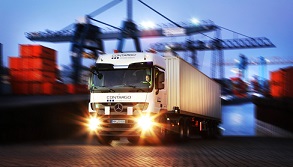
Contargo launches the Koblenz Multimodal Express

0

The Koblenz Multimodal Express is starting off with a fixed schedule and two round trips per week.
The Koblenz Multimodal Express set out from Rotterdam for the first time on 12 January 2017. The train will depart regularly from Rotterdam on Mondays and Thursdays, leaving Koblenz on Tuesdays and Fridays on the return trip, and arriving in each case on the following day. In Rotterdam the train will serve the RSC, APMT 1, ECT and Euromax terminals. A connection with the APMT 2, RWG, RST North and South terminals is possible.
“The new product is an alternative to the direct trucking offer. It is almost as fast as trucking, but less expensive”, says Arndt Puderbach, Director of the Contargo terminal in Koblenz. “The Koblenz Multimodal Express is also the ideal complement to combined transport by barge, since for urgent containers it is speed that counts, and when water levels are low we have easier access to additional transport capacities.”