
Sunday, December 21, 2025
spot_img
Home Blog Page 170

World's largest carriers

0

The report opens with a summary of the Top 25 carriers looking at their operated vessel fleet, capacity, carryings, container box fleets and subsidiaries. Furthermore, this section includes financial results for full year 2015 and the first 9 months of 2016. A rundown of performance and financial parameters for the period 2011/2015 for operators consistently forming the Top 20 is also provided. It concludes with the shares of operated vessel capacity by region of control and by company type.

Financial catastrophe in the making
Dynamar’s latest study offers a most comprehensive overview of the financial results of the globe’s 25 largest operators. For the first time, as a group, they collectively posted a net loss in 2015, this running into hundreds of millions of dollars. Even more monetary horror is to come: for the first 9 months of 2016, the combined net result of twelve reporting lines fell by more than USD 13 billion…!

Little wonder: over the same 9-month period, spot rates quoted for the 10,500 nautical miles Shanghai-Rotterdam leg were USD 618 all-in per TEU on average. This equals less than 6 dollar cents per nautical mile. Quotations ranged between a nadir of USD 205(!) in March, and a zenith of USD 699 in July… which carrier could survive on that?

One Alliance less
In January 2015, four East-West Alliances kicked off:
– 2M – Maersk Line, MSC
– CKYHE Alliance – Coscon, Evergreen, Hanjin, “K” Line, Yang Ming
– G6 Alliance – APL, Hapag-Lloyd, Hyundai, MOL, NYK, OOCL
– Ocean Three – China Shipping, CMA CGM, UASC

Less than one-and-a-half year later, in April/May 2016 already, the relevant carriers announced drastic re-arrangements of their groupings. Taking effect April 2017, these will read:
– – 2M+ – Maersk Line and MSC, plus Hyundai sharing space
– – Ocean Alliance – CMA CGM/APL, Coscon, Evergreen, OOCL
– – THE Alliance – Hapag-Lloyd/UASC, Hanjin, “K” Line, MOL, NYK, Yang Ming

All being well and with the permission of the FMC already in their pockets, these three new Alliances will start operations effective 1 April 2017.

Consolidation in full swing
It is unprecedented developments outside of the existing alliances having pushed aforementioned changes. All actualised or initiated within the space of a single year (2016), which saw six of the original Top 20 lines go, it concerns:
– China Shipping merged into Coscon (February)
– Acquisition of APL by CMA CGM (June)
– Hanjin’s sad going under (September)
– Merger-to-be of UASC into Hapag-Lloyd (1Q2017)
– The proposed joint venture between “K” Line, MOL and NYK (September 2017)
– Maersk Line’s intended acquisition of Hamburg Süd (late 2017)

In the course of all the above sweeping, powerful changes, smaller liner companies come under great pressure to consider consolidation as well: 2017 promises to become another exciting year!

Concluding the “Top 25 Container Liner Operators (2016)” study is a separate chapter on Alliances, Consortia or similar. Profiles are provided on each of the present and future groupings.

Ultra Large Container Ships (ULCS)
Cost reduction, in the form of larger, less gas guzzling and more efficient ships has been the answer to low rates of the top container liner operators. It started with Maersk Line’s 2006-launched 15,600 TEU E-class, developed and built for the Europe-Far East trade. High volumes; an excellent relationship between time spent at sea versus time in port; capable container terminals: this trade is the ideal route for ULCS to reap the maximum from their economies of scale.

Worried by the Danish company’s lower slot costs eroding their market share, other carriers followed suit in big numbers. By mid-2016, eighteen of the Top 25 lines controlled 100% of all ULCS operating and 94% of the orderbook, representing 366 ships/4.9 million TEU, and 156 vessels/2.7 million TEU, respectively. Capacities range between 10,000 TEU and 21,200 TEU. By the end of 2016, 178 ULCS with an average capacity of 15,300 TEU operated between North Europe and Asia.

A damaging deluge
A deluge of large newbuildings combined with a faltering market resulting in severe overcapacity inducing a bitter rate war ensuing dramatic losses: it is the price of too many too big ships…

Aware of the overcapacity damage done with their financials turning deep dark red, no carrier ordered any ULCS in 2016. That is to say, almost, as in December IRISL fulfilled an earlier “promise” to go for ULCS as well, ordering an initial 14,500 TEU units.

Not liner shipping alone
Cold comfort, but it is not container liner shipping alone immersed in uncertainty. Breakbulk, heavy lift, dry bulk, tankers, non-operating owners, you name it, all main shipping segments are concurrently groaning under a downturn as severe as seldom seen before. It can barely get worse.

In addition to maturation, container shipping also faces the yet largely unknown effects on cargo streams of 3D-printing and robotising facilitating near shoring.

Interestingly, despite all doom and groom, at the very end of 2016 it was reported that shipping industry confidence had hit its highest level in 15 months. That’s the spirit, that typifies shipping!

It may have helped that in the fourth quarter, spot rates in all long haul trades from Shanghai saw a recovery, to positively influence the level of contract rates for the new year. Scrapping has never been as high as 700,000 TEU. Troubles are not, but would the worst be over!?

The Top 25 future
Ongoing container liner consolidation as so convincingly initiated in 2016 should help addressing all challenges if… the larger companies and Alliances seriously work on eradicating the current excess tonnage while keeping future capacity expansion in check.

And finally: 2006 ended with (ultimately) eight companies less than it started with. No worry, as long as there is worldwide water and trade, there will be 25 largest container liner companies with all of them worth to know everything about them!
Crowley implements Tideworks' SaaS-based TOS at its Port Everglades Terminal

0

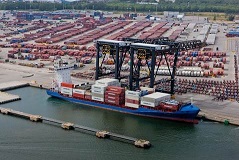
This marks the first Crowley terminal to go live with Tideworks’ TOS in a series of scheduled deployments. Crowley’s terminals in Jacksonville, Florida and San Juan, Puerto Rico are expected to go live in the first half of 2017.

“As the largest marine terminal operator at Port Everglades, it’s important that we operate as efficiently as possible so we can effectively handle the growing volumes of container traffic,” said Patrick Collins, general manager at Crowley’s Port Everglades terminal. “Tideworks provided outstanding support throughout the implementation process and were with us every step of the way through this transition. We’ve been very pleased with the quality and capabilities of the TOS applications since go-live. We look forward to working with the Tideworks team again to help bring the same operational benefits and enhanced productivity that we’ve seen in Port Everglades to our terminals in Jacksonville and San Juan.”

Crowley deployed the Mainsail Vanguard® core TOS as well as its Spinnaker Planning Management System, allowing marine terminal operators to manage vessel, berth, yard and rail planning in one workspace. In addition, Tideworks implemented Traffic Control, which allows for dynamic control of container handling equipment and electronic dispatching of work orders; Forecast, a web portal that helps terminals communicate faster and easier with trucking companies, shipping lines, and other parties; Gate Vision, an integrated gate system to accelerate gate operations and minimize truck processing time; and EDI Porter, Tideworks’ managed EDI service. The IT infrastructure supporting the TOS is hosted at Tideworks’ hardened data center.

Tideworks provided comprehensive support during the implementation process, including project management, software configuration and installation, integration services, user training and go-live assistance. Additionally, Tideworks provided software customization to align with the terminal’s unique operating practices. Moving forward, Tideworks will continue to provide ongoing maintenance and support services, which include 24/7 technical support and software upgrades.

As part of its multi-terminal project with Crowley, Tideworks will also be providing Disaster Recovery (DR) capabilities. The DR facility is located in a geologically stable and geographically disparate region, so if a catastrophic event occurs at Tideworks’ primary data center, the TOS will fail-over almost immediately, ensuring that Crowley’s terminals will continue to function.

“We are thrilled that the first Crowley site has gone live,” said Michael Schwank, president of Tideworks. “We’re confident that our hosted solutions will help improve productivity and enhance customer service at Crowley’s terminals, while providing them with a well-defined total cost of ownership for the TOS and related technologies. We look forward to continuing our relationship with Crowley as we work with them to achieve these goals. We’re also very pleased to expand our presence in the Florida trade hub, which is an important region as we grow our business.”

The Port Everglades terminal went live with Tideworks’ solutions in September 2016.

Port of Tyne appoints new Harbour Master

0

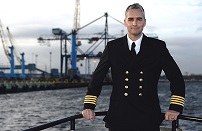
A Master Mariner with 20 years’ experience in the maritime industry, Steven joins the Port from the oil and gas consultancy sector where, amongst other high profile projects, he was responsible for managing upstream marine operations for a major UK oil company. Prior to this he was a Pilot at the Port of Tyne having previously been at sea as Senior Officer on-board various offshore construction vessels with Subsea7 and others.

With a Master Mariners’ Certificate, qualifications in Nautical Science and a Diploma in Port Management, Steven brings a wealth of knowledge to the Port.

Andrew Moffat, Port of Tyne Chief Executive Officer, said: “It is great to welcome Steven back to the Port of Tyne where he was a Pilot for eight years.

“Bringing a lot of experience, Steven is an excellent appointment that will further strengthen our team and I look forward to working with him in his new role.”

Steven said: “I am delighted to be appointed Harbour Master to the Port of Tyne as one of the UK’s busiest commercial ports and to be coming back to the River Tyne with its rich heritage and thriving maritime community. Although I am originally from Scotland, having lived in the North East for the past 10 years, I understand the importance of the Port to the North East regional economy, to river users and to all of our other stakeholders and this will help me meet the challenges of the post and hit the ground running.”

DP World reaffirms commitment to India's growth

0

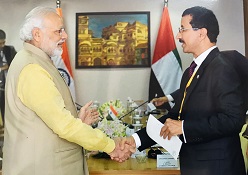
Discussions highlighted the immense potential of India’s growing economy and the nation’s maritime and inland trade. New opportunities resulting from the Prime Minister’s programmes such as Invest India, Digital India, Skill India and Made in India were also on the agenda, evidence of the new economic direction of the country.

Mr. Bin Sulayem also joined a Global CEOs’ meeting at the Summit chaired by the Prime Minister. He outlined the importance of the innovation and opportunities for investors in trade, logistics and the maritime sector. The conference hosted 35 foreign business leaders and 23 Indian industrialists.

DP World Group Chairman and CEO, Sultan Ahmed Bin Sulayem, said: “We are proud of the role we have played serving India’s growing economy for more than a decade, during which we have worked closely with the government to redefine the container terminal business by introducing new technologies, world class infrastructure and international operating practices.

DP World has invested in the development of 5 international gateway ports in India and we believe making ports more productive across the country rather than building more greenfield sites is the way forward. There is also a great need to reach internal markets, invest in cold storage facilities and networks, using coastal and inland waterways to increase efficiencies and lower costs. By developing this transport infrastructure – at existing ports, multi-modal transport including rail for freight and more use of waterways – there will be a direct economic impact benefitting manufacturing and agriculture, those in cities and the rural farming community.”
“Meanwhile, we are reinforcing our commitment to economic development through our operations in the country, where we have invested US $1.2 billion to date, supporting over 30% of India’s container trade. Being one of the strongest emerging economies in the world, it offers immense potential for growth in maritime and inland trade.

“We are also looking for investment opportunities worth over US $1 billion over the next few years offering our partners the opportunity to grow and expand their business. We remain committed to our operations in the country, which form an important part of our global network.”

DP World is a market leader in Indian container terminal operations, with the largest portfolio of investments in ports along the Indian coastline. The network stretches across ports in Gujarat (Mundra, 2003), Maharashtra (Nhava Sheva, 1999 and 2012), Kerala (Cochin, 2005), Tamil Nadu (Chennai, 2001), Andhra Pradesh (Vishakapatnam, 2002). It has also created rail connections to the hinterland and owns a national rail licence from the Government to operate 7 container trains from major hinterland markets to major gateways in Mundra and Nhava Sheva.

India and the UAE continue to have a long lasting trading relationship with bilateral trade reaching US $60bn in 2015.