Tuesday, December 16, 2025
spot_img
Home Blog Page 187

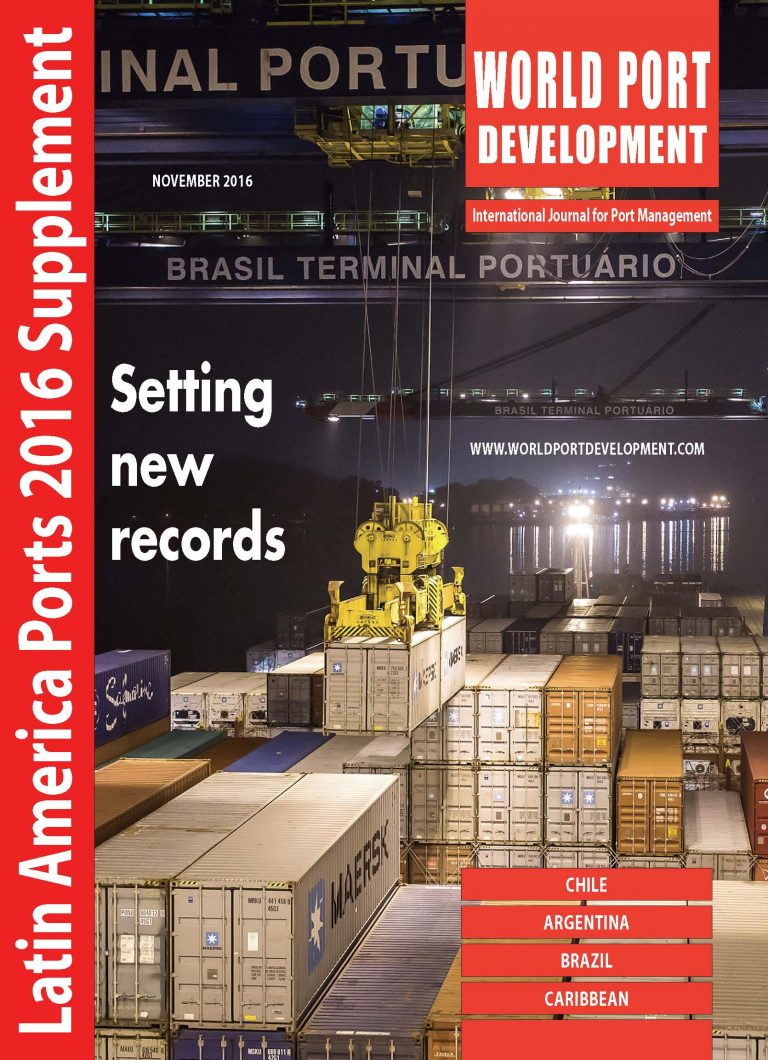
WPD's Latin America ports supplement now available!

0

The Latin America Ports Supplement brings you up-to-date with the latest dredging and port construction projects from this important growth market. The Supplement gives you an insight – by country – how both port authorities and terminal operators have responded to the global economic downturn, their actions and solutions.

Subscribe to WPD now and receive this along with our other special supplements FREE of CHARGE.

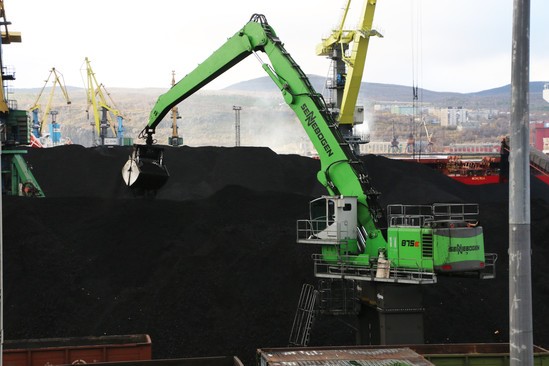
Flows of goods for over 100 years: SENNEBOGEN 875 unloads coal at the port of Murmansk

0

In 2016 the largest city in the Arctic is celebrating its 100th anniversary. Named “Romanow-na-Murmana” in 1916 after the Russian czar, the “Cape Town of the North” is now known by the name Murmansk. Located in a bay of the Arctic Ocean, the city has always been shaped by the port. This has actually existed for one year longer than the city of the same name and was thus the origin of the economic growth of the region.

Efficient material handling with a portal undercarriage and a 24 m range
In the port of Murmansk, which extends for several kilometers along Kola Bay, mainly coal is handled on a large scale, in addition to single items, bulk goods, and containers. Up to 500 cars bring coal from the mining areas in Siberia via rail to the port of Murmansk. With the modern handling technology of SENNEBOGEN, the railcars are unloaded there, and the coal is stored in large stocks to be loaded on ships later. Equipped with a crawler portal undercarriage, the SENNEBOGEN 875 stands directly over the rails, in order to remove the coal with the 5 m³ double shell grab. Thanks to a track width of 5.80 m and a passage height of 5.0 m, the undercarriage spans one of the two railway lines but can comfortably serve both railway lines at the same time, one directly underneath the machine and one parallel to it. In addition, the diesel-driven material handler has a range of 24 m and alternately unloads the railcars on the right and left in a continuous cycle.

Operators of the machine agree: “The view from the elevated Mastercab comfort cab is perfect. In addition, cameras and LED headlights help provide optimum visibility even in bad weather conditions. Thanks to the powerful slewing drive with up to 5 revolutions per minute, we manage an unloading cycle in under 30 seconds – that is our fastest time!”

The machines that the responsible sales and service partner JSC KWINTMADI delivered in mid 2015 have a 395 kW diesel engine and the proven Green Hybrid energy recovery system. The 875 was optimized with a low temperature package for use at Artic temperatures. This includes numerous preheating mechanisms for the equipment and the Green Hybrid system, as well as special lubricants for temperatures down to minus 35 degrees Celsius.

For the employees of Murmansk Commercial Seaport, the reliability and availability of the SENNEBOGEN machines are paramount. With modern handling technology, they are equipped for the challenges of the increasing goods handling. In addition to the 875 with crawler portal, several SENNEBOGEN 830 and 835 material handlers are also in use in the port area. These load and transport all kinds of bulk goods. The competent service and regular maintenance by KwintMadi, which is represented by a branch in Murmansk, ensure maximum availability and guarantee a long service life for the machines.

Konecranes hosts its third hackathon event in Finland

0

The challenge of the Konecranes Maritime Hack will focus on automated cargo handling, where containers move from vessel to yard, and from yard to truck via machine-to-machine communication. “Our previous hacks have focused on operating and servicing lifting devices – this time we look at how cranes interact and sense their surrounding environment, and how work and material flow processes can be improved,” says Juha Pankakoski, Chief Digital Officer, Konecranes. In the event, seven teams consisting of professionals with a variety of expertise, including data analysts, designers and software engineers, will have the chance to showcase their innovations. At the end of the event the results will be presented to a jury and the best innovation will be awarded. The winning team will receive 7,000 EUR and tickets to this year’s Slush event. The Maritime Hack is organized by Industryhack in cooperation with Rolls-Royce, the City of Helsinki and Konecranes.

Damen unveils Marine Aggregate Dredger

0

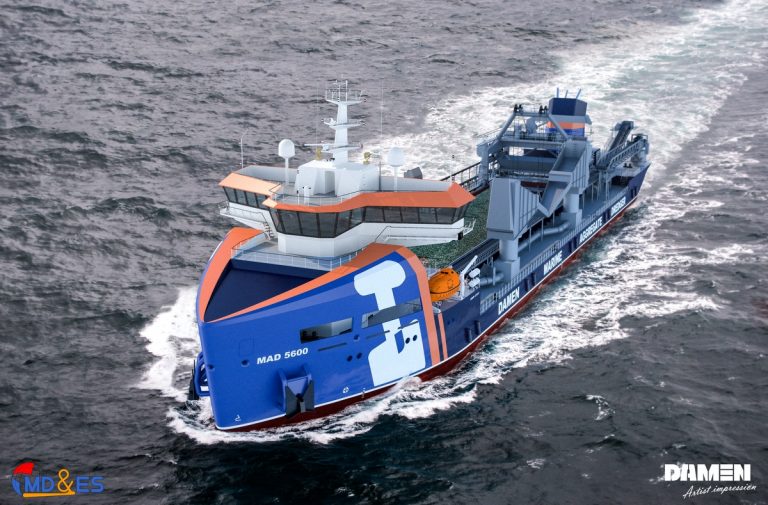
The new product range, comprising of the Marine Aggregate Dredger (MAD) 4000 and 5600 vessels, was introduced in response to extensive market research and customer consultation. The MAD vessels are expected to be well received by an aggregate industry facing rising demand and an aging fleet.

Designed in collaboration with Maritime Design and Engineering Services (MD&ES), an established name known for its innovative approach, the MAD 4000 and 5600 are welcome additions to Damen’s Trailing Suction Hopper Dredging portfolio. For offshore aggregate operations, the new vessels will be able to work in North Sea conditions up to depths of -60 meters. These capabilities allow operators to mine sand and gravel in deeper waters, farther from shore than preceding models.

Demand for improvement
Damen has invested considerably in research and development for the new MAD vessels, having observed an increase in demand for civil construction supplies deriving from an overall improving economy. The development aims at offering industry advanced technology, well suited to existing ports and delivering more uptime at sea.

Olivier Marcus, Damen’s Product Director Dredging comments: “We’ve tailored the technical specifications of the designs in line with the port infrastructure in the region in which the dredgers will operate.

“Furthermore, we’ve paid close attention to seakeeping behaviour in order to ensure the vessels can operate comfortably and safely, even in harsh weather conditions.”

Future proof
Unlike traditional dredgers, the bow shape of the MAD vessels allows them to operate in adverse weather conditions. The shape is based on a proven Damen design applied to renowned vessels such as the Damen Offshore Carrier (DOC) and Platform Supply Vessel (PSV). In addition to improved seakeeping behaviour, the bow shape also protects the sand and gravel cargo from green water ingress.

The MAD vessels have been developed with tomorrow in mind, states Mr. Marcus: “These vessels are future proof. Featuring Tier III engines and, requiring no ballast water, fully compliant with the latest IMO regulations, these dredgers are looking forwards. On top of that the design also takes into account the possible future requirement for advanced automation.”

In action
Close attention has been paid to incorporating the most robust equipment for operations in harsh environments. A submerged, wear-resistant Damen dredge pump facilitates the loading of sand and gravel aboard the vessel. Once onboard, the aggregate then passes through the heavy-duty dredgers’ screening towers, where giant sieves allow for a better assessment and classification of the mined material. Following this, it is stored and de-watered in the vessel’s hopper – with a capacity of either 4,000 or 5,600 m3 – hence the categorisation of the two types of MAD. The operation is supported by state-of-the-art, optimised instrumentation, offering feedback throughout the entire process.

Upon arrival to port, the vessels’ fully automated clamshell system unloads the material onto a conveyer belt. The system conceived of by the design is a flexible one, suitable for use in varying locations.

Mr. Marcus continues: “With a single vessel you can do almost everything. You can go out, get the material, classify it, dry it and deliver it to location. It is the first standardised design in the world with such a scope.”

Standardised customisation
Standardised the design may well be, but it is also versatile and takes into account the need for customisation and multi-role functionality. “A number of options exist in order to cater to differing client needs,” states Mr. Marcus. “The vessel can be supplied with bottom doors if required – which will offer additional versatility in case it is required to perform differing operations. It can also receive spud poles, for example. And, should the client wish to scale up at any point, the MAD 4,000 can easily be converted into a MAD 5,600 with a simple section addition.”

Concluding, Mr. Marcus says, “The MAD concept is one that tackles not only the needs of today, but of tomorrow also. We have developed a vessel that represents the lowest possible euro to cubic metre ratio. It is lightweight, with an optimised, efficient propulsion train, minimised hydraulic usage and offers both low and easy maintenance. We are very much looking forward to seeing it in action.”