
Sunday, December 14, 2025
spot_img
Home Blog Page 192

Guam replaces in-house operating system with Navis N4 to increase terminal efficiency

0

PAG, the only seaport in Guam, is in the midst of a major initiative for port modernization, and terminal operators turned to the industry-leading terminal solutions provider Navis to supplement improvements in terminal handling equipment.

The Port of Guam is a government-owned port that serves as a transshipment hub for the Pacific, servicing the CNMI, Palau, FSM and the Marshall Islands. PAG is a multi-purpose port handling various types of cargo including containers, breakbulk, bulk and RORO operations, and has delivered a TEU of over 177,000 in 2016.

PAG implemented the new TOS with the goal of improving customer service through reducing gate turnaround time and overall vessel and berth productivity. PAG has recently acquired new cargo handling equipment that has been integrated into the N4 TOS, alongside real-time container tracking, all EDI capabilities, a community access portal, and integrated tariff and billing systems.

“During the last few years the Port Authority of Guam has aggressively implemented its Port Modernization Program. In collaboration with our federal, military and private sector partners, we have completed milestone projects never before seen in the Port’s history of existence, including the expanding of our container yard, the reconfiguring of our terminal gate and reducing turnaround for incoming and outgoing terminal traffic,” stated General Manager Joanne Brown. “The acquisition of Navis N4 has taken our organisation to another level. The implementation of the TOS will not only improve the Port’s tariff/billing system but more importantly, it will result in a faster and more efficient movement of cargo to its final destination.”

“The Port of Guam is a key gateway to ocean trade in the Pacific, and Navis is excited to have the opportunity to work with the Port Authority on the modernization of its terminal,” said Mark Welles, VP of Japan and Asia Pacific for Navis. “As PAG is looking to implement a higher level of terminal technology, including new yard equipment and automation processes, N4 stands out in the industry as the best option available for terminals across the world.”
Harwich International Port secures AEO status

0

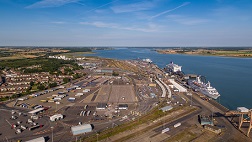
AEO status is an internationally recognised quality mark indicating that an operator’s role in the international supply chain is secure, and that its customs controls and procedures are efficient and compliant.

Commenting on the designation, Daren Taylor, General Manager of Harwich International Port, said:

“The AEO application procedure is extremely thorough and this certification provides an assurance to shippers that procedures at Harwich are of the highest standard. AEO accreditation can help simplify administrative procedures for goods being moved internationally and helps remove risk from supply chains.”

The AEO regime operates under the EU’s Union Customs Code and is administered in the UK by HMRC. AEO status gives quicker access to certain simplified customs procedures and in some cases the right to ‘fast-track’ shipments through some customs procedures.

The achievement by Harwich International Port follows its sister port at Felixstowe which was the first UK port to receive full AEO status in September 2014.

Port of Savannah marks record October

0

In October, the GPA handled 251,566 loaded TEUs, an increase of 5,876 TEUs, or 2.4 percent, to set an all-time GPA record for the month. “I would like to thank our customers for their continued confidence, and congratulate our entire team on this record growth, achieved despite challenges related to Hurricane Matthew and the Hanjin bankruptcy,” Lynch said. “These results are a testament to GPA’s strength in the marketplace, and the need to continue expanding capacity on GPA terminals.”

Also on Monday, the board approved $4.27 million for the Savannah Multimodal Connector, a rail project pivotal to expanding GPA’s service frontier westward.

“This action today by our board gives a green light to GPA’s Mid-American Arc,” said GPA Board Chairman Jimmy Allgood. “Improved unit train capacity will build density into the system, and make routes between the Midwest and the hub port of Savannah more attractive to our rail providers.”

Set for completion in 2020, the $140 million project will double annual rail lift capacity to 1 million containers. The project will allow Garden City Terminal to handle additional 10,000-foot long unit trains, while simultaneously reducing impact on nearby communities.

The multimodal connector will play a key role in GPA’s Mid-American Arc initiative, which will expand rail service from Garden City Terminal to and from an arc of cities ranging from Memphis, to St. Louis, Chicago and the Ohio Valley.

The GPA also took action at its November meeting to increase capacity at the Port of Brunswick, the nation’s second busiest autoport. The board approved three items totaling $15.5 million that will develop an additional 85 acres for vehicle processing at Colonel’s Island Terminal.

“I would like to thank Chairman Allgood and our entire board for the approvals today for our facilities in Savannah and Brunswick,” said Lynch. “These moves position the authority to grow with existing port users, and to provide turnkey operations for potential customers.”

Total tonnage across all GPA terminals for the fiscal year to date reached 10.36 million tons, for an increase of 0.5 percent. Since July 1, Savannah has moved 8.9 million tons of containerized cargo, an increase of 311,438 tons. Although total container tons have increased by 3.6 percent in Fiscal Year 2017, the number of empty containers moving across GPA’s docks have decreased by 17.6 percent to 252,307 TEUs compared to the first four months of FY2016.

Increased traffic between Gothenburg and Belgium

0

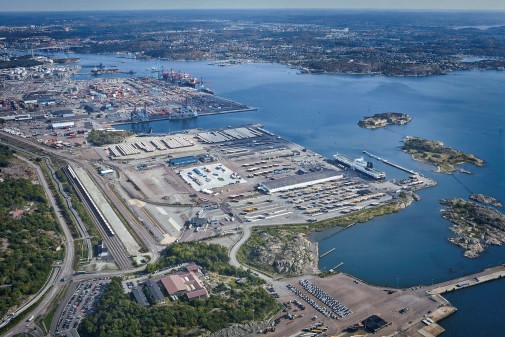
Gothenburg-based shipping company Swedish Orient Line, SOL, is about to expand its departure frequency between Gothenburg and the Belgian port of Zeebrugge. The company’s vessels will now depart from Gothenburg seven times a week.
“We’ve seen an amazing increase in volumes during the past year and we’ve hit the ceiling in terms of capacity. To meet the increase in demand, we’re planning to expand our capability to ensure we can continue to offer our customers an efficient system with a first-rate level of service,” said Ragnar Johansson, Chief Executive of Swedish Orient Line.

To handle the additional departures, the company has brought a new vessel into service – Ark Forwarder. The 185-metre vessel will call at the Gothenburg Roro* Terminal. The first departure will be this Thursday. The voyage to Zeebrugge takes approximately 36 hours.

16 calls to and from Belgium each week
The Port of Gothenburg now offers five ro-ro services to Belgium with a total of 16 calls each week. Apart from SOL, the ro-ro companies CLdN and DFDS Seaways also operate services to Belgium – to Zeebrugge and Ghent respectively.
“Zeebrugge is an important freight hub for many Swedish import and export companies that operate in Belgium and northern France,” said Jacob Minnhagen, Senior Manager, Business Development at Gothenburg Port Authority. “Further options are now available for shipping goods to and from Belgium. We’re extremely pleased that SOL is continuing to make operational investments at the Port of Gothenburg.”
Belgium is Sweden’s eighth largest export market with annual exports worth around 50 billion kronor, mainly engineering products, machinery and bearings. Many Swedish goods that are exported are transloaded in Belgium for onward movement to other markets. Imports from Belgium comprise foodstuffs, vehicles and components for Swedish industry.

Fact file: Port of Gothenburg
The Port of Gothenburg is the largest port in the Nordic region. 30 per cent of Swedish foreign trade passes through the Port of Gothenburg as well as 60 per cent of all container traffic.
The Port of Gothenburg is the only port in Sweden with the capacity to receive the world’s largest container vessels and has the broadest range of shipping routes within and outside Europe. The 25 rail shuttles that depart each day mean that companies throughout Sweden and Norway have a direct, environmentally smart link to the largest port in the Nordic region. The Port of Gothenburg has terminals for oil, cars, ro-ro, containers and passengers.