Wednesday, December 10, 2025
spot_img
Home Blog Page 199

Dutch Dredging wins ten-year maintenance contract in New Zealand

0

The contract will be signed in Auckland on Wednesday 9 November, in the presence of King Willem-Alexander and Queen Maxima of the Netherlands, and the Dutch and New Zealand ministers of Economic Affairs, Henk Kamp and Steven Joyce.

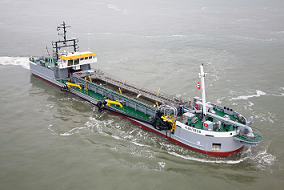
This long-term deal covers the ports of Napier, Taranaki, Timaru, Lyttelton and Tauranga. It is significant that a tender for the maintenance contract was issued jointly by these competing ports, so that a dredger could be permanently stationed in New Zealand over this period. Dutch Dredging is to deploy one of its trailing suction hopper dredgers ‘Albatros’ for the task.

“We’re absolutely delighted about winning the order,” says Kees van de Graaf, managing director of Dutch Dredging. “As a family business we focus on the long term, so a ten-year contract fits in perfectly with our philosophy. This is a great example of how a long-standing partnership between parties can be brought about and illustrates once again that the Netherlands is more than capable of holding its own on the world scene. Of course, for us, the attendance of the King and Queen at the signing ceremony represents the proverbial icing on the cake.”

VAHLE and Portek Systems & Equipment sign partnership agreement

0

VAHLE is since 1912 a specialist for mobile power supply systems in the most different industrial segments and one of the world’s leading companies for safe and undisturbed data transmission with headquarters in Kamen, Germany.

VAHLE has more than 750 employees and 12 subsidiaries worldwide. Including representatives VAHLE is active in 52 countries around the world. By establishing the Port Technology Business Unit in 2014, VAHLE is managing significant electrification projects as general contractor and offers turn-key solutions to the container terminals worldwide. Due to the geographic location of world largest ports in South East Asia, VAHLE is becoming more regionally active with the creation of VAHLE SEA (South East Asia) a new subsidiary based in Singapore. VAHLE South East Asia Pte. Ltd has recently opened for business in cooperation with Portek.

Portek is a perfect partner and now the sole representative of the VAHLE port technology products and systems for the South East Asia to market, install, commissioning and provide aftersales services for mobile electrification projects in the container handling industry.

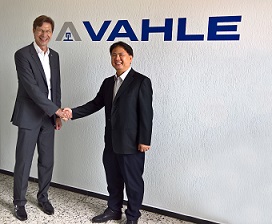
Mr. Achim Dries, Group CEO of VAHLE and Mr. Tok Soon Chong, CEO of Portek Systems & Equipment signed the official agreement on the 2nd June 2016 in Kamen.

Mr Tok Soon Chong, CEO of Portek Systems & Equipment commented, “It is a great honor for Portek to partner with VAHLE. VAHLE is an established company with more than 100 years of history and well-known for their quality and reliability in various industries. Portek has about 30 years of experience in the port industry. We believe that this collaboration will deepen our relationship and also allow us to expand our crane electrification activities rapidly in this region.”

ICTSI 3rd Quarter release

0

Earnings Before Interest, Taxes, Depreciation and Amortization (EBITDA) of USD390.3 million, 15 percent higher than the USD339.5 million generated in the first nine months of 2015, and net income attributable to equity holders of USD141.9 million, up 4% from the USD136.2 million earned in the first three quarter of the previous year. Net income attributable to equity holders increased primarily due to the volume and revenue growth tapered by higher depreciation & amortization expenses and lower capitalized borrowing costs related to Tecplata S.A. (“Tecplata”), the company’s new terminal in Buenos Aires, Argentina, and higher interest expense from higher average loan balance. Excluding the effect of new terminals and projects, consolidated net income attributable to equity holders would have increased by 28 percent. Diluted earnings per share for the period was six percent lower at USD0.052 from USD0.055 in 2015.

For the quarter ending September 30, 2016, revenue from port operations increased 18 percent from USD239.9 million to USD284.2 million while EBITDA was 30 percent higher at USD132.9 million from USD102.1 million. Net income attributable to equity holders was up 53 percent from USD35.8 million to USD54.6 million in 2016 mainly due to the strong volume and revenue growth across all three of the Company’s geographic segments tapered by higher depreciation & amortization expenses and lower capitalized borrowing costs at Tecplata in Argentina, and higher interest and financing charges arising from higher average loan balance. Excluding new terminals and projects, consolidated net income attributable to equity holders would have increased by 72 percent. Diluted earnings per share for the quarter increased 66 percent from USD0.013 in 2015 to USD0.021 in 2016.

ICTSI handled consolidated volume of 6,435,192 twenty-foot equivalent units (TEUs) in the first nine months of 2016, 12 percent more than the 5,768,248 TEUs handled in the same period in 2015. All three of the Company’s geographic segments in Asia, EMEA and Americas continued to post positive volume growth for the third consecutive quarter. The increase in volume was mainly due to new shipping lines and services, improvement in trade activities in most of the terminals in the Asia region and the continuing ramp-up at ICTSI Iraq. For the quarter ending September 30, 2016, total consolidated throughput was 15 percent higher at 2,170,559 TEUs compared to 1,880,118 TEUs in 2015. It was the second consecutive quarter of double digit volume growth at all of the Company’s three geographic segments.

Gross revenues from port operations for the first nine months of 2016 increased five percent to USD835.0 million from USD792.0 million reported for the same period in 2015. The increase in revenues was mainly due to volume growth at most of the Company’s terminals; tariff rate adjustments and new contracts with shipping lines and services at certain terminals; and the continuing ramp-up at ICTSI Iraq. This however was partially off-set by unfavorable container volume mix and lower non-containerized and storage revenues at certain terminals. For the third quarter of 2016, gross revenues increased 18 percent to USD284.2 million from USD239.9 million in 2015. All three of the Company’s geographic segments in Asia, EMEA and Americas posted double digit revenue growth in the third quarter of 2016.

Consolidated cash operating expenses in the first three quarters of 2016 was down five percent to USD310.1 million from USD326.6 million in the same period in 2015. The decrease was mainly due to the improved operational efficiencies resulting to lower costs of repairs and maintenance, lower fuel and power consumption, combined with lower global fuel prices; the implementation of the company-wide cost optimization initiatives; and lower variable cost at ICTSI Oregon (IOI) in Portland, OR, USA. The reduction in cash operating expenses was tapered by increase in variable manpower costs as a result of increase in volume and the cost contribution of new terminals and projects.

Consolidated EBITDA for the first nine months of 2016 increased 15 percent to USD390.3 million from USD339.5 million in 2015 mainly due to strong revenue growth combined with lower operating costs and effective cost optimization initiatives. Consequently, consolidated EBITDA margin improved to 47 percent in the first nine months of 2016 from 43 percent in the same period the year earlier.

Consolidated financing charges and other expenses for the first three quarters increased 38% from USD48.6 million in 2015 to USD66.8 million in 2016. The increase was mainly due to slightly higher average loan balance and lower capitalized borrowing costs due to the cessation of the capitalization of Tecplata’s borrowing cost, unfavorable translation impact of certain currencies against US dollar in 2016, and the recognition of solidarity contribution tax and provision for claims at Contecon Guayaquil S.A. (CGSA) in Guayaquil, Ecuador.

Capital expenditures for the first nine months of 2016 amounted to USD297.9 million. Excluding capitalized borrowing costs and expenses, capital expenditures amounted to USD273.0 million, approximately 65% of the USD420.0 million capital expenditure budget for the full year 2016. The established budget is mainly allocated for the completion of the initial stage of the Company’s new container terminals in Australia, Democratic Republic of Congo and Iraq, and the continuing development of the Company’s projects in Honduras and Mexico. In addition, ICTSI invested USD50.1 million in the development of Sociedad Puerto Industrial Aguadulce S.A. (SPIA), its joint venture container terminal development project with PSA International Pte Ltd. (PSA) in Buenaventura, Colombia. The Company’s share for 2016 to complete the initial phase of the project is approximately USD60.0 million.

ICTSI is widely acknowledged to be a leading global developer, manager and operator of container terminals in the 50,000 to 2.5 million TEU/year range. ICTSI has an experience record that spans six continents and continues to pursue container terminal opportunities around the world.

The Port of Barcelona presents a pioneering air quality improvement plan

0

The document, approved by the Port’s Management Board and put to the Table on Air Quality in the Barcelona Conurbation, involves 25 actions rolled out in 53 operations.

Port of Barcelona president Sixte Cambra, General Manager José Alberto Carbonell and the organisation’s environment chief Jordi Vila presented the Plan at a press conference. The most representative actions are promoting LNG as an alternative fuel for vessels and for road freight transport, an ambitious policy of discounts for cleaner ships and replacing the Port’s internal fleet with electric vehicles.

“Over the last two decades our Port has led the way on environmental issues and we are firmly committed to continuing in this leading role. We are aware that our responsibility as a public company is to lead the change towards a more sustainable model” said Sixte Cambra.

According to modelling done by Barcelona Regional, port activity is responsible for 7.6% of average annual concentrations of NOx in the city of Barcelona and of 1.5% of particulate
matter.

Port General Manager José Alberto Carbonell specified how this contribution is split between the main segments of the Port’s activity. Container ships are responsible for 1.7% of the annual average concentration of NOx in the Catalan capital, with other cargo ships representing 2%, ferries 1.4% and cruise ships 1.2%. As regards particulate matter, the contribution port activity makes to total concentration in the city (estimated at 1.5%) is split into 0.38% for container ships, 0.48% other cargo ships, 0.23% cruise ships and 0.28% ferries, among others.

A port that leads the way in environmental issues
Since 1996, the Port of Barcelona has played a pioneering role in promoting actions to reduce the environmental impact of the activities it performs in the precinct, promoting the use of rail and Short Sea Shipping (SSS), environmental checks on all of the works developed by the Port, creating an air quality monitoring network in the port environment (the first and most complete in the Spanish port system), regulating handling of solid bulk and monitoring the emissions of the various concessions.
The Port of Barcelona’s Air Quality Improvement Plan is part of two more far-reaching plans by the Catalan Government, the Generalitat (2015-2020 Air Quality Improvement Plan for the Metropolitan Region) and Barcelona City Council (2015-2018 Air Quality Improvement Plan for Barcelona). The document proposes a wide range of areas for improvement: reducing emissions from ships, road traffic, terminal machinery, port works and solid bulk; promoting rail transport and Short Sea Shipping; new accesses, sustainable mobility and air quality network.

LNG as a fuel for mobility
Promoting liquefied natural gas (LNG) as an alternative fuel for ships, terminal machinery and trucks is one of the highlights of the plan, as LNG use cuts NOx emissions by 80% and stops particulate and sulphur oxide emissions. In addition, new legislation on greenhouse gas emissions is increasingly restrictive and the maritime industry is turning to LNG as a fuel for powering an increasing number of vessels that will enter into service in the coming years.
This action consists of various operations to promote LNG as an alternative fuel for ships and lorries and aims to provide the Port of Barcelona with LNG supply infrastructure and to develop pilot and demonstration projects. Port infrastructure required to facilitate LNG fuelling for vessels involves installing a flexible cryogenic loading arm at the Enagás terminal to supply LNG to a barge and small boats and adapting a barge to supply LNG to larger vessels. Both initiatives are under way and receive EU funding, since they are part of the CORE LNGas hive project run by the European Union.

Of note among the pilot projects are the addition of an auxiliary gas engine to Balearia’s ferry Abel Matutes and the building of a gas generator on the wharf to replace the auxiliary engines of RORO vessels and providing them with electrical energy from the land side. Test will also be run to convert two straddle-carriers (machines used in the container terminal) from diesel to LNG to analyse performance, efficiency and emission levels. The pilot project will be rolled out at the BEST (Hutchison) terminal and at APM Terminals (formerly TCB), and if the results are satisfactory, the straddle-carrier fleet of both facilities will be renewed progressively.

Discounts for cleaner ships
The policy of environmental discounts on ships’ fees is one of the most innovative aspects of the plan. “The discount applied to port fees is a very important tool, since it is a fundamental instrument for bringing about change in the vessels,” said General Manager José Alberto Carbonell. The problem is that at present the law allows a maximum discount of 5% for environmental reasons on ships’ fees, which is a very small margin for building an ambitious environmental strategy.

“The Port of Barcelona will ask the Ministry to amend the Ports Law in order to implement environmental discounts of up to 40% of ships’ fees, just like the ports of northern Europe (Rotterdam, Hamburg, Antwerp)” added Mr Carbonell. With the new regulations, the Port of Barcelona aims to more effectively attract cleaner ferries, cruise ships and cargo ships.
“Furthermore, for the past six years the Port has also had influence in the various international bodies of which it is a member, urging the International Maritime Organization (IMO) to be more ambitious in regulating vessel emissions,” added President Sixte Cambra.
The complete renewal of the Port’s internal fleet of vehicles, which will be progressively replaced by electrical units, is another of the operations under the organisation’s Air Quality Improvement Plan. The aim is for the fleet to be 100% electric by 2020. This measure will be accompanied by rolling out electrical connection infrastructure to the parking areas, car parks and public spaces of the port precinct. As a public administration, the Port considers it must lead the way in measures which can then be followed by other organisations of the Port Community.