
30th April & 1st May 2024, Savannah Convention Center, Savannah, Georgia
Agreement signed between CodaOctopus and Seatronics
This agreement was made during Oceanology International the world’s largest marine exhibition, featuring over 500 exhibitors from 30 different countries. TAP™ now means clients can contact any CodaOctopus or Seatronics base office directly to hire the real-time 3D sonar technology that is transforming applications from marine construction through to port security, dredging and decommissioning. Over and above access to revolutionary sonar technology, TAP™ also makes available a pool of trained operators who can deliver a host of service provision to suit every client’s requirements.
Whether you are a large marine operator working on a major offshore installation requiring both equipment and personnel, or a smaller scale company needing short period equipment hire with a few days of operator training, TAP™ is the affordable answer.
Seatronics maintain a number of Echoscope® systems on their rental pool already with the main TAP™ asset pool becoming available from April 2012 onwards.
New Zealand – robust recovery
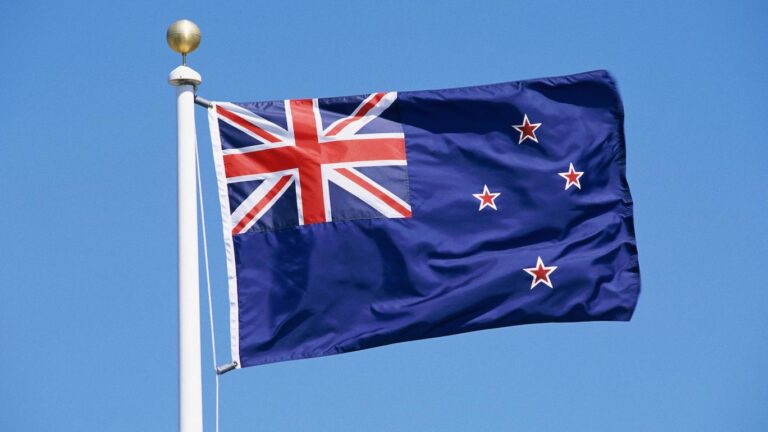
The surplus of exports over imports topped NZD269 million and is seen as a positive sign. However, all was not yet calm as the Ports of Auckland needed a NZD50 million boost from its owner Auckland Regional Holdings during the year to help it repay a bank loan in December. The port CEO Jens Madsen says there is no need to go back for more. Situated at the end of the voyage for many shipping lines, New Zealand has suffered in the global recession along with most nations, particularly through the estimated 10% overall worldwide decline in container trade. The kiwis have been told for decades that they “need to export to survive” and the forestry rich and agricultural product diverse country suffers more than most from any world market volatility. The difficulties in having too many international ports have prompted open talk in recent years of the need for consolidation – something the shipping lines have already been forced to do to save costs in steaming Down Under.
Talks fizzle
Ports of Auckland and its main rival Port of Tauranga held consolidation talks, but they have since been abandoned. However, down south, two ports continue to explore the benefits of coming together. Lyttelton Port Company (the port of the major South Island city of Christchurch) and Port of Otago (Dunedin’s port further south) began another round of talks late in February 2010. Saying they were going to the next phase of merger talks, the two southern facilities are now looking at the ramifications of the legal separation of their infrastructure assets from the operations and commercial activities of each port. Any agreed proposal for an operational merger would still require shareholder support and the approval of the Commerce Commission. The potential merger is being closely watched by many in the transport logistics industry after attempts to bring Ports of Auckland and the Port of Tauranga together failed. Lyttelton Port has applied for consents to dredge its harbour opening it up to larger ships, while Port Otago is also progressing with plans to handle larger container vessels. However, there is some concern that New Zealand ports will overcapitalise as they compete with each other to attract the larger container vessels now coming into service, which will most likely only call at one or two ports in the whole country.
Profit lift
Meanwhile, in its summary of the six months to December 31, 2009, Ports of Auckland reported a 50% lift in profit to NZD13.9 million. It turned almost NZD10 million of that back to its owner, the ratepayer-owned Auckland Regional Holdings as a dividend. In contrast, it did not pay an interim dividend earlier in the year. Container volumes through Auckland slid 3.7% in the half year compared to the same period of 2008. However, container traffic, which accounts for about 75% of all port revenue, increased by a total of 7% in December and January. The resurgence towards the end of 2009 surprised the port, which had to hire extra staff to cover gaps left by earlier layoffs of more than 30 people. “It is fair to say that over the next three to four months it looks pretty good, but we don’t take anything for granted because the situation is pretty volatile,” says Auckland Chief Executive Madsen. The port handled 438,438 TEU in the last six months of 2009 compared to the record high of 455,083 TEU in the same period in 2008. The largest container ship ever to call on a New Zealand port, the 5,000 TEU Maersk Detroit called in Auckland in December and helped in the improved throughput. Meanwhile, Ports of Auckland has joined with KiwiRail to launch a NZD9 million rail link between its Wiri Inland Port in South Auckland and the downtown port facilities such as its major Fergusson Wharf container facility. While the new rail link won’t be officially opened until March, it has already started four services of 23 rail wagons a week in each direction. The Wiri Inland Port is strategically positioned in the heart of Auckland commercial sector and close to the Auckland International Airport and major highways. In the past, container trucks had to find their way through the busy downtown to get to port facilities, adding to traffic congestion, frustration, and pollution.
NZ’s largest
Major rival, the Port of Tauranga, which lays claim to being New Zealand’s largest and most efficient port with an annual cargo throughput of over 13 million tonnes, has set up a competing inland port in Greater Auckland, known as MetroPort Auckland, to funnel container traffic its way by rail. Tauranga, situated just a couple of hours drive from Auckland on the east coast of the North Island, called its half year performance “robust” as it produced an improved net profit of just over NZD23 million for the second half of 2009. That represented a 2% increase over the record profit earned in the same six months of 2008. While exports grew nearly 10% thanks to log shipments increasing 31% and dairy rising by a huge 44%, the port saw container volumes dip 18% as imports dwindled. Tauranga’s Chief Executive, Mark Cairns, says the container market will remain volatile in the short term, but he is encouraged by the strength of the forest industry. The port expects a “gradual improvement in economic growth” and plans to match its record performance of 2009 with a similar result in 2010. Tauranga sees itself as “New Zealand’s port for the future” and is heading to a consent hearing in March that will allow it hopes will give it permission to dredge its harbor channels to a 14.5 meter draught at low tide making it the only port in New Zealand with that large vessel capability.
Wharf upgrades
Meanwhile, the nation’s third major port, CentrePort in Wellington is doing its best to shake itself out of the economic turmoil of the past year through NZD6.7 million in wharf asset upgrades such as six new straddle carriers and a new tug. And as for the consolidation of ports debate, CentrePort Chairman Warren Larsen, isn’t afraid to wade in on behalf of his facility situated at the southern most point of the North Island. “Debate escalated again during the year on the optimum on the optimum siting of New Zealand container ports,” he notes. However, Larsen says the debate has been based more on anecdotal comment rather than robust economic data and claims it has continued to ignore the impact of road, rail and coastal shipping on the overall port location. “The absence of a national transport strategy has affected CentrePort’s potential to further aggregate cargo in what is one of New Zealand’s best natural harbours,” he adds. Meanwhile, the capital city port has embraced a “bold but prudent property development strategy” for its port lands with new buildings coming on stream with secure rental income. It is committing a further NZD33 million to property development and investment property now represents 52% of CentrePort’s asset base providing what it terms a “solid, stable stream of income to counter-balance the sometimes changeable port sector.”
Konecranes wins order in Rotterdam for mobile harbour crane
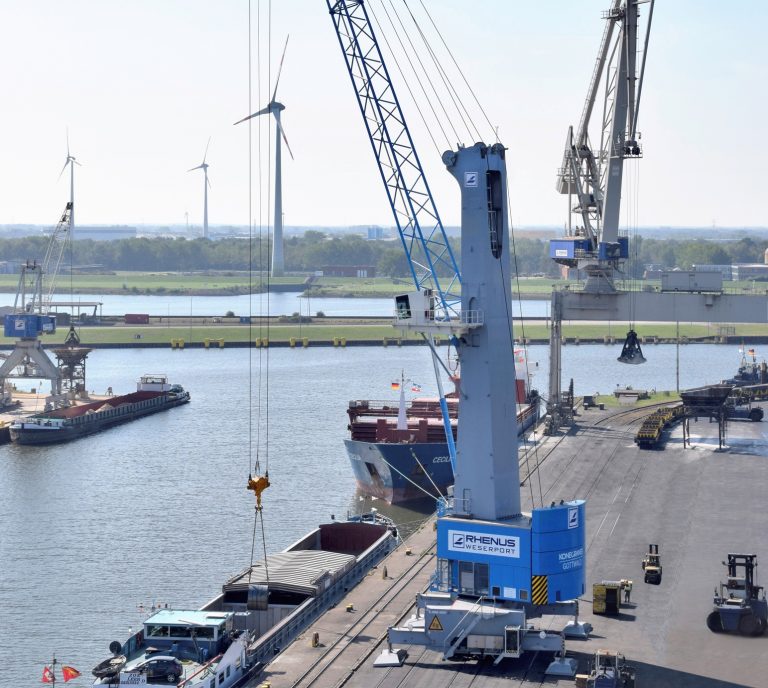
With commissioning planned for May and handover by June 2020, the crane will handle general, heavylift & project cargo and expand the terminal’s container handling capacity. Equipped with an external power supply, it brings Konecranes’ Powered by Ecolifting to a new market. At 40km long, the Port of Rotterdam is Europe’s largest port, with access to ship, train and road connections, as well as river transport all the way to France and Switzerland. As a leading global logistics provider, the Rhenus Group operates multiple terminals at this key location. The Rhenus Deep Sea Terminal, situated on the Maasvlakte extension into the North Sea, functions as a hub between long-distance cargo and short sea shipping, with unobstructed nautical access. Rhenus decided to invest in a new mobile harbour crane to extend and modernise their fleet of three Konecranes Gottwald cranes. “We’ve been very pleased with our Konecranes equipment,” says Peter van der Steen, Managing Director of Rhenus Logistics B.V. “When we took over this terminal some years ago, there were already two 100-ton Konecranes Gottwald mobile harbour cranes in operation. They’ve been excellent, so four years ago, we bought our first 125 tonner, Model 6, a high-performance crane that gives us the flexibility to handle any kind of cargo. For this new order, we wanted something similar, but with even better energy efficiency, to correspond with the Rhenus Group’s commitment to sustainability and to our ambition in Rotterdam for further electrification.” Their fourth Konecranes Gottwald crane is like their previous purchase, a Model 6 Mobile Harbour Crane in the G HMK 6507 variant. It gives Rhenus a second option for handling up to 125 tons of general and heavy project cargo as well as containers. In twin-lift with its sister it can lift up to 187.5 tons. One difference is that the new crane uses a 690V external power supply, which will lower operating costs, while reducing noise and exhaust emissions at the same time. The first Model 6 crane has built-in readiness for an external power supply, so Rhenus will be able to connect it to the harbour mains as well, at a later stage. “This is the first MHC in the Netherlands to be delivered with an external power supply,” says Hans-Juergen Schneider, Regional Sales Manager, Konecranes Port Solutions. “We are excited to see the growing enthusiasm for the Konecranes Powered by Ecolifting approach in the Benelux region. Eco-efficient solutions like this are essential to modern long-term business investment.”