

Tuesday, December 16, 2025
spot_img
Home Blog Page 31

Florida ports continue to innovate with use of alternative fuels

0

Dr. Julia Nesheiwat, Florida’s Chief Resilience Officer under Gov. Ron DeSantis, said, “Florida ports are leading the way in moving to cleaner, alternative energy sources, bringing tremendous environmental benefits to our transportation systems and our communities.”

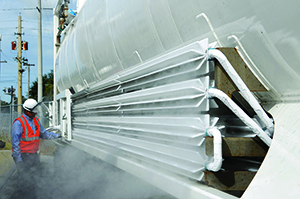
As more stringent air quality regulations for port operations and maritime vessels are implemented across the world, there is increased demand for alternative fuels in the national and global transportation industry, according to the Alternative Fuels Study. “The rapid expansion of the natural gas industry and the alternative fuel market provides an exciting opportunity for Florida seaports to expand their use of natural gas, creating economic and environmental benefits for the state,” said Doug Wheeler, Florida Ports Council President and CEO. “Our ports are in a unique position to capitalise on their economic strength and are on the leading edge nationally of LNG for cargo and cruise vessels. We must ensure that Florida has the infrastructure and business climate to promote the economic and environmental benefits from these alternative fuels.” In shipping and rail industries, liquefied natural gas (LNG) has proven to be the most cost effective and beneficial alternative fuel source. In fleet and cargo handling operations, compressed natural gas (CNG) and LNG are both reliable alternatives, subject to the particular application and task. Dale Calhoun, Executive Director, Florida Natural Gas Association: “The natural gas industry is a proud partner of Florida’s port system. Our ports are implementing the use of alternative fuels, including natural gas, which benefits both our environment and our local economies.” Florida seaports are on the leading edge of alternative fuel utilisation nationally and have continued the development and deployment of alternative fuels for cargo and cruise vessels. For example, JAXPORT has the largest LNG bunkering operation at a U.S. port, which includes JAX LNG and Eagle LNG facilities with the capability to serve not only the domestic fleet but larger international vessels as well. Other ports around the state including PortMiami, Port Tampa Bay and Port Canaveral that are capable of handling ISO containers without modification are also poised to receive LNG delivered by truck or rail, which can then be loaded onto container ships or roll-on/roll-off oceangoing carriers for export. And according to the Cruise Ship Order Book, 26 new LNG powered cruise ships are to be built and delivered between 2020-2026. As cruise vessels shift toward alternative power sources, Florida’s cruise ports such as PortMiami, Port Everglades, and the Port of Palm Beach will invest in infrastructure to accommodate this new type of vessel. Harvey Gulf International Marine will soon take delivery of an LNG bunkering barge to provide fuel to the first fully liquefied natural gas-powered cruise ship in North America, Carnival Cruise Line’s Mardi Gras, homeported at Port Canaveral.
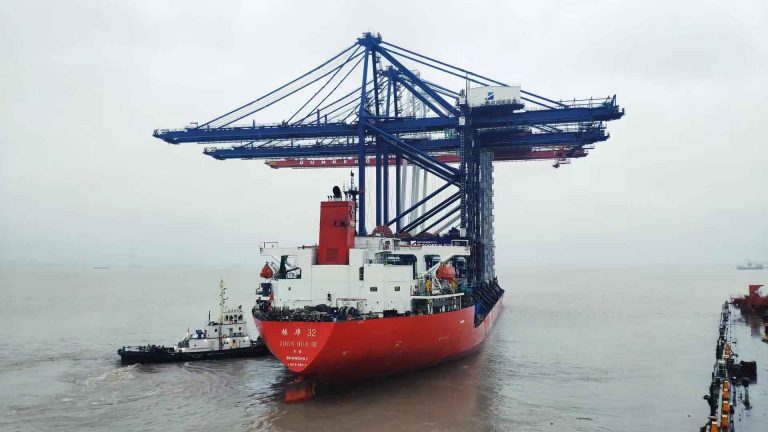
Two new super-post-Panamax cranes on their way to the Stockholm Norvik Port

0

Ports of Stockholm’s new freight port – the Stockholm Norvik Port – will be able to handle the largest vessels operating in the Baltic Sea. The container cranes are just over 80 metres high in their lowest position, they can handle a width of 22 container units and can lift 65 tonnes. This capacity, in conjunction with proximity to the major fairways, the natural 16.5 metre depth, and the good opportunities for onward transport by haulage vehicle, train or barge will enable efficient handling and service at the port. “With these two super-post-Panamax cranes we will be able to welcome the largest vessels in the Baltic Sea and, together with Hutchison Ports, we are able to offer our customers efficient handling and service. It is extremely exciting that the container cranes are now actually on the way, achieving yet another milestone,” says Nicklas Ebersson, Marketing Manager Cargo, at Ports of Stockholm. The container terminal at the Stockholm Norvik Port will open in May and will be run by Hutchison Ports, one of the world’s largest container terminal operators, with 52 ports in 27 countries.

Port of Felixstowe upgrades Ro/Ro facilities

0

Commenting during the Minister’s visit to the port, Clemence Cheng, Chief Executive Officer at the Port of Felixstowe and Executive Director of Hutchison Ports, said: “Roll-on/Roll-off is an important component of the port’s business. With three sailings per day to Vlaardingen in Rotterdam we provide a vital connection to North Europe for UK importers and exporters. The port is already Brexit-ready and the improvements that we are starting today, coupled with additional trailer parking that has already been completed, will enhance capacity, capability and performance for Ro/Ro traffic at Felixstowe. As well as improving our facilities for Ro/Ro traffic we are continuing to upgrade our containerised capability and are ready to cater for increases in trade with the rest of the world as a result of new trade deals struck following our exit from the EU.” Secretary of State for Work and Pensions, and local MP, the Rt Hon Thérèse Coffey MP, said: “It was great to welcome the Maritime Minister, Nusrat Ghani, to the Port of Felixstowe as work to enhance the roll on/roll off capacity gets underway. Direct ministerial support and contact is really important to help my work as MP for Suffolk Coastal and for the ongoing success of Felixstowe Port.” The works, which are due to be completed before the end of the Brexit transition period, include the lengthening of the ports No.3 Ro/Ro berth and the replacement of the current hydraulic ramp at No.4 Ro/Ro berth with a larger floating linkspan. Whilst at the port the Minister also saw the new Ro/Ro trailer storage area created with support from Department for Transport Port Infrastructure Resilience and Connectivity funding and held discussions with Hutchison Ports’ senior management on a range of discussions including the Women in Maritime initiative and development of the port’s 5G network.

Shipping Minister highlights importance of ports and shipping during decarbonisation conference

0

During her key-note address she highlighted the importance of Maritime 2050 and the Clean Maritime Plan in working towards a cleaner, greener future. Also at the conference was Chair of the Committee on Climate Change Lord Deben who gave an overview of how UK industry as a whole will need to change to ensure we achieve our climate change targets. He also spoke about the opportunities that a shift to clean growth will provide. A range of speakers from across the shipping and port sectors also presented during the day long conference.

Conference organiser and UK Chamber of Shipping Policy Director Anna Ziou said: “ We were delighted to welcome the minister, Lord Deben and all our speakers for what was a fascinating day. Tackling climate change and reducing emissions are a top priority for us and we were delighted to have industry leading figures give their views on the future of decarbonisation.” The conference was run and organised with the British Ports Association and their Head of Policy & External Affairs Mark Simmonds said: “The levels of engagement and interest at this conference demonstrates how decarbonisation and the environment and climate change more widely now top the agenda for our industry. The scale of the challenge is clear and I’m pleased that so many colleagues could join us to discuss how we overcome some of the barriers. These challenges for industry cannot be met without the support of Government and so it was great that officials and the Minister could join us too. The British Ports Association is looking forward to continuing this level of constructive engagement with UK shipping and Government over the course of this year and beyond.”