
Saturday, December 13, 2025
spot_img
Home Blog Page 316

Long Beach cargo volumes up 6 percent in first quarter

0

While March 2015 volumes soared 32 percent over the same month in 2014 due to the exceptional recovery from cargo backlogs early last year— March 2016’s container volumes were down 26.2 percent. Other factors contributing to this March’s smaller monthly total included the Lunar New Year, when many factories in East Asia shut down for one to two weeks.

“Overall, we are pleased with these results,” said Port of Long Beach CEO Jon Slangerup. “The uneven global economy, industry financial pressures, weak U.S. export demand and the introduction of megasized container vessels to West Coast ports have created dynamic conditions for the maritime industry that will continue to play out over the coming year. Nevertheless, our value proposition, being the fastest and most cost-effective supply route from Asia to America’s consumer markets, continues to define Long Beach and Southern California as the multimodal gateway of choice for our shipping customers.”

In March, Long Beach marine terminals handled a total of 464,855 twenty-foot equivalent units or TEUs, the industry standard for measuring container cargo. Imports decreased 34.6 percent to 207,635 TEUs and exports were flat at 127,210 TEUs. Empty containers, which are sent back overseas to be refilled with more goods, decreased 29.8 percent to 130,010 TEUs.

“As the Green Port of the Future, Long Beach is committed to creating an even more efficient and environmentally sustainable supply chain,” said Harbor Commission President Lori Ann Guzmán. “We’re confident that our Port will continue to attract cargo and meet the challenges brought by the new generation of megaships.”

With an ongoing $4 billion program to modernize its facilities this decade, the Port of Long Beach is investing in capital and service improvements that will bring long-term green growth and maintain its compelling value proposition.
Terex Port Solutions (TPS) achieves another success in South America

0

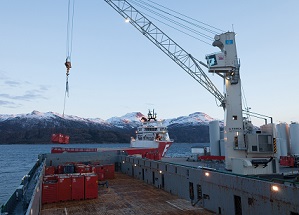
From the end of 2016, AES will use the cargo handling machine in its 1,540 MW power plant in San Nicolás de los Arroyos to unload coal imported from Colombia and South Africa. The G HSK 2224 crane will be the first Model 2 in the world designed as a portal harbour crane. It will replace the ageing cargo handling equipment in the river terminal located approximately 200 km to the north west of the Atlantic estuary of the Rio Paraná.

Efficient coal handling with portal-mounted mobile harbour crane technology
The versatile portal harbour crane based on Terex Gottwald mobile harbour crane technology features a 32-t grab curve and a maximum lifting capacity of 80 t. It offers an outreach up to 40 m and maximum lifting speeds of 85 m/min and will be used at the terminal of the AES power plant for efficient coal handling on vessels of the Panamax class. The machine will be driven particularly cost-effectively by external power from the terminal’s own supply. TPS will adapt the crane portal with 10 m track gauge and 6 m clearance height to individual local conditions. This includes rail-bound travel units that comprise a total of 24 wheels – six in each corner – in order to comply with maximum permissible rail loading. Guillermo Paponi, Operations Director for Argentina: “With the G HSK 2224 we have opted for a state-of-the-art solution that specifically meets our requirements for cargo handling rates and design of the crane portal and is also based on proven Terex Gottwald mobile harbour crane technology.”

Increased demand for adaptable machines in South America
Terex Gottwald portal harbour cranes can be ideally incorporated into both existing and new terminal infrastructures and particularly allow for operation of conveyor belts, trains and road trucks below the portals. There is currently increased demand in South America for mobile harbour crane technology on rail-mounted portals. Daniel Vanegas Torres, Regional Sales Manager TPS: “In Brazil, two Model 6 and two Model 4 portal harbour cranes are already working in the demanding area of fertilizer handling. The four machines are each tailored to very specific individual terminal requirements. We are delighted that a customer in the neighboring country of Argentina has now opted for one of these adaptable cranes – a success to which Schoss S.A., our TPS distributor from Argentina, has also contributed.”

Multi tool Hyster ReachStacker handles varied loads

0

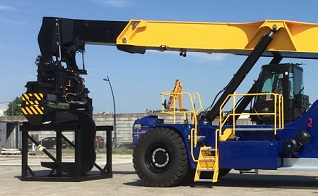
“The customer needed to use the same ReachStacker to handle many types of loads such as standard 20ft and 40ft containers, high top/curtain containers, cargo trailers and steel coils,” says Chris van der Werdt, Commercial Manager for Hyster Big Trucks. “To maintain productivity, it was important that the customer could easily switch between different attachments quickly and reliably.”
Hyster developed a solution where a unique tool changer is fitted to the Hyster® RS46-41XLS CH ReachStacker to allow easy exchange of attachments. When a different tool is needed, the mast can simply be lowered into the required attachment.
“This Hyster® ReachStacker can now be used with a standard container spreader, an intermodal spreader or a C-hook attachment offering maximum flexibility with minimal fuss,” he says. “The wheelbase was also extended to 7.5m for extra capacity on long load centers.”
The tough Hyster® RS45-46 range of 12 heavy duty ReachStackers offers outstanding maneuverability and superior handling speeds with no loss of power at full capacity for demanding loads, and the capability to lift in excess of 33 tonnes in a third row.
“While a range of Hyster ReachStackers exist to suit a number of different applications and even the most rugged environments, this bespoke solution has added real value to the customer and allowed them to overcome a very difficult challenge in their operation,” says Chris van der Werdt, Commercial Manager for Hyster Big Trucks.
“To handle various types of loads a number of different trucks may sometimes be needed. However, with this solution a large number of different activities can be performed with just one ReachStacker, resulting in significant savings in operating costs,” adds Chris. “That is also why the reliability offered by a Hyster® ReachStacker is essential to ensure maximum truck availability.”
The Hyster Special Engineering Department is located at the Nijmegen plant in the Netherlands, the global centre for Hyster Big Trucks design, development and testing.

Strainstall secures major order from DP World Southampton for its world-leading container weight verification system

0

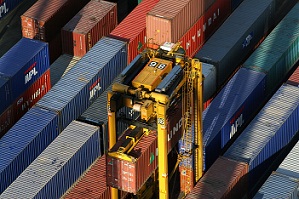
Strainstall’s CWSâ„¢ solution has been specifically developed to meet the SOLAS container weight verification regulations and was trialled at DP World Southampton, demonstrating the system’s accuracy, which is in excess of industry expectations.
Nick Loader, chief executive officer, DP World Southampton said; “We assessed a number of different options to be able to offer a container weighing service to our customers and selected Strainstall’s system because it doesn’t require any changes to our port operating procedures and is quick to install. The trials demonstrated an accuracy above our expectations and the system will be fully integrated into our TOS to ensure we are able to offer a full VGM service by the first of July.”
DP World recently confirmed that its UK ports will offer a full container weighing service having recognised the need to provide a service to their customers to assist the industry to meet the SOLAS requirements by 1 July 2016. With less than three months until the amendment comes into force, DP World wants to be able to offer a fully compliant service to ensure there is no disruption to UK exports through its ports.
Simon Everett, managing director of Strainstall, commented on the success; “Our latest generation container weighing system is the culmination of two years of development by our engineering team, and we’re delighted that DP World Southampton has decided to equip all their straddle carriers with it.”
CWSâ„¢ offers customers a robust solution and is designed to be integrated into Terminal Operating Systems giving a simple and automated process for producing a Verified Gross Mass for SOLAS compliance.
“There is a massive global requirement for our container weighing system. The deadline for compliance is fast approaching and port operators all over the world are anxious to implement solutions before the regulations come into force, with the MCA being the only state competent authority so far confirming the accuracy requirements, the industry is running out of time to get solutions implemented.” Everett concludes.