
Thursday, December 11, 2025
spot_img
Home Blog Page 318

Terex Port Solutions presents new-generation reachstacker

0

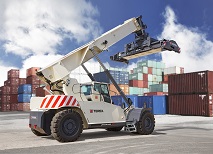
Besides Liftace reachstackers, this new generation also includes Terex Stackace empty container handlers. The technologically mature, agile and maneuverable cargo-handling machines of a compact design offer users a high degree of cost-effectiveness, ease of maintenance and ergonomics.

The Liftace 5-36 reach stacker offers low fuel consumption and low wear, easy access to all maintenance points and a cab with a particularly user-friendly design. In addition to the 45 t when serving in the first container row, typical for Liftace reach stackers, the maximum load capacity is 36 t in the second row and 18 t in the third. With a wheelbase of 6,200 mm, the Liftace 5-36 reach stacker can stack up to five high-cube containers (9’6”) in the first row and four high-cube containers or five standard containers in the second row. For the engines, TPS relies on state-of-the-art technology from Volvo and Cummins that meets the requirements of the EPA Tier 4 final emission standard (EU Stage IV).

Since the launch, the new Terex lift trucks have established themselves successfully on the market. Many customers are using the machines in both Europe and North America. Mike Hegewald, Senior Director Global Engineering Terex Port Solutions: “Like all vehicles of the new generation, the Terex Liftace 5-36 reach stacker has been developed by an international team based on global customer requirements. The mix of competitive operating costs, ease of maintenance and convenience at the human-machine interface makes the machines efficient overall packages that provide competitive advantages for our customers. We will consistently continue on this course and successively expand the model range of the Liftace reach stacker.”
New Orleans opens Mississippi River Intermodal Terminal

0

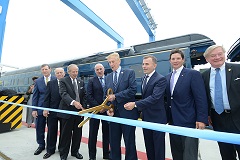
The terminal, made possible by a USD16.7 million federal transportation TIGER grant, has a capacity of moving 160,000 twenty-foot-equivalent units (TEUs) per year by rail.

“This new terminal provides a highly efficient option for our customers moving cargo via rail,” said Gary LaGrange, Port President and CEO. “I want to thank the entire Louisiana congressional delegation for their assistance and support in obtaining the federal funding that made this state-of-the-art terminal possible.”

The Transportation Investment Generating Economic Recovery (TIGER) grant provided about 68 percent of the total funding for the terminal. The Port’s capital budget covered the remaining investment, which provided 280 temporary construction jobs and will create an estimated 100 new permanent maritime jobs.

New Orleans Mayor Mitch Landrieu said: “When we invest in transportation infrastructure, we’re building for our future. The new Mississippi River Intermodal Terminal will move marine and rail cargo more efficiently, creating new, exciting opportunities for trade and growth that will yield hundreds of new jobs. The Port of New Orleans plays a major role in our global economy and is an irreplaceable economic engine for our City and State.”

“This new terminal will facilitate the movement of marine and rail cargo, stimulate international commerce and enhance safety – all while reducing the carbon footprint of regional and national transportation systems within our market – which constitutes 62 percent of consumers of the United States,” said Michael Kearney, Vice Chairman of the Port’s Board of Commissioners.

Industry partners, such as Patrick Burgoyne, President and CEO of Ceres Global, which operates the facility jointly with New Orleans Terminal, lauded the new container transfer facility, as well.

“The Port of New Orleans recognized a critical infrastructure requirement to sustain competitiveness and delivered,” said Mr. Burgoyne. “At New Orleans Terminal and Ceres we are pleased to work alongside the Port, City and State of Louisiana. We will do our part on competitiveness and this new Intermodal Railyard will help tremendously in that regard.”

The new railyard features four tracks with 1,550 feet of working pad for each track, in addition to a runaround track. Two new rubber-tired gantry cranes built by Konecranes are part of the project scope, further increasing cargo handling and efficiency. A new marshalling yard of 18-inch concrete paving will provide an additional 64,000 TEUs of capacity in the Napoleon Avenue Container Terminal. In addition, the new terminal design will make five more acres available for the planned expansion of the Napoleon Avenue Container Terminal.

“CN has and is expanding our inland reach,” said John Orr, Senior Vice President – Southern Region for CN Railroad. “We are marketing our additional inland points such as Indianapolis, Decatur (Illinois), Chippewa Falls and Arcadia (Wisconsin), as well as growth in the Detroit area. CN is proud to be the primary intermodal solution for the Port of New Orleans serving the major geographical freight hubs in North America. CN is working in collaboration with our partners to continue to grow the business through strategic marketing initiatives.”

“New Orleans is a major player for national and international cargo operations and now we have the assets and capabilities needed to remain competitive at the highest level in the global market,” said David Schulingkamp, Chairman of the Board of the New Orleans Public Belt Railroad, the short-line railroad that provides the Port’s connectivity to its six Class 1 railroad partners. “This new railyard will improve shipping logistics tremendously, which will in turn grow cargo business for the Port of New Orleans.”

Port of Richards Bay celebrates 40 years

0

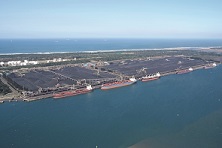
The Port of Richards Bay was established in 1976 and – despite being one of the “newcomers” to the industry – has expanded to include a variety of exports, earning it a reputation as one of the most successful of its kind within South Africa’s shores.

Chief Executive of Transnet National Ports Authority, Richard Vallihu, said landmark year for the port served as an indicator of the economic growth opportunities available.

“When you consider that this area was once seen as one lacking in potential as a harbour, the rise of the port and the town as a whole becomes that much more remarkable. The success of the Port of Richards Bay over these past 40 years demonstrates the capabilities of the country and our ports in providing a system of growth that is beneficial to the surrounding communities, promoting careers and business opportunities in the maritime industry,” Vallihu said.

The Port of Richards Bay was created for the purpose of transporting locally-mined coal to international shores.
Today it routinely handles a diverse mix of commodities inclusive of magnetite, chrome ore, alumina, coking coal and ferro alloys – all this in addition to the port’s main line of export, coal.

Its existence has led to the creation of other industries within Richards Bay, providing thousands of direct and indirect job opportunities for the people of the city and in turn, transforming the small fishing village into an industrial hub, while supporting big businesses such as Richards Bay Coal Terminal, BHP Billiton, Richards Bay Minerals and Foskor.

Richards Bay further cemented its role as one of the country’s leading ports during the 2010-2011 period, when it increased its revenue generation, breaking the R1 billion turnover mark for the first time in the port’s history. During the 2015/2016 financial year the port handled 99.229 million tons of bulk and break bulk cargo.

In addition to this, the port’s 23 berths, specialised cargo handling facilities, fast vessel turnaround, deep-water infrastructure, excellent rail links to the hinterland and its large greenfield development potential, has made the Port of Richards Bay one of the world’s leading bulk ports.

Preston Khomo, Richards Bay Port Manager, said the achievements of the port showcased the key aspect of working together to build the standing of an entire public.

“The continued success of the Port of Richards Bay will be dependent upon partnerships with business and the community, and we see this landmark anniversary as a means through which these relationships can be strengthened.”

Future planning at the port is in line with the South African government’s National Growth plan, and in particular the Operation Phakisa initiative where the main objectives are economic development, job creation and skills development.

As part of the Port’s 40th Anniversary celebrations, TNPA has planned a host of events to mark the occasion. The festivities kicked off on 1st April, when TNPA honoured the real heroes of the port’s achievements – the employees.

There will also be community inclusive events, as well as exclusive celebratory occasions for dignitaries and principles of industries.

Terex Port Solutions buys CVS Ferrari terminal tractor product line from Manitex

0

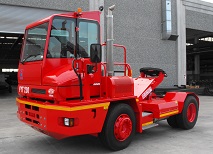
The acquisition strengthens TPS’ position as a leader in integrated solutions for ports and terminals. The existing range of terminal tractor models will be further developed and marketed under the Terex brand. The machines will be manufactured at the Terex site in Lentigione, Italy, which currently manufactures Terex empty and full container handlers in addition to heavy-load forklift trucks. CVS will fulfill current supply contracts with its existing customers. At the same time, TPS is taking all necessary measures to quickly integrate the new products in its sales, R&D, production and service activities.

The addition of terminal tractors further develops TPS’ position as a provider of integrated systems for port technology, augmenting what is already the most comprehensive product range in the market and closing the last big gap in its product portfolio. Steve Filipov, President Terex Material Handling & Port Solutions: “Adding terminal tractors enables us to enter this mature market and offer an even greater range of handling equipment solutions – simplifying business for our customers by trimming the number of manufacturers they deal with to get the equipment they need. By acquiring this product line from another premium manufacturer, it also avoids adding unnecessary new capacity to the global manufacture of these machines.” Approximately two thirds of the larger terminals worldwide currently organize their container handling with rubber-tyred gantry cranes (RTG) together with terminal tractors. According to Filipov, “With such a large market, it is logical that we want to offer these products. RTG cranes have long been a central component of our portfolio, and these robust terminal tractors are perfect companions.”

TPS will include the diesel-mechanical terminal tractors FYT 230 (4×2; 4 wheels, 2-wheel drive) for container transport from quay to container stackyard, and the FR 270 (4×4; 4-wheel drive) for RoRo operations, in its global offering. This will extend the markets served beyond the approach of CVS, which focused primarily on Europe and parts of Africa. “Moreover,” according to Klaus Peter Hoffmann, Vice President & Managing Director Terex Port Solutions, “TPS plans to further develop the machines in a customer-driven manner, open up applications and offer demand-appropriate options and variants. TPS will also quickly equip the machines with engines that comply with the EPA Tier 4f (EU Stage IV) emissions standard, in order to be better equipped for the business in Europe and North America.”

TPS offers its customers a wide range of vehicles for horizontal container transport. Besides several Terex Gottwald AGV models, TPS offers Terex straddle carriers and Terex sprinter carriers, and now terminal tractors. Hoffmann adds, “With our recently extended portfolio, we are even better equipped to manage all terminal infrastructures and processes in a professional and integrated manner. With the addition of terminal tractors, we now have in our range a vehicle more geared to environments characterized by RoRo.”