Monday, December 8, 2025
spot_img
Home Blog Page 320

Van Oord's new cutter suction dredger christened

0

Rotterdam, 8 April 2016 – In the presence of guests and employees, Ms Lydia van de Kerk, the wife of CFO Arjan van de Kerk, named Van Oord’s latest cutter suction dredger Biesbosch on 7 April 2016. The ceremony was held on the jetty at Van Oord’s Rotterdam office. The cutter suction dredger Biesbosch was built by Royal IHC at its yard in Sliedrecht, the Netherlands.

The vessel forms part of Van Oord’s strategy to modernise its fleet of cutter suction dredgers according to Van Oord safety and environmental standards. As of mid-April, Biesbosch will be deployed for dredging works at the Zeetoegang IJmond project, the construction of the new sea lock at IJmuiden, which is part of the locks programme of the Dutch Department of Public Works.

The first trains arrive at JAXPORT's new rail terminal

0

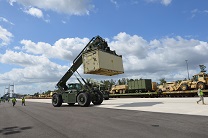
Prior to the start of the ICTF’s commercial operations, JAXPORT is partnering with numerous U.S. Army units, including the JAXPORT-based 832nd Transportation Battalion, for exercises aimed at expediting the movement of ocean-going military cargo, rehearsing the capabilities of personnel as well as the new terminal.

During the exercise, uniformed Army personnel are moving nearly 800 pieces of cargo–including vehicles, containers and equipment–from this state-of-the-art facility onto a nearby military ship. The ICTF allows cargo to move directly between ships and trains, speeding up the shipment process, extending the port’s intermodal reach well beyond Jacksonville and increasing the region’s global trade competitiveness.

Construction of the $30 million ICTF was funded through state and federal grants. The facility is served by CSX rail lines.

JAXPORT is one of 17 U.S. Strategic Seaports on-call to move military cargo for national defense, foreign humanitarian assistance and disaster relief.

Strainstall launches a lightweight, fully transportable container weighing solution for the freight industry

0

CWS Portable is a stand alone, lightweight and cost-effective system designed specifically for container packers and shippers without access to container handling equipment.

With the SOLAS regulations for container weight verification coming into force 1 July 2016, it will be a legal requirement for every export container to have a verified container weight as a condition for loading aboard a vessel. Failure to do so will be disruptive and costly to operations, with the potential of non-compliant containers being turned away from terminals, causing disruption to both shipper and carrier.

Available ex stock for immediate shipment globally, CWS Portable has been designed to enable shippers, who are ultimately responsible for the provision of the verified gross mass (VGM) of a container, to comply with these legal requirements in places where ports and terminals are not looking to provide a weighing service. The system automatically logs accurate VGM data, along with its centre of gravity (COG), providing compliance with road transport regulations as well as providing a SOLAS compliant VGM.

This lightweight system is within manual handling lifting guidelines making it quick and easy to use, and is a cost effective means of determining the VGM of a packed container. CWS Portable requires no other lifting equipment and delivers a VGM accuracy of better than 1% of applied load up to 60 tonnes.

Strainstall’s CWS Portable is used via a specially designed smart phone app that records VGM and COG data electronically, generating automatic reports for easy and instant sharing and printing, as part of the documentation provided by the shipper that must be signed to confirm its compliance with SOLAS requirements.

Simon Everett, managing director of Strainstall, said “In many countries around the world ports and terminals are preparing to offer a container weighing service to help shippers comply with the SOLAS requirements. Whilst this is the most cost effective place to obtain a VGM some ports are choosing not to offer a service. We therefore identified a need to develop a simple, quick and cost effective solution for shippers to be able to comply with this legal requirement where the option to weigh at the port isn’t available.

“Strainstall supplies a comprehensive range of spreader based container weighing systems primarily focused at enabling the ports and terminals to offer a weighing service. Using this extensive experience we have been able to produce CWS portable, so by selecting Strainstall our customers are secure in the knowledge that they are using a brand trusted throughout the industry for accuracy, robustness, service and value,” adds Everett.


Kalmar CargoHack brings new ideas and innovations to the port and terminal industry

0

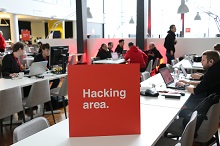
“CargoHack was a great success in many aspects. We received more than 100 applications and had to widen the event scope already at an early stage. We selected 16 teams to join in and gave them challenges covering areas like visualisation of terminal operations, use of mobile technologies, safety, and improving efficiency of the wider value chain around cargo handling,” says Tommi Pettersson, Vice President, Automation at Kalmar.

The participants had access to the latest technology and equipment in the port industry, including world’s largest automation test field with unmanned machines and drones, Kalmar’s Virtual Lab, Application Program Interfaces (APIs), sensors and big data from terminal environment. In addition, experts from Kalmar and Tieto Corporation served as mentors for the teams during the entire event.

“Improving performance by utilising technology that is already available and safety turned out to be the most common themes in the final pitches. Many proposals looked for new ways to use drones, sensors, robots, smart glasses or other innovative tools and devices in improving terminal efficiency and safety or in creating new intelligent services for terminal operators. Some of the teams came up with new conceptual thinking to improve sharing of data and knowledge among the entire value chain of terminal operations. We even heard ideas on how to intelligently combine manual and automated operations,” Tommi continues.

Customer value and business model were key criteria in choosing the winner of CargoHack. The winning concept was presented by the team Pointscene. Their unique idea of using visualisation in a terminal environment can be implemented in multiple ways.

“Overall, the hackathon proved to be a great tool and method for bringing out and demonstrating new ideas and out-of-the-box thinking. We will move forward with some of the ideas and integrate them into our product and technology roadmaps,” Tommi concludes.