
These figures are attributable to the successful execution of several major projects, including construction of the Second Suez Canal, completion of Luchterduinen offshore wind park, and fast-tracked execution of Gemini wind park. The order portfolio totalled EUR 2.349 billion at year-end 2015 (2014: EUR 3.222 billion), down 27% on 2014. High level of activity but more difficult market conditions 2015 was a year of major projects that made a significant contribution to our revenue and profit growth. Although Van Oord closed 2015 on a high note, it was also a year of sharp contrasts. Some worrisome economic trends have emerged, but also opportunities. With the low oil price causing capital expenditure to decrease in the oil and gas sector, our oil and gas activities have faced challenging circumstances. Our Oil & Gas and Wind business units had fewer new projects than we had originally expected. The market for dredging projects was also negatively affected by the low oil price. As a result, our order portfolio fell by approximately one billion euros compared with 2014 to EUR 2.349 billion. On the other hand, the problems arising from climate change are creating opportunities for our Offshore Wind Projects business unit. Dredging In 2015, Van Oord executed a variety of major dredging projects. One of the most important was the Second Suez Canal. Pieter van Oord, CEO: ‘Van Oord was part of a four-party consortium that successfully constructed this new 35-kilometre bypass within an extremely tight deadline of ten months. More than 25 vessels dredged well over 200 million cubic metres of sand in record time. On some days, we produced more than one million cubic metres.’ Major works still in execution are the Prorva project in Kazakhstan and the land reclamation project for the KNPC refinery in Kuwait. Fleet capacity utilisation was good in 2015. At 37 weeks, capacity utilisation of our trailing suction hopper dredgers exceeded 2014 by an average of four weeks. Compared with 35 weeks in 2014, our cutter suction dredgers were active 39 weeks – a new record.
Thames set for a bright future says PLA Chairman
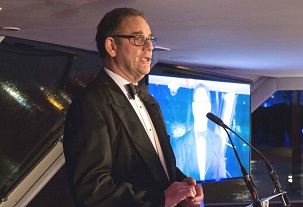
Addressing over 250 Thames stakeholders onboard the passenger boat, Silver Sturgeon, including shipping minister Robert Goodwill MP, PLA chairman Rodrigues marked a strong year of growing river use, with port trade exceeding 45 million tonnes and over 10 million passenger trips on the Thames. He said activity on the river is expected to grow strongly over the next 20 years, with the Thames Vision project identifying six goals for growth:
• the biggest ever Port of London;
• 20 million passengers on the river;
• more freight moved on the Thames;
• greater participation in sport; combined with
• an improved environment; and
• more people enjoying the river than ever before.
“The Vision is a perfect device for gathering together all river users – large and small – behind a program that ensures the development of a vibrant, safe, commercially successful river not just in the next year or two, but for 20 years ahead,” Rodrigues said. “Perhaps as importantly, the launch of the Vision is starting to change what people say about the Thames. It is the beating heart of our city and a great future beckons for all its future stakeholders.
“The Vision represents a major project for the PLA, but it cannot be delivered by the PLA alone. If ever there was a “we” project, this is it. There is unanimous support for pushing ahead and for the PLA to play a leading role in driving the vision forward. We are grasping the baton you have given us and asserted that we are the Custodians of the Tidal Thames.
“There’s still a lot of work to do. We’ll start with the low hanging fruit this year and work with interested parties to develop implementation plans for the strategic projects and to confront the trade offs those projects will require. It is an exciting time for the Thames and no better time to work on the river.”
Well-trained, skilled people are vital to making the most of the new opportunities highlighted in the Thames Vision. The recently created Thames Skills Academy (TSA), a new initiative by the PLA, Transport for London, Tideway (who are building the Thames Tideway Tunnel) and the Company of Watermen & Lightermen, will be established as a Group Training Association – a learning and skills partnership where employers subscribe to sector-specific off-the-job training in order to provide efficient, expertly-delivered skills that meet the River’s needs.
Christopher Rodrigues said:
“The generous support of Tideway has been the catalyst enabling the organisation to be set-up. For young people coming to the river at the start of their working lives, and indeed for experienced workers as they up-skill, the TSA will be a critical resource. It will make sure river workers are equipped to contribute directly and indirectly to the Tideway project, the biggest single development project on the Thames in over a century.
“Beyond that, in five or six years’ time, when Tideway has finished its work and the Thames is much cleaner, there will be a pool of skilled labour ready to move on to the next major project making use of the Thames.”
The TSA will build on the work done by the Thames Training Alliance (TTA), whose latest group of apprentices will formally complete their training in the coming weeks. The TTA is ceasing operations on completion of this group’s training.
The latest consultation on the Thames Vision closed in mid-February and drew over 120 responses. The responses will be published on the PLA website next week and the outline plan for delivery of the Vision will be published in the next couple of months.
Broekman Breakbulk Terminal loads gas turbines for Qatar
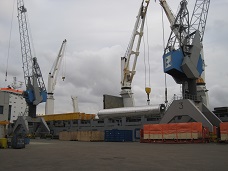
The shipment is intended for the project development company Umm al Houl in Mesaieed, Qatar.
Gas turbines and generators
The cargo includes four enormous gas turbines and generators, for a total of 1,400 metric tonnes. The items will be delivered by barges and loaded directly onto the ship. Jos Masselink, General Manager Broekman Project Services, emphasises: “We are pleased with the arrival of the ship, since handling heavy cargo is our expertise. And of course, we are looking forward to more of these assignments in the future.”
Project Developer Umm Al Houl
The final customer for the cargo is the project development firm Umm al Houl, a consortium of the Qatar Foundation (QF), Qatar Petroleum (QP), Qatar Water and Electricity Company (QWEC), Mitsubishi Corporation (MC) and Tokyo Electric Power Company (Tepco). With a total electric generating capacity of 2.5 gigawatts, and capacity to produce up to 618 million litres of drinking water per day, the plant will provide almost one quarter of the country’s installed generating capacity. This will be enough capacity and water production to alleviate seasonal peak demand and major events. The first phase is projected to become operational in 2017, and the entire complex will be complete in mid-2018.
Tonnage makes 2015 best in Port of Vancouver USA history
The port reported a record USD38.2 million in operating revenue in 2015, up from the previous record of USD37.5 million in 2014. Tonnage – total import and export cargo – was at 6.95 million metric tons, a nearly 5.5% increase from 2014.
As expected, operating expenses also grew in 2015 to accommodate new staff and investments in infrastructure and facilities such as Centennial Industrial Park and Terminal 1, the port’s waterfront project.
“Our docks are busy, our industrial facilities are full and we’re making great strides on critical projects like Centennial Industrial Park and the waterfront redevelopment,” said port CEO Todd Coleman. “We’ve added some great folks to our world-class staff to make sure we’re growing thoughtfully and planning for the future.”
Exports: More gains for grains
Overall exports moving through the Port of Vancouver were up 3.8% in 2015. Grain – wheat, corn and soybeans – continues to be the port’s largest export by volume. Grain overall increased by 6.4% to 4.56 million metric tons in 2015. While wheat exports saw a slight decrease due to fluctuations in currency and the global economy, corn exports increased by 19.5% and soybean exports grew by an impressive 58.6%.
United Grain Corp. moves the majority of grain at the Port of Vancouver. For years the company has partnered with the port to invest in facilities that take advantage of increased rail capacity from the port’s West Vancouver Freight Access project, supporting our region’s ability to answer demand from the competitive and growing global grain market.
Imports: Steel, project cargo and Subarus
Overall imports increased by 12% in 2015. Much of the increase was fueled by gains in steel and project cargo, which require the Port of Vancouver’s unique equipment capabilities and laydown space.
Steel slabs, a new commodity for the port in 2014, took total steel import tonnage to 770,627 metric tons – an increase of 30.5% from 2014 to 2015. Project cargo, such as massive transformers handled at the port for a Bonneville Power Administration energy project, saw a 103% increase.
It was also a great year for the Port of Vancouver’s partnership with Subaru of America Inc. The Japanese automaker signed a lease extension in 2015, extending its partnership with the port until at least 2030. Subaru’s imports at the Port of Vancouver grew to 90,183 vehicles in 2015 – a 10% increase over 2014 and another record-breaking number for this longtime port tenant.
Steady revenue, continued investments in 2016
Things are looking good for the port in 2016. Because of a broad-based commodity portfolio, the port is able to keep goods moving despite fluctuations in the world market. The port is well-positioned to handle these fluctuations and take advantage of upticks in commodities such as wind energy, automobiles and grain.
The port will also continue redeveloping a 10-acre site it owns on the Columbia River. Known as Terminal 1, the site is the port’s birthplace and home to its first warehouse, built in the 1920s through a partnership with the City of Vancouver. When fully developed, Terminal 1 could feature a public marketplace, new hotel, retail and commercial office space, and visitor amenities.