
“Last February’s volumes were affected by several snowstorms, but it is important to note that the strength of our increase was far greater than the impact of last year’s weather,” said John F. Reinhart, CEO and executive director of the Virginia Port Authority.
In February, the port saw increases in rail volume, up 51 percent; truck volume, up 12 percent; and ship calls, up 10 percent. The new rubber-tire gantry cranes that were delivered in early January were placed into service in February and helped to build throughput at the rail operations at VIG and Norfolk International Terminals.
Richmond Marine Terminal’s (RMT) volume was up 42 percent and Virginia Inland Port (VIP) was up 96 percent. Reinhart stated, “Richmond and VIP are showing growth and demonstrating their overall importance to our capacity to efficiently handle cargo outside of our primary facilities and meet the needs of our customers.”
Reinhart added that there are still opportunities for improvement, saying, “While we handled a significant amount of volume, we did experience some deterioration of service levels at Virginia International Gateway (VIG) that created a challenge for our motor carriers: corrective measures are being taken and implemented.”
On a fiscal-year basis the port’s TEU volume is up 5 percent; rail volume, up 11 percent; truck volume, up 2 percent; and ship calls, up 2 percent.
February TEU Volumes hit 220,000 mark at Port of Virginia
The Port of Barcelona brings in a procedure for communicating container weight
Safety at sea and on land
The obligation to declare container weight before shipment is designed to improve the safety of seafarers and of everyone involved in the logistics chain. Errors in declaring the weight of containers lead them to be positioned incorrectly in the ship’s hold and have caused major accidents at sea in recent years, making ships list and causing cargo to be lost, while also endangering the lives of many sailors.
Similarly, an incorrectly weighed container can cause safety problems in loading and unloading operations and in land transport, as truckers worldwide have repeatedly condemned.
Now it is mandatory for every container to carry a document certifying its gross weight, which is the sum of the weight of the container and its cargo. There are now two options available – weighing the cargo then adding the weight of the empty container, or weighing the loaded container once it has been closed and is ready to be shipped.
The shipper will be responsible for weighing
The shipper will be responsible for communicating the certified gross weight of the container to the consignee to allow time to communicate with the terminal before the ship’s stowage plan and cargo planning are performed.
Every day the Port of Barcelona receives about 1,700 full containers – 2,500 on the busiest days – intended for export, and from 1 July they will have to include a document attesting to their confirmed gross weight. To help exporters and operators to adapt to the new situation, the Port has established the documentary information procedure for the verified gross weight between the parties involved: the shipper, consignee and terminal.
The documentary procedure will be made by an EDIFACT VERMAS (Verified Gross Mass) electronic communication for each container, which will include information such as the name of the person responsible for the weighing, the method used and the date weighed. This procedure will take place whether the container has been weighed directly by the shipper, commissioned to a weighing station or the weight has been checked at the terminal. Both the map and the communication flows have been designed to enable all these procedures to take place as early as possible before the container arrives in the terminal, while ensuring that everyone involved has the required documents and the relevant confirmations.
Port of Barcelona Telematics Forum
The procedure for communicating verified container weights at the Port is the result of work performed by the Telematics Forum, a Barcelona Port Community working group set up in 1994 to improve port processes with initiatives such as implementing the rollout of electronic data interchange (EDI) to all documentary procedures of companies and organisations.
SOLAS designates the States as the parties responsible for the wording and application of regulations for weighing containers in their territories. TCB and BEST, the two international container terminals in the Port of Barcelona, along with other companies of Barcelona Port Community involved in international trade, are hoping to incorporate these new specifications into Spanish port legislation to set up the mechanisms and infrastructure necessary for their implementation.
Port of Long Beach delivers highest volume February in 105-year history
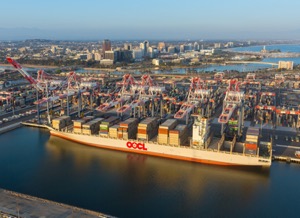
For February, imports were up 44.7 percent to 295,870 TEUs. Exports increased 11.1 percent to 123,010 TEUs, while empty containers rose 45.5 percent to 142,532 TEUs. Empty containers are shipped back overseas to be refilled with goods for import. More than 1 million TEUs have moved through the Port of Long Beach in the first two months of 2016. (TEUs are the standard industry measure for container cargo.)
“In February, we showed the world we can handle today’s megaships by inaugurating the 18,000-TEU CMA CGM Benjamin Franklin,” said CEO Jon Slangerup. “The future of big ships is here and our customers are choosing Long Beach because we offer the fastest, most efficient way to get cargo from Asia to the rest of the United States.”
The gains in February are also explained by several other factors. The strength of the U.S. dollar continues to drive demand for imports, but at the same time slows exports by making them relatively expensive overseas. The Lunar New Year holiday began Feb. 8, closing many Chinese businesses for a week or more, so U.S. importers ordered extra products ahead of the lull that will come to the Port in early March.
With an ongoing $4 billion program to modernize its facilities this decade, the Port of Long Beach is building the Port of the Future by investing in capital and service improvements that will bring long-term, environmentally sustainable growth, and maintain its competitive advantage as the fastest route from Asia to anywhere in North America.
Andrew Ward appointed Vice President of Sales APAC at Transas

Chief Executive of Transas, Frank Coles explained, “As we move forwards with our vision and the next stage of growth, we are excited to have someone of Andrew’s caliber join us. Moving Johan Gustavsson into Customer Support will also add strength and allow us to continue to provide world class support.”
Andrew Ward brings nearly two decades of sales experience in the commercial and defence markets, and in the oil and gas sector.
Andrew has a BA (Hons) In Business Administration and Marketing and began his career with Litton Marine Systems (now Northrop Grumman Sperry Marine). During 2007 – 2009 Andrew worked at the Imtech Marine UK supporting both their commercial business but also development of their naval business, most noticeably the CVF (Carrier Vessel Future) and the RFA (Royal Fleet Auxiliary) Landing Craft Ships.