

Monday, December 8, 2025
spot_img
Home Blog Page 364

Samskip extends shortsea services in Norway

0

The multimodal solution provider describes the move as its latest strategic step to intensify Samskip’s presence in the Nordic region and enhance efficiency. It follows on from the introduction of the larger capacity 657 TEU container vessel MV ALK into
Norwegian West Coast shortsea services in mid-2015.

Local coverage
Centrally located in the county of More and Romsdal, between oil & gas- and salmon-rich Kristiansund and Molde, the port of Gjemnes is well placed to cater for industry and consumers in the region. The port is also a flexible trans-shipment hub, handling significant numbers of coastal breakbulk and container vessel calls.

“Narrow roads and limited infrastructure make trucking to and from the major Norwegian city of Ã…lesund, expensive, unsafe and environmentally unfriendly,” says Are Grathen, General Manager Norway. “With a fixed weekly Tuesday departure ex Rotterdam to the port of Gjemnes and a Saturday arrival and departure from Gjemnes, Samskip offers a reliable alternative for the region. Moreover, from Gjemnes it is the shortest available lead time (50 hours).

Direct link
The shortsea service connects the Gjemnes area directly into the Samskip European multimodal network as well as to major deepsea terminals for shipments worldwide. The service is open to all types of intermodal loading units such as 45ft containers, reefers, tank containers and bulk containers.
Konecranes will deliver four more RTGs to Spanish TCV Stevedoring

0

When the four RTGs on order go into operation, TCV will operate a fleet of 24 Konecranes RTGs. The cranes will be delivered in the first quarter of 2017.

“Our cooperation with TCV Stevedoring Company spans over a decade, and it keeps getting stronger. The first Konecranes RTGs were ordered and delivered in 2004,” says Kim Salvén, Sales Director Europe, Konecranes, Port Cranes. “TCV’s trust in us is based on the excellent performance of our equipment and the high quality of our service. Trust must be earned, and we’ll keep earning TCV’s trust.”

The 16-wheel RTGs will be equipped with Konecranes’Active Load Control, Diesel Fuel Saver system, Auto-steering and Crane  Management System, ensuring safe and uninterrupted use of the cranes. They will have a lifting capacity of 50 tons to operate in twin-lift operation, and will stack one-over-five containers high, and six plus truck lane wide.

Georgia Ports Authority orders more STS cranes from Konecranes

0

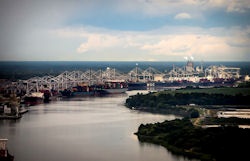
The Konecranes STS cranes currently on order have a lifting capacity of 66 tons, an outreach of 61 meters, and a lifting height of 46 meters above the dock. “Even before the new cranes arrive, Savannah has more cranes on its nearly two-mile long dock than any other single terminal in North America,” said GPA Executive Director Curtis Foltz.

In 2015 the Port of Savannah moved an all-time high 3.73 million TEU (twenty-foot equivalent container units), an increase of 391,356 TEUs, or 11.7 percent, compared to 2014.

“The expansion was fuelled in part by heightened demand in the US Southeast, Savannah’s logistical advantages drawing new customers to Georgia, and cargo diverted from the West Coast,” said Mr. Foltz.

The Port of Savannah currently operates 116 Konecranes RTG cranes with additional 30 RTGs in the delivery pipeline. It also currently operates 22 Konecranes STS cranes with 4 in the delivery pipeline for 2016, and 4 more in 2018 for a total of 30.

The STS crane engineering is carried out in Finland, and the key components are from Europe. The heavy structures are manufactured in China.

The crane purchases, along with the ongoing Savannah Harbor deepening, anticipate the opening this year of an expanded Panama Canal. This will provide an important new route for larger vessels calling on the US East Coast, which will shift from an average current capacity of 4,500 TEU to more than 10,000 TEU.

“Our relationship with the GPA goes back to 1990, when we delivered our first STS crane to Savannah,” said Tuomas Saastamoinen, Sales & Marketing Director, Konecranes, Port Cranes. “With each container crane delivery over the years, we have made improvements, fine-tuning our technology in cooperation with the GPA, to constantly improve efficiency and reliability. The STS cranes on order now are the latest products of this process,” concluded Mr Saastamoinen.

DYNAMAR Reefer Analysis: Market Structure, Conventional, Containers

0

Significant details and some interesting findings are included in the report.

Publication highlights:
– Fresh produce accounts for 2.7% of the world seaborne trade of dry cargoes of all kinds
– The size of the reefer container fleet has reached 2.6 million TEU in 2015
– Conventional reefer capacity is to decline by 41% to 120 million cft by 2025
– Seatrade is the largest conventional reefership operator: 57x 526,000 cft average ships
– Maersk Line has 103,000 installed container plugs on its South/North routes
– Annualised South/North reefer box capacity exceeds ditto conventional space 6.5 times
– 2015 closed with barely any scrapping … and with a 15 units strong confirmed orderbook

To order your copy of the report please contact:

Dynamar B.V.
Office: Noorderkade 1G
Postal: P.O. Box 440
1800 AK Alkmaar
The Netherlands

Phone +31 72 514 7400
Fax +31 72 515 1397
E-mail info@dynamar.com
Web www.dynamar.com

Contacts:
– Michele Camm, Managing Director
  MCamm@dynamar.com
– Dirk Visser, Senior Shipping Consultant; Managing Editor DynaLiners
  dirkvisser@dynamar.com