Monday, December 8, 2025
spot_img
Home Blog Page 368

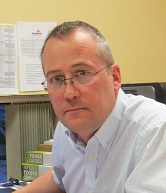
Telestack Announce New Managing Director

0

Martin will be responsible for setting and achieving Telestack’s goals and objectives and will report to the Group Vice President Aggregates & Mining, Jeff Elliott.

Joining Telestack from Terex, Martin has had various roles in his 10 year tenure. His last role saw him serve as Vice President, China Operations and Business Initiatives for Terex and was based in Xiamen in China. Prior to this, he served in various positions of increasing responsibility within Terex, including Terex Environmental Equipment, Terex Materials Processing, Terex Cranes and Terex Port Solutions, all with an emphasis on Operations.

Commenting on the new appointment, Jeff Elliot said: “Martin brings valuable operational know-how to Telestack and will be an tremendous asset to the company. His knowledge of manufacturing and international experience will be invaluable as we look to define more innovative solutions for our clients and grow our presence globally.”

Dummigan commented: “I look forward to expanding Telestack’s business globally and building on the strong growth that it has experienced over the last number of years. The Telestack brand has an excellent reputation in the industry and I am confident of a positive and strong future for the company.”

Martin studied at Queens University in Belfast and received a Master (MSc) in Electrical and Electronic Engineering.

Konecranes wins RTG order for Veracruz, Mexico

0

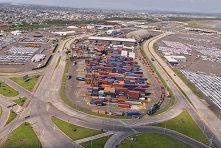
The Port of Veracruz, on Mexico’s south-east coast about 300 km from Mexico City, is Mexico’s oldest, largest and most historically important sea port. It serves all of central and southern Mexico through railways and roads with global sea connections. The port has very ambitious plans for expansion, with two new container terminals in the works and the Panama Canal expansion project due for completion early in 2016.

Grupo CICE, one of the most important port operators in Veracruz with its multipurpose terminal handling various vehicle types and materials including agricultural grain and minerals, has ordered two RTGs from Konecranes. Grupo CICE has been operating Konecranes lift trucks for a number of years. The cranes will be delivered at the end of 2016.

The Konecranes RTGs on order are 16-wheel machines with a lifting capacity of 40 LT, lifting 1-over-5 high and 7-plus-truck lane wide. They will be equipped with Konecranes’ Active Load Control system, which eliminates container sway to increase container handling performance. They will also be equipped with Konecranes Diesel Fuel Saver technology.

The cranes will also be equipped with the Konecranes Auto-steering feature, which keeps the crane on a pre-programmed, straight path during gantry travel, and the safety-enhancing feature Stack Collision Prevention. TRUCONNECT, a remote service that provides 24/7 access to a network of support centers, offering expertise to help solve problems and reduce downtime, will be part of the picture.

“The confidence that Grupo CICE has placed in Konecranes will be rewarded with first-rate container handling performance and reliability when the RTGs enter service. I look forward to delivering and commissioning the cranes, and working with Grupo CICE in the future,” said Alfredo Ramirez, Konecranes, Port Cranes, Latin America.

“Due to the experience we already have with Konecranes, GRUPO CICE has decided to rely on their equipment and is proud to announce the acquisition of two RTGs. They will arrive by the end of this year. With this order, we want to optimize the productivity of our operations and offer a better service to our customers, handling their cargo more efficiently, and attracting new customers,” said Grupo CICE. “Currently, our company handles approximately 4 million tons of goods annually. With the two new cranes, we intend to increase the volume of our operations in our facilities.”

Cavotec & Wärtsilä to develop world's first marine wireless charging and mooring concept

0

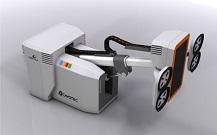
Cavotec provides automated mooring systems for various types of vessels, as well as shore power and reel systems. Wärtsilä has developed a wireless charging system based on inductive power transfer. By combining the strengths and expertise of the two companies, an integrated wireless charging/mooring concept will be developed for use in Wärtsilä’s ship designs.

Cavotec’s mooring system is a vacuum-based automated mooring technology that eliminates the need for conventional mooring lines. Remote controlled vacuum pads recessed in, or mounted on, the quayside, moor and release vessels in seconds. The technology dramatically improves safety and operational efficiency, and also enables ports to make infrastructure savings. It has performed more than 145,000 mooring operations at ferry, bulk handling, Ro-Ro, container and lock applications worldwide.

“Cavotec is well-known for it’s innovative approach to engineering and we are a leader in the field of automated mooring and Alternative Maritime Power supply systems. This is an exciting project and we are delighted to be partnering with Wärtsilä to make shipping cleaner, safer, and easier. The envisioned integrated wireless charging and mooring system will further the marine industry’s environmental profile,” says Ottonel Popesco, CEO of Cavotec Group.

Wireless charging provides an alternative to the cable connection between the vessel and shore, securing and facilitating safe connections and disconnections. It also reduces maintenance since wear and tear to physical connection lines is eliminated. Similarly, damage to electrical outlets caused by seawater, snow and ice is also avoided. The new project’s integrated system will be capable of transferring more than 1 MW of electrical energy. This is some 300 times more than that of current chargers used by
electric cars.

“During recent years, wireless charging has been introduced for cars, busses and trains. Wärtsilä has now made this possible also for marine vessels. This agreement with Cavotec will enable this technology to be delivered as an integrated charging and mooring system,” says Peter Rogers, Director Power Products, Wärtislä Marine Solutions.

The environmental challenge has been the starting point for Wärtsilä’s work in developing battery/hybrid technology for marine vessels. By making wireless charging of ship batteries possible, the electrification of coastal shipping is enhanced, resulting in major reductions in harmful exhaust emissions. Wärtsilä has already launched an innovative ferry concept featuring wireless induction battery charging.

Supporting customers to become more productive while reducing their environmental impact is a well established cornerstone of Cavotec’s operations. In 2015 Cavotec completed installation of the world’s first combined automated mooring and shore power system in Norway, servicing Norled’s fully battery powered ferries. Featuring integrated MoorMaster automated mooring and Alternative Maritime Power electrical supply systems the project demonstrates Cavotec’s capacity for innovation, underlining its ability to offer integrated systems that maximise efficiency and environmental performance.

Gippsland Ports orders Damen TSHD 650

0

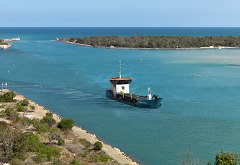
The client will use the dredger to maintain entry to the port of Lakes Entrance and the Gippsland Lakes system, in Victoria, which is used by recreational, fishing and supply vessels.

Currently, the client contracts a dredger annually to carry out the necessary dredging to maintain port access. However, after analysing the situation it became clear that there was a case for investing in their own vessel. Having their own dredger will, over time, reduce the maintenance costs and ensure year-round availability, for example in the event of weather related shoaling events.

Having decided to make the investment, Gippsland Ports put the project out to tender in 2014. Following evaluation of proposals in December 2015, Damen was awarded the construction contract. The vessel is currently under construction at Damen Yichang Shipyard in China and will be delivered in Q3 2017.

“We had close contact with Gippsland Ports in order to answer all their questions and explain our designs to them,” comments Damen Sales Manager Asia Pacific Vincent Maes. “We were able to make all the adaptations the client required to the standard TSHD 650 design.”

One of the key adaptations to the design involved increasing the installed propulsion power to cope with the strong currents characteristic of the harbour’s entrance.

Another feature takes into account the environmental sensitivity of the operating area. The client specified the installation of an anti-turbidity valve on the overflow. This reduces air bubbles and, therefore, visible plumage in the water.

Capable of dredging to depths of 15 metres, this dredger will be built with self-emptying capabilities, with bottom doors for dumping and either bow connection or rainbow extraction for beach reclamation work. In order to increase the vessel’s payload capacity when dredging sand with a high specific density, Damen will reduce the freeboard of the vessel and apply a dredge mark.

Taking advantage of the numerous available options, Gippsland Ports also selected an indication package to measure soil density. This allows the suction pipe to be angled precisely for efficient operations. The dredging process will be made even more efficient by the installation of the navigational dredging aid, NavGuard, indicating the area and quantity of substrate dredged.

This particular contract further illustrates the Damen Shipyard Group’s experience with building hopper dredgers. In 2015, deliveries included a 2,500m3 hopper dredger. In addition to this particular vessel, Damen is currently busy with the construction of five further TSHDs. These include two with a 2,000m3 capacity and three with a 1,000m3 capacity. A number of these projects are being executed in cooperation with local yards as part of the Damen Technical Cooperation (DTC). With DTC, Damen can provide assistance, such as engineering, materials, technical support and training, so that Damen vessels can be built in any yard around the world.

Accompanying client representatives on a visit to Damen Yichang Shipyard, Mr Maes took the opportunity to demonstrate the yard’s excellent production quality management systems, in keeping with Damen’s quality standards applied globally. “The client was particularly impressed with Damen’s team that supplemented the yard’s own comprehensive quality management processes.”

“Gippsland Ports is very pleased to have executed a contract with Damen to build this dredger,” states Gippsland Ports CEO Nick Murray. “This is a critical investment decision for Gippsland Ports and we had quite specific criteria we needed to satisfy. We selected Damen because the TSHD 650 together with other attributes of the Damen proposal best met our requirements. We are looking forward to delivery of our new TSHD in 2017.”