

Thursday, December 11, 2025
spot_img
Home Blog Page 37

2020: Sustainability to overtake Brexit as main focus for ports industry?

0

The British Ports Association has issued its annual New Year’s message picking out some expected highlights for UK port authorities and operators in 2020. Whilst the terms of the Brexit deal will no doubt continue to dominate, the BPA – the national association for ports, harbours and terminals – is keen to influence the new UK Government and policy makers around the UK in a range of important areas.


Brexit, Free Ports & Maritime 2050

The Association’s Chief Executive, Richard Ballantyne, said: “2020 could be a pivotal year for ports. The passed the EU Withdrawal Agreement will see the UK diverging from European customs rules meaning new border controls for freight operators. This will be a major challenge for parts of the UK logistics sector including those on the Irish Sea, so working with the Government to ensure additional costs and delays are kept to a minimum will be central to our discussions with officials. There will of course be potential opportunities to influence the expected deregulation drive which may include shaping any new infrastructure and fisheries funding, as well as State Aid rules and port service regulations. We also expect the Government to press ahead with a Free Ports policy so encouraging an inclusive port zoning strategy, looking at how ports of all type and location will feature in national and regional growth strategies will be central. Separately working with the UK Government and devolved administrations, as well as implementing some of the previously considered strategies such as Maritime 2050 in England and others in the rest of the UK, will be key themes for the BPA this year.”


Sustainability, Planning, and the Energy Transition

The BPA’s team outlined some specific points. The BPA’s Head of Policy and External Affairs, Mark Simmonds, who leads on the Association’s sustainability agenda, said: “For many, 2020 is the year of the sulphur cap but the focus on air emissions from ports and shipping more widely will continue to grow. Whilst Brexit has dominated the headlines for years, sustainability has been the issue that affects all ports and it will be near the top of the political agenda for the next decade – whether it’s emissions, planning rules or marine litter. This presents huge challenges for ports and sustainability and the environment will be a particular focus for the BPA this year. More generally, the energy transition will continue to change the way ports operate as some cargoes decline or fall away completely whilst new ones appear and offshore renewables becomes ever more important to the sector. Finally, a ‘new’ UK Government, Brexit and any potential economic fallout may mean that the industry’s ideas for improving the planning and consenting regimes for ports start to be heard with more interest in Westminster, Holyrood, Cardiff Bay and Stormont.”


Infrastructure and Connectivity

In terms of wider transport and economic policies, Phoebe Warneford-Thomson, Policy and Economic Analyst, at the BPA highlighted the important economic role that ports play in providing jobs and industry in often deprived UK regions. Highlighting how Government and local authorities can support port growth she said: “2020 is a year of real opportunity for ports. However national, regional and local planners will need to prioritise port transport and infrastructure needs in order for the sector to realise new projects and developments. While UK cargo figures did slow somewhat last year, other types of port business are thriving. Notably, ports remain a fundamental component of UK tourism as the popularity of marine leisure continues to grow. UK cruise passenger numbers also increased by 15% to 2.2 million last year, in continuation of the significant upward trend in recent years and we expect to see continue in 2020 along with other trends such as in relation to growing and supplying offshore renewables and wind energy developments.  In addition, the BPA will also be heavily focusing on transport connectivity for ports this year as we host the first Port Connectivity Summit in March, to focus attention on the investment needed to better integrate ports into the wider transport infrastructure and we will also be renewing calls for a new UK Freight Strategy to help UK ports be more agile and competitive.”
Port of NYNJ welcomes world’s largest ships

0

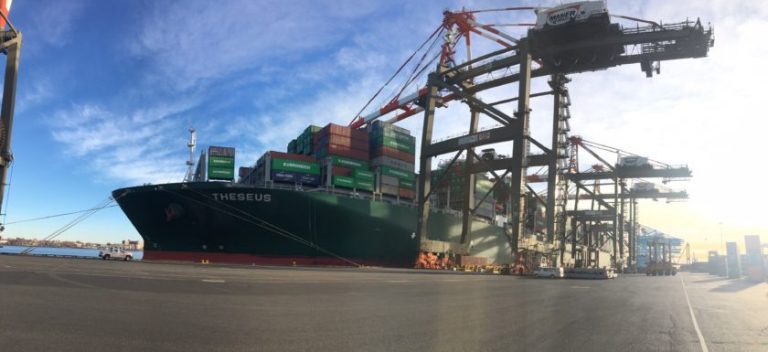
Port department staff were on hand to welcome Captain Tsipouras Dimitrios and his crew, presenting the captain with a plaque to celebrate the ship’s inaugural visit. Theseus joins the Triton, which made its first visit to the port earlier this year, as one of the largest vessels to enter the Port of New York and New Jersey. Both ships are chartered by Evergreen and are deployed on the operator’s Far East to U.S. East Coast service as part of the OCEAN Alliance network, which connects Asia and U.S. East Coast ports by means of the Panama Canal. Cargo volume has steadily increased over the past year as larger vessels call on the port, and Maher Terminals, located at Port Elizabeth, is capable of handling multiple ultra-large container ships simultaneously. One advantage of ultra-large container ships, which range from 14,000 to 21,000 TEUs, is the ability for them to carry more containers with a fewer number of vessels, which helps reduce the environmental impact.

Van Aalst officially listed on NPEX stock exchange and prepared for the future

0

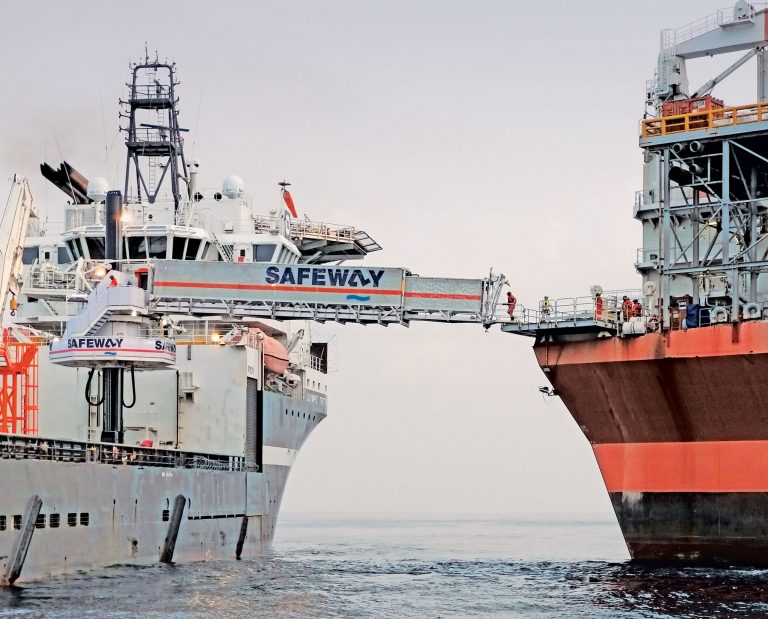
“The listing of our company and the first bond offering is another step in acquiring funds for our projected ambitious growth plans in the next years,” says Cees Zuur, CFO of Van Aalst Group. “As Van Aalst Group continues to grow, we require more capital from various sources and this bond issue is part of the ideal mix of funding of our company making us ready for the future.” The funds raised will mainly be used to support Van Aalst Group growth plans including the expansion of our present fleet of the highly reliable Safeway gangways. This unique motion compensated offshore access system offers the ability to safely and efficiently transfer key personnel and cargo to carry out essential offshore installation, maintenance or decommissioning activities. In particular in the renewables sector, Walk to Work (W2W) operations become increasingly vital, while at the same time the growth of offshore wind activities have led to a huge geographical spread. Europe, the Far East, America. So much is happening everywhere, right now. This growing internationalisation calls for a financially strong Van Aalst Group and I am excited to say that we are now prepared to be part of all global innovative projects of the future,” says Wijnand van Aalst, Van Aalst Group CEO.

The Montreal Port Authority is using artificial intelligence to improve the flow of port trucking and reduce GHG emissions

0

The MPA teamed up with Element AI, a global supplier of artificial intelligence (AI) products, to develop, test and deploy this enhanced technological solution, which consists of a predictive model added to the Trucking PORTal app. The new predictive dashboard shows average processing times at the various terminals for each 30-minute period over the next 24 hours. Quick Views are also available for the next three hours. This data is in addition to the real-time wait times on the terminals, information that has been available on the app since its launch in 2016. Predictive data is made available by reading access cards using mainly RFID (Radio Frequency Identification) technology. These measures taken at four strategic locations on port territory make it possible to collect data indicating current transaction times. The use and analysis of the results through AI algorithms then make it possible to model the predictive data. The resulting data then helps truck drivers better plan their trips to the port. This new solution will have a positive impact on the drivers, dispatchers, trucking companies and container terminal operators. The neighbouring community will also benefit from the reduction in GHG emissions due to better traffic flow on port territory. The use of this data by truck drivers will improve fluidity and reduce the number of traffic jams at the entrance to and on port territory, which will also ease traffic on Notre-Dame Street. “At the Port of Montreal, we put innovation at the heart of our strategies to ensure a smoother flow of goods and maintain our competitiveness. The new predictive model of the Trucking PORTal app lets us help our port partners improve operational efficiency and, at the same time, lighten our ecological footprint for a more and more sustainable port,” said Sylvie Vachon, President and CEO of the MPA. “As one of the first Element AI solutions deployed, our project with the Port of Montreal presented a unique challenge that meets a considerable need in the city that houses our headquarters. We are pleased to have helped solve it using artificial intelligence and machine learning,” said Anand Medepalli, Head of Products at Element AI.