
Monday, December 8, 2025
spot_img
Home Blog Page 391

BMT to Assist Nicaragua Canal Developers

0

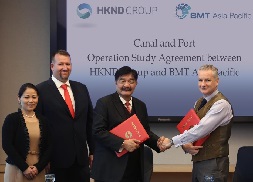
BMT will assist the development and validation of the Canal’s design and operations through a structured framework.

“Our Study will seek to articulate a solution that minimises canal excavation while ensuring adequate canal capacity and safety,” comments Dr Richard D Colwill, Managing Director at BMT Asia Pacific. “A crucial part of that solution involves sophisticated navigation and transport simulation, which will set the basis for identifying a design that balances excavation CAPEX with operational safety, efficiency and capacity.”

Navigation simulators recreate typical scenarios that a ship master would experience and BMT’s proprietary simulator, REMBRANDT, is widely recognised by the shipping sector for its accurate and detailed recreations of the navigation environment. Its What You See Is What You Get (WYSIWYG) output provides a powerful platform that assists engineers and mariners to investigate different design geometries.

“Through REMBRANDT BMT will provide early and decisive insight on potential marine constraints, enabling us to identify appropriate mitigation and optimisation measures – be it physical or operational in nature,” Captain Paul Morter of BMT ARGOSS explains.

In addition to carrying out operational assessments, BMT will also update the business case for the Canal’s Pacific and Caribbean ocean ports. Central America is one of the most important corridors of global shipping and BMT, with extensive experience in Port Masterplanning and Port Strategy, will support HKND in identifying the port’s potential competitive positioning along this key artery of global trade.

K W Pang, Executive Director at HKND adds: “The Nicaragua Canal system will see a large variety of vessels and wide range of vessel movements along the canal, within the inland ports, and between canal, port and ocean approaches. These activities occur with differing metocean conditions, transit speeds/directions, and transit modes, etc.

Recognising this complexity, we are seeking to access BMT’s global network of subject matter experts to assemble a highly capable, technical team to address the Canal’s marine safety and traffic challenges from all angles.”
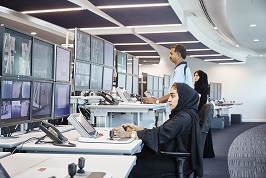
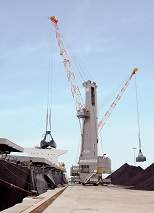
ABB to automate more DP World terminals

0

The first phase of the new Terminal 4 will add capacity worth 3.1 million TEU by 2018 in Jebel Ali. This capacity will be achieved with 13 ship to shore (STS) cranes and 35 automatic stacking cranes (ASC), all equipped with automation and remote control solutions from ABB.

The operation concept of Terminal 4 will be similar to that in Terminal 3, which commenced operations last year with its 50 Automated Rail Mounted Gantries ARMGs. However, with Terminal 4, DP World will take another step in remote operation: All STS and stacking cranes of this terminal will be operated from a control room located away from the quay of the terminal.

“DP World’s new concept of placing the controlroom within the port area but outside the terminal with increased distance  between the cranes and the control room, are what we see as the next level in remote operation. This concept simplifies the security procedures for crane operators since they can reach their control stations without going through security control required for entering the terminal”, said Fred Hoonaard, Group Vice President of ABB Ports.

“Investments in state-of-the art automation systems and remote control in our terminals together with increasing capacity reinforces Jebel Ali’s position as a leading trade hub and gateway of the whole region. With the concepts and technologies we have chosen to deploy, we are building facilities that meet the requirements of our customers and their new mega ships”, said Mohammed Al Muallem, Senior Vice President and Managing Director, DP World, UAE Region.

The communication betweenthe terminal and the control room is compliant with safety classified  communication requirements and ensures that a crane operator is able to perform real-time and time critical process control functions requiring operator involvement fast at all times. “In spite of the increased distance, remote operation is performed safely”, Fred Hoonaard added.

“We are building capacity to accommodate more of the world’s largests container ships at one time, and to improve the efficiency of the region’s supply chain”, said Mr Al Muallem.

The first phase of the new Terminal 4 will add 3.1 million TEU capacity to Jebel Ali by 2018, taking the port’s total capacity to 22.1 million TEU by 2018.

Tender: Repair of quay walls

0

The work to be carried out include underwater repair works to damaged sheet piles and are to be carried out according to a design and construction method to be devised by the port.

Additional minor repair and refurbishment works, specified in outline by the port, are to be carried out above the waterline on the quay wall capping beam.

A pre-tender meeting will be held on 22 December 2015 at 11am.

For further information contact:
Xheladin Toro, Project Implementation Unit Director Ministry of Transport and Infrastructure Durrës Port Authority.
Lagjia Nr 1, Rruga Tregtare
Durrës 2000
ALBANIA

Telephone number: +355 52 293432
Facsimile number: +355 52 223115
Email: xh.toro@apdurres.com.al

Ten Terex Gottwald Harbour Cranes for Indian Ports

0

Since mid-2014, seven customers have ordered a total of ten cranes from TPS. Here in the second most populous country in the world, highly robust machines for professional handling of bulk materials in 4-rope-grab design with a long service life are particularly in demand. These include seven Model 6 mobile harbour cranes in the G HMK 6407 B variant and two Model 4 mobile harbour cranes in the G HMK 4406 B variant. In addition to the mobile harbour cranes that are either already in operation or will start working soon, TPS has received an order for a Model 7 portal harbour crane in the G HSK 7432 B variant. With these latest sales TPS will have delivered almost 40 Terex Gottwald harbour cranes to India.

The cranes from TPS are usually erected in a North Sea port and then brought by heavy load ship to their destination port, where they are swiftly commissioned. In India, these machines will predominantly handle coal but are also intended to load and unload general cargo. With Terex Gottwald mobile harbour cranes, terminal operators receive flexible machines that can be used at any accessible point in the port. The G HSK 7432 B portal harbour crane, which is based on mobile harbour crane technology, will be adapted to the existing rail infrastructure in the destination port. It will work next to a nearly identical crane supplied by TPS in 2010. Its individual portal solution is designed for a track gauge of 15m and a 6m clearance height. The handling machine will be operated with power from the port’s electricity supply.

The new cranes are going to both existing and new customers and will be used in five ports. Andreas Moeller, Sales Director Harbour Cranes TPS said: “The mobile harbour cranes will work at terminals in the three ports along the east coast, Paradip, Krishnapatnam and Chennai, as well as in Dighi near Mumbai. The portal harbour crane is going to Pipavav in the north west of the country. In addition to existing customers who are established in the market and who have relied on technology from TPS for years, emerging terminals will benefit from the versatility and efficiency of our cranes.” As in other regions of the world, the trend in India is towards particularly high-performance cranes. Moeller explains: “For Indian terminal operators, productivity and reliability are particularly important criteria, since local industrial production depends on a reliable supply of energy carriers such as coal. All Terex Gottwald cranes in the 4-rope-grab design provide powerful grab curves, dedicated classification for a long service life and high handling speeds for fast loading and unloading of ships.

The destination ports for these TPS cranes are in fast growing Indian economic regions. The machines will help these ports to support the strong growth of surrounding industrial companies over the long term. Shyam Pathak, General Manager Sales India TPS: “The Indian economy has experienced strong growth rates for many years and has gained renewed momentum since 2014. We are pleased that our technology is making a significant contribution to this sustained growth.” Pathak continued: “Krishnapatnam is surrounded by production facilities of both world-famous brands and innovative local industries, and Chennai is the center of the Indian automotive industry. With their work, Terex Gottwald cranes will ultimately support these industrial sectors, too.”