
Monday, December 8, 2025
spot_img
Home Blog Page 393

Sohar signs breakthrough environmental deal with be'ah

0

Chief Executive Officer Tariq Ali Al-Amri, at Oman Environmental Services Holding Company or be’ah, the Omani utility tasked with restructuring and privatising the solid waste sector, said: “At be’ah, our main objective is to structure the waste sector in a sustainable manner; to eliminate or reduce environmental damage incurred during traditional waste dumping processes; and to support the creation of more in-country value in Oman by developing the waste sector.” He continued: “This new project will develop the infrastructure required to handle any waste and access materials that come out of industries in SOHAR in an environmentally sustainable way.”

The new integrated facility will be equipped to deal with the large quantities of waste generated annually by the country’s burgeoning industrial sector, much of it from SOHAR, now one of the region’s primary industrial hubs. Jamal Aziz, SOHAR Freezone CEO, said: “Excellent road connectivity in SOHAR, as well as future rail links with other industrial hubs in the region, were some of the main factors for locating the treatment plant here.”

The integrated industrial waste treatment facility will serve as the cornerstone of industrial waste management infrastructure being developed for SOHAR and will include a dedicated waste solidification facility; units for thermal, physical and chemical treatment designed to process different types of industrial waste; as well as landfills.

The facility will treat and process waste with maximum safety in accordance with international standards. The metals cluster in SOHAR creates solid waste, or slag, and Freezone CEO Jamal Aziz is particularly excited about one spinoff from the new facilities: “Soon we will be able to recycle industrial slag from our iron and steel production, and use it as aggregate for the new roads we’re building in our Freezone — the technology is world-class and although the initial quantities are small, this  will be a significant milestone for our environmental management programme in SOHAR.”

Sustainable waste management systems aim to reduce the quantity of natural resources consumed and ensure that any resources already taken from nature are reused or recycled many times; the amount of waste produced is kept to a minimum and this leads to a better carbon footprint. Experts from the Netherlands, embedded in the SOHAR Port and Freezone team, work closely with be’ah, Ministry of Environment and Climate Affairs (MECA), and other stakeholders to ensure that SOHAR is always at the forefront of international environmental standards.

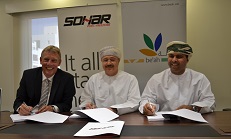
Speaking after the signing ceremony, SOHAR Port CEO, Andre Toet summed up the vision for Oman’s waste management when he said: “Behind all the technology and investment we’ve discussed today, our number one priority is very simple: we want to preserve the environment of this beautiful country Oman and for all generations to come.”
Abu Dhabi's container port ready for next phase of expansion

0

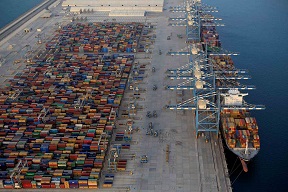
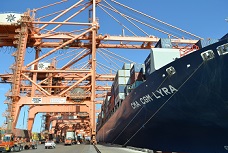
Abu Dhabi’s main container port is currently on 78% of its handling capacity and the next two years will see Abu Dhabi Terminals enhancing its operational readiness through infrastructural development to meet the expected growth of the local and regional industry.

2015 has proven to be another good year for Abu Dhabi Terminals. As the year’s end approaches, it’s forecasted that a total of 1.48 million TEU have been handled at Khalifa Port Container Terminal in 2015, up from 1.14 million TEU in 2014. It is anticipated that 2016 will see moderate growth of 10 percent with the port operator handling 1.62 million TEU containers. By 2020, the first phase of Khalifa Port Container Terminal will be at maximum capacity – 2.5 million TEU containers – and subsequently the second part of the port island will be commissioned, taking the capacity to 5 million TEUs annually.

Martijn van de Linde, Abu Dhabi Terminals’ Chief Executive Officer commented: “Khalifa Port Container Terminal is now firmly on the world map as a key logistics hub which has been achieved through becoming an industry partner for our customers, as well as demonstrating that Khalifa Port offers a cost-effective, fast and reliable alternative to regional ports. We have also significantly developed our network, going from an initial five to a current 50 international destinations.”

“Through collaboration and diversification of our services, Abu Dhabi Terminals maintains its mission to innovate constantly, and continue our growth momentum through to 2020 when the next phase of the port island will be handed over,” he added.

In three years of operation, traffic through Khalifa Port Container Terminal has grown at the fastest pace of any container terminal in the Middle East, experiencing double-digit yearly growth and doubling the volume of containers handled. Abu  Dhabi Terminals has made significant investments in a polymer packing plant and 2.3 million sq.ft. of warehousing inside the port, offering value-added supply chain services and increasing speed and reliability for shipping lines and trade customers.

Salalah announces new CMA CGM service calls

0

The Noura Express service, on the East Africa trade lane operates four vessels of up to 2,755 TEU capacity, linking the ports of Jebel Ali (UAE), Khor al Fakkan (UAE), Mombasa (Kenya), Mogadishu (Somalia) and Salalah. At Salalah, transshipment is available to CMA CGM’s Europe Pakistan India Consortium (EPIC) Service, which links ports in South Asia, the Persian Gulf, the Red Sea, the Mediterranean, and North Europe. The EPIC Service is operated with eight vessels of up to 9,400 TEU capacity.

“The introduction of the EPIC service to the Port of Salalah provides our growing customer base in Salalah with an additional opportunity for export to Europe, the Mediterranean and North Africa, as well as for imports from the Indian Subcontinent” said Port of Salalah CEO David Gledhill, adding “the Noura Service call leverages the strategic location of Salalah to provide a new, fast cargo connection from East Africa to Europe, which can potentially be also used to accommodate Omani imports from Kenya and Somalia.”

Part of the APM Terminals Global Terminal Network, the port of Salalah is now undergoing an expansion which will double the quay length, and increase dry bulk capacity to 20 million tons, and liquid bulk capacity to 6 million tons annually. The Port of Salalah,  in which APM Terminals operates and holds a 30% share, handled 3.03 million TEU in 2014, along with 7.9 million tons of bulk cargo. Salalah was tied for 5th in the Europe, Middle East and Africa region of the JOC Group Productivity Study for 2014 with 96 MPH with a vessel alongside. A “2030” initiative includes plans for USD15 billion in infrastructure investment in the Salalah Free Trade Zone by 2028 to create a larger regional shipping and commerce center for the region, and a Port Phase 3 expansion including three new container berths.

“These new services reflect our ongoing efforts to provide diverse options to the growing Salalah shipping community; the Port of Salalah shall continue to explore opportunities both with shipping lines and logistics providers to offer enhanced supply chain solutions to our valued customers” said Port of Salalah Deputy CEO Ahmed Akaak.

Christopher Rodrigues appointed PLA Chairman

0

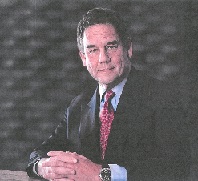
Christopher Rodrigues will succeed Dame Helen Alexander, who has been PLA chairman since January 2010, as her statutory term of appointment comes to an end.

Following an executive career in the financial and tourism sectors, Christopher Rodrigues is currently chairman of Visit Britain, Openwork LLP and The Almeida Theatre and is a Trustee of the National Trust. He is a past chairman of Leander Club and a steward of Henley Royal Regatta

The PLA oversees navigational safety along 95 miles of the tidal Thames, a river home to the UK’s second biggest port, the busiest inland waterway for passengers and freight and a world famous centre for rowing. Running the river in trust for the benefit of future generations, the PLA shares its marine, environmental, planning and other expertise, promoting use of the river and safeguarding its unique marine environment.

PLA chairman, Dame Helen Alexander, said: “I am proud of the PLA’s achievements over the last six years, helping the Thames to be the busiest and safest it’s ever been. We’ve seen a transformation of river use. Last year modern day records were set with nearly ten million passengers travelling and over five million tonnes of freight moved between wharves.

“Now the PLA is looking to the future of the river and estuary. The Thames Vision project has identified great potential. The PLA executive team, supported by Christopher, will have the exciting challenge of bringing it to fruition.”

Christopher Rodrigues said: “The River Thames is the beating heart of the greatest city in the world. It has been part of my life for over 50 years, first as a schoolboy oarsman on the Tideway, then as a  member of two winning Cambridge Boat Race Crews and subsequently as chairman of Leander Club, a steward of Henley Royal Regatta and a craft owning freeman of the Waterman’s Company.

“I’m truly delighted to be joining the PLA as it finishes shaping its Vision for the river’s future. I look forward to getting out to meet the people who use the river for work, travel and play and to helping build support for the Vision from the river’s multiple stakeholders.”

Christopher Rodrigues is a graduate of Cambridge University and the Harvard Business School. He holds an honorary doctorate from the University of Surrey in recognition of his work in the tourism industry. He was previously president and chief executive of Visa International and chief executive of Bradford & Bingley and Thomas Cook.