

Friday, December 12, 2025
spot_img
Home Blog Page 464

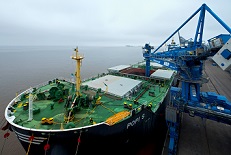
World’s largest single shipment of biomass discharged at Port of Immingham

0

Almost 60,000 tonnes of wood pellets were unloaded from the POPI S – the first time such cargo has been carried by a Panamax-class vessel. The ship was loaded at the Westview Terminal in Prince Rupert, British Columbia on 2 June, before making the 34-day journey to Immingham. The pellets have been discharged using ABP’s bespoke continuous ship unloaders, which feed the product onto a conveyor system connected to Immingham Renewable Fuels Terminal (IRFT), where it will be stored in eight silos, each capable of holding 25,000 tonnes of biomass, before being loaded onto trains for the final part of its journey. IRFT is the world’s largest dedicated biomass handling facility.

The world-beating shipment forms part of ABP’s Humber-wide agreement with Drax Power Ltd, which will see it supply up to six million tonnes of biomass per year to the power station as part of its conversion to low carbon electricity generation. ABP Director Humber, John Fitzgerald said: “This shipment marks a significant milestone not only in our partnership with Drax, but in the development of the biomass and renewable energy sectors globally. “This is a very exciting time for our ‘Energy Estuary’ and we’re extremely proud to be at the forefront of the renewables industry on the Humber, working closely with partners including Drax, to drive innovation, boost the regional and national economy and fuel the Northern Economic Powerhouse.” Drax Head of Supply Chain & Logistics, Graham Backhouse said: “This shipment provides further evidence of our new supply chain supporting the transition from coal to sustainable biomass at Drax.   We are transforming the UK’s largest Power Station into one of Europe’s largest generators of renewable electricity and this shipment is another example of how we provide the UK with sustainable, reliable and affordable energy.”
Patrick's new crane commissioned

0

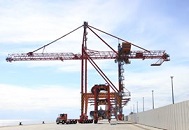
Increasing demand from customers for export services has led Patrick to commission the brand new ship-to-shore crane which augments the company’s existing fleet to five. The crane which has an outreach of 50m with a lifting capacity of 75 tonnes, lifts containers in both single and twin-lift mode and, is faster in terms of its hoist and cross travel speeds. Terminal Manager Matt Hollamby said: “The acquisition of this new machinery is further testament to Patrick’s commitment to vigorously contest the market with the highest quality equipment.

“We expect to make significant productivity gains with this new crane. It will join a fleet of existing ZPMC cranes and will deliver efficient supply chains for importers and exporters. “This investment is a demonstration of Patrick’s commitment to the Port of Brisbane and represents the continuation of a development program aimed to serve the needs of our customers for years to come,” he added further.

The crane was manufactured in Ireland by Liebherr Container Cranes, one of the world’s leading crane manufacturers and delivered in parts to Patrick’s Brisbane Autostrad Terminal in February. Close to 200 individual lifts were required to bring the parts ashore – everything from small packing cases to the machinery house. In addition to the new crane, Patrick also commissioned four additional automated straddle machines or AutoStrads to support the crane bringing its fleet total to five ship-to-shore gantry cranes and 31 Autostrads in the Brisbane operations.

Volumes up 26% in first year at Everglades East Coast railway intermodal facility

0

“This is a terrific milestone that validates the investment made by FECR, Port Everglades, the State of Florida and Broward County. One that will have long-lasting benefits for the community by reducing road congestion and greenhouse gas emissions,” Hertwig said. “We look forward to continued growth at the ICTF as the Port adds new docks and cranes, and expands its harbor with deeper and wider channels.”

In a model public-private partnership, FECR built the ICTF on 43 acres provided by Broward County’s Port Everglades. The ICTF, which was completed in 18 months and opened in July 2014, is used to transfer international intermodal containers arriving or departing by ship-both north/south and east/west trade lanes – as well as domestic containers and trailers with cargo moving to and from South Florida.

Prior to the opening of this facility, such containers were transported by truck to and from Port Everglades to off-port rail terminals in Fort Lauderdale and Hialeah.

“The ICTF ensures that Port Everglades is competitive with other U.S. East Coast gateways, and, most importantly, gives South Florida a cost and time-to-market advantage over many of these gateways,” said Steve Cernak, Port Everglades Chief Executive & Port Director.

Cargo moves through Port Everglades to/from Atlanta and Charlotte in two days, and Nashville and Memphis in three days. FECR’s direct connection to the nation’s Class 1 rail network allows for service to 70 percent of the U.S. population within four days.

Additionally, having empty 53-foot domestic containers and trailers adjacent to the Port provides more opportunities to trans-load import cargo from ocean containers to domestic containers for inland rail transport. This results in more domestic containers moving north as loads, instead of empties, increasing the efficiency of the intermodal network.

The ICTF is expected to reduce congestion on interstate highways and local roadways because loading and offloading cargo will take place at the Port as opposed to offsite facilities. As a result, air emissions will be reduced by diverting an estimated 180,000 trucks from the roads by 2027.

Bulk Terminal Zeeland BV enters into contract with Zeeland Seaports

0

Access to the site is via a quay that can accommodate ships with a maximum length of 225m. The arrival of BTZ marks an important development, which provides good commercial opportunities for the parties involved. This new player in the Zeeland port will also generate 50 to 100 direct and indirect jobs. Good cooperation resulted in the new agreement.

“We looked at the possibilities in the port after noticing a need for bulk goods processing, and that’s where our journey began,” says managing director of BTZ, Marijn van Nispen. “It was a long road, which ultimately led to a very positive result, thanks particularly to the extremely good working relationship with the commercial department of Zeeland Seaports,” according to Van Nispen.

“The port of Vlissingen has excellent infrastructure, which BTZ can utilise. Vlissingen is just an hour’s sail from the North Sea and has very good access to the European hinterland, by road, rail and inland shipping. So there are plenty of opportunities for a successful bulk operation”, concludes Van Nispen.

The terminal of BTZ offers excellent facilities for the handling of bulk cargo.