

Thursday, December 11, 2025
spot_img
Home Blog Page 470

New technology supports faster haulier turnaround and container handling at Port of Liverpool

0

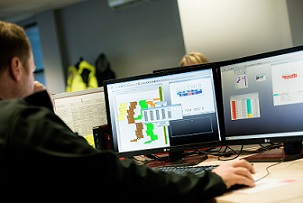
The Navis N4 Terminal Operating System (TOS) and AutoGates are now live and fully operational following the construction and commissioning programmes.

The new TOS and 10-lane AutoGates are the latest phase of new infrastructure in the company’s £300 million redevelopment project to expand and develop Liverpool2, consolidating its position as the UK’s largest transatlantic deep-sea port and container terminal. The £9.7 million information systems investment platform, which has been undergoing rigorous testing in recent weeks, will deliver faster turnaround times through a streamlined process from landside or quayside entry to exit.

The fully automated AutoGate system uses state-of-the-art identification technologies to manage gate operations, ensuring that all containers and trucks are automatically identified before entering or exiting the terminal. Advanced OCR (optical character recognition) and line-scan camera technology (automatically detecting seal presence) link with gate operating software that seamlessly integrates to Peel Port’s existing terminal operating software, Navis N4, and Customer Access Portal (CAP). The security process is further completed using biometric fingerprint identification to further validate driver/load identification and enhance security.

David Huck, Port Director, said: “The introduction of AutoGates and the new Navis N4 TOS is a very important step for us in making a difference to our customers, enhancing their experience using the port. We took the bold move to combine both initiatives into a single project to minimise any disruption to normal operations for our customers and to provide the overall benefits sooner. Although this decision came with added risks, we have managed to deliver this significant upgrade to our capabilities, thanks to the planning and hard work of the whole team over many months.

“Haulier transactions are now fully integrated into the N4 system, which means more secure and efficient visits and minimal turnaround times at our terminals. This process will also mean that paperwork and leaving the vehicle are unnecessary, so increasing security, improving safety, reducing risks and saving time spent completing manual checks.

The AutoGate equipment was supplied and installed by Kalmar and its partners, APS Technology Group, who provided the OCR technology.

Tommi Pettersson, VP Automation at Kalmar, said: “Our automated solutions drive greater efficiencies, resulting in lower overall operational costs, improved safety and better equipment availability. Process automation solutions are designed to optimise the information flows within the terminal’s business processes to ensure the most efficient equipment utilization.”

Scott Skillman, Senior Vice President of APS Technology Group, a member of the ABB Group said: “We are excited to be a part of a host of technology upgrades including the turn up of a new Navis Terminal Operating System and Automated Gate Control Systems in the comings weeks at Peel Ports. The integration of these new systems and their supporting processes represent major advancements for Peel ports that will result in faster processing of hauliers at key areas of the gate and yard. The gate system is designed such that the gate and transfer zones should be much easier and significantly faster than they ever were before, especially once the driving community becomes familiar with the new technology and updated processes.”

Andy Barrons, Senior Vice-President and Chief Marketing Officer of Navis said: “Landside collaboration is the single biggest remaining opportunity to reduce inefficiency and Peel Ports is tackling this head-on with the implementation of new technologies and processes that will help to move the hauliers through the terminal more rapidly. Navis is happy to be supporting these initiatives with N4 and we look forward to continuing to work with Peel Ports as they expand the use of these technologies into Liverpool2 and other terminals in the group.”

How the system works

Before coming on site the haulier registers their lorry consignment details on a
simple and streamlined online system.

On entering the port the system will scan a lorry, capturing all details (container number, container size type, hazard placards, bolt seals, container damage) automatically through optical character recognition. It will also scan the licence plate and take a photo of the driver.

The driver proceeds to a kiosk, scans their biometric ID card (this is linked to the online account used to register the consignment) and answers a few simple questions on a touch screen monitor.

On entering the terminal, the system will direct the driver and inform the Straddle Carrier that unloading/loading will take place.

TT Club urges immediate action on Box Weighing

0

Unlike the CTU Code, which forensically seeks to identify the chain of responsibility for everyone involved in the movement of freight, the amendment to the Safety of Life at Sea Convention (SOLAS) mandating the verification of gross mass of container overtly only names the ‘shipper’, the ‘master’ and the ‘terminal representative’, and – by implication – the competent authorities.

The complex nature of logistics means that the term ‘shipper’ may encompass a range of people involved in the contracting, packing and transporting of cargo. However, as stated in the WSC guidance, the key commercial relationship in question is with the person whose name is placed on the ocean carrier’s bill of lading. Thus, in many cases, the responsibility for actual ‘verified’ declaration will rest with a freight forwarder, logistics operator or NVOC. This means that often reliance will have to be placed on others to have adequate certified methods to provide verified gross mass – particularly for consolidation business. Of course many suppliers of homogenous shipments will already have advanced systems, which merely require some form of national certification.

Apart from having a sustainable method by which the gross mass is verified, the shipper also needs to communicate it (‘signed’ meaning that there is an accountable person) in advance of the vessel’s stow plan being prepared. The information will be sent by the shipper to the carrier, but with joint service arrangements there may be a number of carriers involved, with one taking responsibility to consolidate the manifest information, in addition to communication with the terminal.

The ‘master’ comprises a number of functions within the carrier’s organisation. Implicit in the SOLAS amendment is that the carrier sets in place processes that ensure that verified gross mass is available and used in planning the ship stow. Arguably, each carrier will need to amend systems and processes to capture ‘verified’ information. However, the simplest might be to amend the booking process, so that the gross mass information is left blank in the system until ‘verified’ data are available. This will be effective if it is clearly understood by all partner lines and terminals with whom the line communicates.

The explicit obligation of the master is simply that he shall not load a container for which a verified gross mass is not available. This does not mean that one with a verified gross mass is guaranteed to be loaded, since that would derogate from the traditional rights of a master.

Recognising the pivotal nature of the port interface, the ‘terminal representative’ has been drawn into the new regulation as a key recipient of information for ship stow planning and, critically, in a joint and several responsibility not to load on board a ship if a verified gross mass is not available. There has been considerable debate as to whether terminals need to position themselves to be able to weigh containers, not least because of the cost of creating appropriate infrastructure, and amending systems and procedures, with uncertain return on investment. In addition there are commonly incidences of containers packed at the port, in which case the terminal activities could include assisting the shipper in producing the verified gross mass.

The SOLAS amendment places responsibility on national administrations to implement appropriate standards for calibration and ways of certifying. The overtly named parties rely on this to work smoothly and, preferably, consistently on a global basis.

Clarity of such processes needs to be matched by consistency in enforcement. Talk of ‘tolerances’ is disingenuous. SOLAS calls for accuracy. Everyone appreciates that some cargo and packing material may be hygroscopic, thereby potentially increasing mass during the journey, but that need not mask fraudulent activity, nor entice over-zealous enforcement. The UK Marine Guidance Note may be instructive here, stating that enforcement action will only be volunteered where the difference between documented and actual weight exceeds a threshold.

Update on restructuring of port facilities in Libya

0

Gerry Northwood OBE, COO of leading maritime security firm MAST, said:

” UN sponsored Unity Government negotiations appear to have stalled for now, with the Tripoli Government with drawing from the talks. However, the UN process will continue and it is likely that a series of ad hoc discussions will take place between the various government and tribal factions.

Northwood added: ” These talks will be partly driven by the common interest in fighting ISIL, but achieving the level of agreement required to form a Unity Government is unlikely in the near term.”

Northwood said that it has been reported that the National Oil Company (NOC) has lifted the force majeure declared in December 2014 at Ras Lanuf Oil Terminal on the Gulf of Sidre. Once operational the facility could increase Libya’s oil exports by up to 300,000 bpd.

Northwood further commented: “. Under force majeure Ras Lanuf was not a target for ISIS. As it returns to working status, it is likely to be of increasing economic importance to the Tobruk based Government and ISIS forces may therefore see it as a potential target for a terror attack.

“Care must therefore, be taken by vessels visiting Ras Lanuf. The Tobruk based government has threatened to attack any vessel they believe is assisting ISIS. Vessels heading towards Ras Lanuf should make it clear to the authorities where the ship is heading in order to reduce the risk of being attacked.

Marseille set for cold ironing

0

The facility will be available from this October following six months of work to install the quayside power network and adapt the company’s vessels – Kalliste, Girolata and Piana – so that their diesel generators are no longer required during port calls.

Switching to environmentally-friendly shoreside electricity will reduce noise, fuel consumption and air emissions. For each ship, the change will eliminate CO2 and particle emissions equivalent to more than 3,000 vehicles per day on the 64km route from Marseille to Aix, while NOx emissions will fall by the equivalent of 65,000 vehicles per day.

The €4.4 million initiative follows several years of studies and was part-financed by national and regional government aid.