
Tuesday, December 16, 2025
spot_img
Home Blog Page 503

Peel Ports launches Cargo2000 initiative

0

Announcing plans at Multimodal 2015 in Birmingham, the company outlined opportunities for cargo owners, importers and exporters to cut the cost of inland transportation by switching current delivery of ocean freight from south-east ports to the centrally located Port of Liverpool, if their goods start or end their journey in the north of the UK. According to Peel Ports’ calculations, cargo owners can save up to £400 per container by altering supply chain routes.

The company aims to recruit up to 200 cargo owners, importers and exporters to support the campaign.

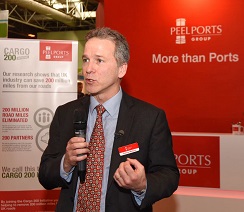
Peel Ports’ Group Commercial Director, Patrick Walters said: “This initiative is about efficiency and sustainability. We have looked at the geographical demand for goods in the UK, comparing the point of entry of those goods into the country with the end destination and calculating the carbon emissions and potential savings.

“The reality is that 50% of demand for all UK cargo comes from the northern half of the UK, including Scotland and Ireland – not really surprising as 35 million people, including many in Ireland, live within 240km (150 miles) of Liverpool.

“The Port of Liverpool is strategically important as the most centrally located port in the UK. Yet only 8% of goods arrive in the UK through this route. That means the majority of cargo destined for the north currently has to be transported via road or rail, incurring hundreds of additional miles, burning fuel, creating road congestion and adding to carbon emissions and costs.

“With the opening of Liverpool2 planned for December, there is a viable and cost effective alternative which we are urging cargo owners and logistics operators to consider.

“Investments in transport infrastructure, road, rail and canals are already supporting the accelerated growth of businesses in the north, but taking advantage of these opportunities means making a conscious shift in today’s supply chains and services. That shift is primarily to bring cargo closer to markets, thereby cutting the costs, carbon emissions and congestion resulting from inland transportation.

“From our modelling, based on the journeys currently undertaken by these cargoes, it has been possible to project that at least 200 million road miles could be saved over the next five years. We are calling on cargo owners and operators to ‘act green’ and support this very important initiative.”

Peel Ports already has garnered initial support from a number of household-name brands, including Typhoo and B&M. The company will work with these and other Cargo200 partners to share data and carry out further modelling to support the development of the initiative.
UASC names the world's most environmentally friendly ultra-large container vessel

0

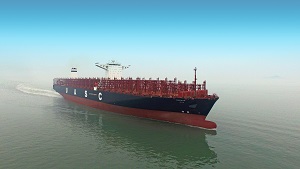
MV ‘Barzan’ is a part of the industry’s first LNG-ready ultra-large container vessel fleet. With a loading capacity of 18,800 TEU, the DNV GL classed vessel MV ‘Barzan’ is first in a new class of leading ultra-large container vessels that will be the largest in UASC’s fleet to date and will set new standards for fuel and energy efficiency, due to optimised vessel design and an array of propulsion and equipment efficiency technologies. Preliminary calculations indicate an EEDI (Energy Efficiency Design Index) value that is close to 50% below the 2025 limit set by IMO. UASC is working to establish a range of additional metrics and targets through which the efficiency of UASC’s vessels can be managed to drive further reduction in carbon emissions across all UASC vessels.

The MV ‘Barzan’ has a CO2 output per TEU that is more than 60% below a 13,500 TEU vessels delivered just three years ago.

“We understand that providing environmentally friendly transport solutions and recognizing environmental initiatives around the globe are no longer a choice; they are a necessity for both our organization and our customers”, said Jørn Hinge, President and Chief Executive Officer of UASC. “M.V. ‘Barzan’ and the 18,800 TEU fleet will complement the 15,000 TEU fleet, being gradually delivered since November 2014 and operating on the Asia-Europe trades as part of the Ocean 3 services. There, Barzan will deliver the industry’s lowest per-container levels of CO2 output.”

Hinge added, “We are increasingly servicing environmentally aware customers across the globe. We push the boundaries of eco-efficiency standards to ultimately ensure that our customers can achieve higher levels of environmental sustainability”.

“The MV ‘Barzan’ is equipped with an eco-friendly system incorporating state-of-the-art technologies to meet the reinforced maritime regulations and provide UASC with a competitive advantage”, said G J Ha, President and CEO of Hyundai Samho Heavy Industries.

“I am certain this vessel will further promote UASC’s and its alliance partner’s business competitiveness, and our own reputation as Builders, thereby paving the way for a closer relationship between UASC and Hyundai Heavy Industries Group”, he added.

UASC’s eleven newbuild 15,000 TEU and six 18,800 TEU vessels are scheduled to be fully delivered by 2016. This year, UASC will receive a total of 10 new vessels.

Technologies previously used by UASC that proved extremely effective in reducing fuel consumption and CO2 emissions have been applied as best in class standard procedure across the board. Technologies and solutions deployed on the MV ‘Barzan’ and all 18,800 TEU vessels include shore-to-ship power supply solution for zero emissions at berth and energy efficient integrated system to monitor and optimise propulsion systems, machinery operations and navigation decision-making amongst others.

Ternvag most sustainable vessel in Rotterdam in 2014

0

Last year, 1413 ships with a high entry in the Environmental Ship Index arrived in Rotterdam. In total, the Port Authority paid out EUR 1.2 million on these sustainable vessels.

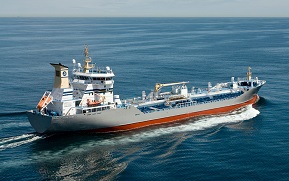
Ternvag is a tanker built in 2003. At the request of de charterer – the Swedish oil company Preem – the vessel has been fitted with so-called SCR (selective catalytic reduction) for the engines. That is a post-combustion technology used to reduce emissions of nitrogen oxides (NOx). Terntank has currently commissioned the development of 4 LNG-driven product tankers. ‘In 2016 one of these ships will also be sailing for Preem. So we want to win the prize for the most sustainable vessel in Rotterdam again in 2017,’ says Tryggve Möller, director of Terntank. ‘We see the prize as an endorsement of our policy to use clean ships. Rotterdam is a sustainable port and the largest in Europe.’

ICTSI Subic unit opens one stop shop

0

. Cabinet Secretary Rene Almendras led the launching of the OSS together with SBMA chairman and administrator Roberto Garcia and SBITC general manager Roberto Locsin. Located
inside the New Container Terminal 1, the OSS is next to the administration offices of SBITC and several satellite offices of shipping lines.

With the OSS, port users can expect shorter document and cargo processing times as SBITC, BOC and SBMA are housed in one location. Port users no longer have to travel from one office to another to process their documents.

“Through the OSS, what we want to achieve is a seamless flow of transactions to the benefit of our customers. The facility practically solves the problem of having to go to different locations within the Freeport zone to follow up on transactions,” explains Mr. Locsin.

A four-day dry run, which started mid April, showed promising results in terms of improving overall processing efficiency. The average processing time has been effectively reduced to around four hours provided that pertinent document requirements are complete and queues are not long. Under previous circumstances, port users had to spend from half to a full day to complete the processing of their documents.

“The dry run went smooth and we are happy with the feedback we got. Just imagine the convenience: out of the 16 steps before you get your container out of the terminal, 14 of them can be processed in the OSS facility. After taking a good first step towards improving things here in Subic, the next step is to get the word out and get more customers to come to us,” he adds.

The OSS is also part of SBITC’s initiative to lure potential customers to Subic. With its competitive rates compared with other ports in Luzon, Subic also offers flexibility, reliability and convenience. With the BOC and SBMA under one roof, coordination has become
relatively easier resulting in faster resolution of issues.

Secretary Almendras underscored Subic’s role as a trading gateway to northern and central Luzon and in supporting the container market of the Port of Manila. “The government needs to add port capacity outside Metro Manila to address the country’s growing container volumes, and Subic Bay has so much potential because of its existing port, infrastructure, roads and electricity,” he said.

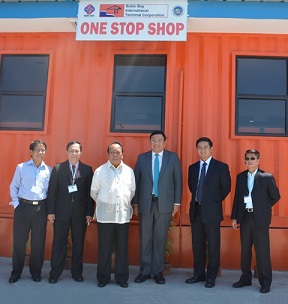
Photo shows: SBITC opens one stop shop. International Container Terminal Services, Inc.’s (ICTSI) Subic Bay Freeport unit, Subic Bay International Terminal Corp. (SBITC), in partnership with the Subic Bay Metropolitan Authority (SBMA) and the Bureau of Customs (BOC), recently opened a one stop shop (OSS) to fast track documentary transactions at New Container Terminals 1 and 2 in Cubi Point, Subic. Cabinet Secretary Rene Almendras (fourth from left) led the launching of the OSS together with SBMA
chairman and administrator Roberto Garcia (third from left) and SBITC general manager Roberto Locsin (fifth from left.
With him were (from left): Tony Ramos, SBITC head of finance and administration; Marcelino Sanqui, SBMA seaport and airport senior deputy administrator; and Nolito Manuel, SBMA seaport marketing head.