

Thursday, December 11, 2025
spot_img
Home Blog Page 507

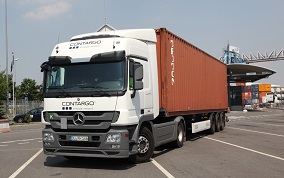
Contargo makes the source code of IRIS freely available

0

In this way, many people’s input of knowledge and experience can flow into the software, and the program can be continuously adapted to changing background conditions.

IRIS stands for Intermodal Routing Information System, and was initially an element of Contargo’s Tariff Calculation System IMTIS, where IRIS acted as a central broker between IMTIS and Contargo’s own in-house development of OpenStreetMap material, specially designed for use in intermodal transport. IRIS has now been separated from IMTIS. The IRIS program provides users with core information about routes – which routes to take – but other data can also be calculated, such as total kilometres, road toll kilometres, and journey times to plan in. Up to now the program covers Germany and all its neighbouring countries. IRIS takes account of information from the map data such as e.g. maximum permitted weights and toll obligations. When calculating the CO2 emissions of an intermodal transport, the transports by rail and barge as well as the handling and transfer of the container are included.

From 1 May 2015 this software will no longer only be available to registered users via Contargo. IRIS can then be downloaded under AGPLv3 Open Source License at GitHub, and can be further developed by users for their own needs.

Hongkong International Terminals sees container throughput slide by 9.8%

0

In the statement HIT called for joint efforts to address a year-on-year drop in container throughput at its’ Kwai Tsing container port. Although the decrease, during the first quarter 2015, was contributed to uncertainties in the global economy and international trade, HIT urged for joint efforts within the industry to enhance efficiency and competitiveness and ensure Hong Kong retains its status as a major regional shipping hub and trans-shipment port.

For the first three months in 2015, HIT handled 3.9 million TEU at its’ Kwai Tsing port.

Additionally, HIT announced that external contractors had agreed to a 5.5% increase in basic salary for their workers in the coming year, which is above the 2014 inflation rate of 4.4%. About 95% of their workers have given written consent to the pay rise.

HIT’s external contract workers have received a cumulative increase in monthly pay of 26.9% since 2013, and a 44.9% increase over the past five years. In May 2014 HIT introduced an incentive programme to reward workers for maintaining productivity under safe operating conditions. The programme will continue in the coming year.

In recent years, the company has strengthened communication with external contractors and workers and has made significant improvements to the working environment.

Japanese Naha Port signs MOU with Taiwan International Ports Corporation

0

Currently, Taiwan has cruise services between Okinawa, Japan, and Keelung, Taiwan, and opened a weekly cargo service from Kaohsiung to Naha in June 2014, which is operated by Ryukyu Shipping’s cargo carrier.

To further enhance new opportunities for shipping services between Japan and Taiwan TIPC signed the agreement – it’s first MOU with a Japanese port.

TIPC’s seven ports (Keelung, Taichung, Kaohsiung, Hualien, Taipei, Su’ao, and Anping) have handled a total of 740 million tonnes of cargo in 2014 – up 6.97% compared to 2013. Total container throughput reached 15.05 million TEU – of which 10.59 million TEU was handled by Kaohsiung Port alone – up 6.6% compared to the previous year.

Passenger volume of the seven ports reached 1.38 million passengers – an increase of 40% in 2014. Around 0.72 million people were cruise passengers – an increase of more than 30% compared to 2013.

Okinawa prefecture’s Naha port, is located 600km southwest of Japan’s main island and in the middle of the East China Sea. It is close to Shanghai and in between the ports of Busan and Kaohsiung. It is the gateway to Okinawa prefecture, supporting the economic activities of more than 40 surrounding islands. The port operates 50 routes including international container services for North America and Asia.

Cargo volumes drop at Tokyo

0

…. by 7.3% to 6.579 million tonnes compared to the same month in 2014.

Container throughput dropped 11% to 323,729 TEU in foreign trade but was 4.8% up in domestic trade with 36,514 TEU handled compared to January 2014.

Of the 6.579 million tonnes, 3.574 million tonnes came from foreign trade (down 10.1%) and the remaining 3.005 million tonnes came from domestic trade (down 3.7%).

In foreign trade, Tokyo exported 978,336 tonnes of cargo in January – up 13.2%, and imported 2.595 million tonnes of cargo – down 16.6%.

Tokyo also saw the number of vessels drop – a total of 406 ocean-going ships, including 375 container ships, entered Tokyo in January (down 10.6%), while 1,557 domestic vessels entered the port (down 3.5%).