

Monday, December 8, 2025
spot_img
Home Blog Page 509

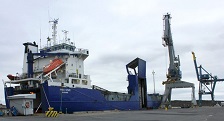
Added capacity and a new connection for Baltic Line

0

The ship started on the Turku–Poland–Denmark–Norway route and increased the capacity by 2,000 tonnes. It is a sister ship of m/v Link Star that started on the route a year ago. Both vessels are equipped with stern and side gates and opening deck hatches. Link Star sails under the Finnish flag and Mini Star under the Swedish flag. Baltic Line Finland Oy acts as the agent of Nor Lines AS in Finland.

“Introducing two new vessels on the route and switching to weekly departures from a two-week schedule have considerably improved the competitiveness of the route”, says Tomas Uschanow, Managing Director of Baltic Line Finland.

“Both vessels will operate according to a regular weekly schedule on the route Turku–Swinoujscie–Fredericia–Lysekil–Norwegian ports. A new port of call is Lysekil on the west coast of Sweden to where scheduled traffic is starting in April”, Mr Uschanow adds.
Bomin Launches Bunker Operations in Copenhagen

0

The expansion is in line with the company’s ambitious plans for growth throughout 2015.

The Copenhagen operations complement Bomin’s existing physical network in the Baltic Sea region, including Tallinn, Stockholm and Rostock.

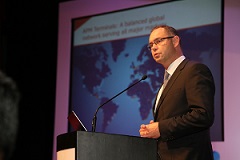
“Securing supply in key markets for our customers is an important part of the growth strategy for the Baltic region”, said Anatoli Belov, Managing Director Bomin Baltic. “Our physical offering enables us to take more control of the bunkering process, ensuring that customers are provided with quality products and at the right quantity, as well as looking at all opportunities to maximize their operational efficiencies. We plan to phase our physical expansion within Copenhagen, beginning with providing products ex-pipe and by truck.”

Available immediately is the provision of Marine Gas Oil delivered ex-pipe. All deliveries are supplied using a mass flow meter to ensure customers are provided with the exact quantity of gas oil that they order. Bomin will not charge customers port fees, providing further value. The company can also provide smaller product quantities by truck, which can be delivered to customers directly at berth in Copenhagen, increasing efficiencies and minimizing downtime, as well as into smaller ports in the Copenhagen area and South West Sweden.

Jan Christensen, Regional Manager Northwest Europe concluded: “The development in Copenhagen is the first of several planned expansions within our network. Despite the continued challenges within the shipping industry, Bomin is well placed, financially robust and with the strong backing of its parent company to drive growth and increase market share.”

The Bomin Group has been active in the bunker business for more than 35 years via its subsidiaries and is one of the world’s leading independent suppliers and traders of bunker oil. The business portfolio covers activities ranging from the supply of bunker fuels to lubricants and other services to the shipping industry. The company operates around the globe with a staff of more than 300 in 36 offices worldwide. Bomin is 100% owned by Mabanaft.

Oman Emerging as New Regional Logistics Center

0

“Oman has a good opportunity to improve its business environment in terms of ease of doing business, developing integrated transport chains that can even better link road, rail and air transport through a world-class port, capable of accepting the largest vessels in the world and to further develop world-class industrial parks and free zones near these maritime gateways” stated Mr. Fejfer. He added “by simplifying the business regulatory environment – Oman will attract even more entrepreneurs and capital that will reduce barriers to cross border trade”.

The Salalah Free Zone plans additional investments totaling USD15 billion by 2028, with chemicals and materials processing, manufacturing and assembly, and logistics and distribution the specific target market areas. A caustic soda facility and an LPG plant are scheduled to be operational by the end of Phase I of the expansion by 2018. Linking sea and air logistics centers to free trade zones will be an essential component of economic growth.

A 20-year Port Master Plan now in effect through 2030 calls for the development of a Salalah Hub which includes direct rail connections to commercial and population centers within the GCC (Gulf Cooperation Council), the construction of food processing, distribution and warehousing facilities, and new terminals for cruise ships and liquid bulk storage. An expansion of the port’s annual general cargo handling capacity to 20 million tons of dry bulk commodities and more than 6 million tons of liquid products is already underway.

The Port of Salalah, which is managed by APM Terminals, and in which the company holds a 30% share, is one of the most productive container facilities in the Middle East, handling three million TEU in 2014. The port also handled 10.3 million tons of general cargo for the year, representing an increase of 30% over 2013. Current plans to link the port to the GCC rail network will provide efficient transportation to inland locations while reducing truck traffic and diesel engine emissions.

14% Container Volume Growth at SC Ports

0

In March SCPA handled 171,113 TEU, an increase of 13.7% compared to 150,516 TEU moved during the same month last year. Fiscal year to date, the port has handled nearly 1.4 million TEU.

As measured in pier containers, or the total number of boxes handled, containerized cargo is up 15 percent fiscal year to date compared to last year. SCPA moved 97,191 boxes in March, bringing year fiscal to date pier container volume to nearly 798,000 boxes.

“March volumes reflect the end of a very strong quarter, and I’m confident the port will handle over 1 million boxes by the end of our fiscal year in June,” said SC Ports Authority CEO Jim Newsome. “We’re seeing broad-based growth across all sectors, particularly refrigerated cargo and automotive manufacturing. Discretionary cargo volumes are also up, with the growth of retail imports and agricultural exports reflected in a nearly 25% increase in rail moves last month.”

The Inland Port handled 5,187 rail moves in March, achieving its highest volumes since the facility opening in November 2013. Fiscal year to date, the Inland Port has handled 40,313 rail moves and is 52% ahead of planned volumes.

Breakbulk business volume was strong in March, with 111,352 total pier tons handled during the month. Charleston moved 68,163 tons in March, bringing fiscal year to date breakbulk tonnage at the North Charleston, Columbus Street and Union Pier terminals to 594,022 tons. Georgetown handled 43,189 tons in March, and the facility is 6% head of planned volumes with 401,778 tons moved fiscal year to date.