
Monday, December 8, 2025
spot_img
Home Blog Page 68

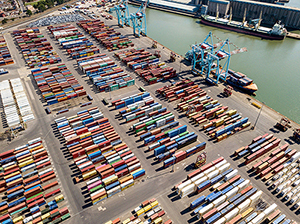
NWSA joins West Coast ports in urging President Trump to pursue fair and mutually beneficial trade agreements

0

“The chaos of the current trade war is one of the most prominent risks ahead. Exporters are losing market opportunities through increased tariffs on sales to China. Changing global trade routes could mean fewer West Coast imports as supply chains shift away from China,” said Stephanie Bowman, Port of Seattle Commission President and Co-chair of The Northwest Seaport Alliance.

“A long trade war could mean more shipping time for western producers and fewer work opportunities for West Coast workers,” said Clare Petrich, Port of Tacoma Commission President and Co-chair of The Northwest Seaport Alliance.


From the letter:

“As the largest ports on the U.S. West Coast, we are writing to share our concerns that the long-term impacts of the escalating trade conflict between China and the United States will create irredeemable economic harm to employers, workers, residents and international partnerships along the entire coast and throughout the country.


“U.S. trade policy impacts not only our core businesses, but also the success of our customers, and the livelihoods of our local communities. Collectively, our trade and logistics operations employ hundreds of thousands of family-wage workers whose jobs rely on dependable trade flows. In addition, the cargo handled at our ports flows to and from every corner of the country — from the Atlantic seaboard through America’s heartland to the West Coast — to support American businesses of every size. In fact, 38% of all U.S. exports to China by value go through our six ports alone.”


The letter also highlights the latest impacts related to back-and-forth tariffs between the United States and China. California is the largest exporter to China of any state in the nation; in 2018, California ports collectively saw a decrease of about 30% in exports to China.

Exports to China of wheat — grown across 10 states from the Pacific Northwest to the Midwest and exported via Washington and Oregon ports on the Columbia River — have nearly ceased this year. Similarly, The Northwest Seaport Alliance and Seattle-Tacoma International Airport exports have declined, including potatoes (-16.85%), hay (-49.93%), skins and hides (-47.89%), salmon (-47.71%), cherries (-54.56%) and fresh crab (-63.34%).
Liebherr hands over 14th STS crane to DCT Gdansk

0

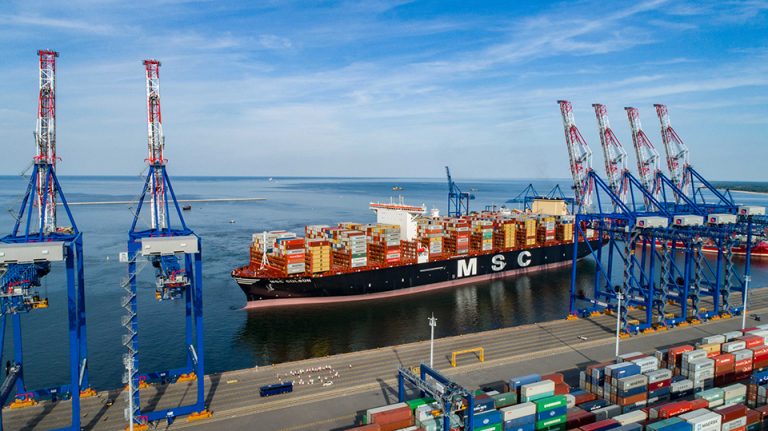
The cranes are capable of handling vessels with 25 rows of containers across deck, and along with five previously installed Liebherr ship-to-shore cranes, provide eight ultra-large container cranes capable of handling the latest and future generations of ultra large container vessels. The MSC Gülsün is 400 m long and 61.55 m wide and has a capacity of 23,756 TEUs. It is the first of eleven vessels that have 24 containers across the deck. This new class has been designed with a wide range of environmental, efficiency, stability and safety matters in mind. The reduction in carbon footprint and the improved efficiencies ensure that ultra large container vessels continue to be a vital component in international shipping for the future. Today, DCT Gdansk is Europe’s fastest growing container port with an impressive 22.2 % growth in 2018. Since its inception in 2007, DCT Gdansk has chosen Liebherr ship to shore container cranes to power their quayside operation. The latest crane is the 14th Liebherr STS crane supplied to DCT Gdansk since its foundation. According to Cameron Thorpe, CEO of DCT Gdansk, purchasing the right equipment and future proofing is a key component of the success of DCT Gdansk. “At DCT Gdansk, we continually invest for the future, so when the future arrives – as it has with this new class of vessel – we’re ready for it” David Griffin, Managing Director – Sales at Liebherr Container Cranes Ltd. added, “Liebherr is very proud of the very strong relationship and reference that we have with DCT Gdansk and we look forward to being involved as DCT continue their growth into the future.” 

Konecranes wins order from Texas for mobile harbour cranes

0

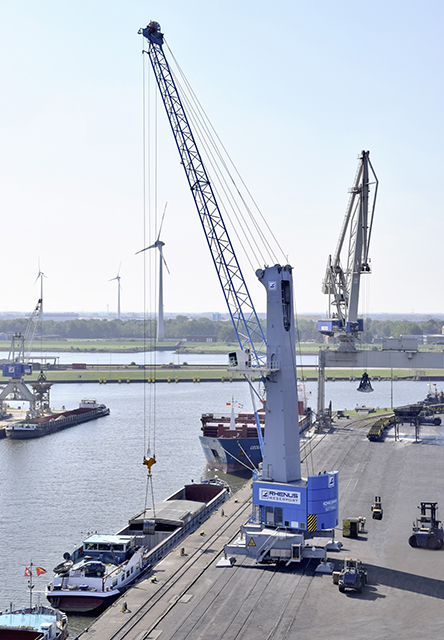
The Port of Brownsville, the only deepwater port located on the U.S./Mexico border, is currently experiencing an increase in cargo volume across its range of services. The two new Konecranes Gottwald mobile harbour cranes will be delivered to the port fully assembled and commissioned, ready to begin work as early as December 2019. The cranes will handle a wide variety of cargo including breakbulk, bulk products, heavy project cargo and steel products. The Model 6 cranes have advanced mobile harbour crane drive technology from Konecranes that meets EPA Tier 4f emission standards, helping Brownsville reduce its environmental footprint. “The Port of Brownsville continues to invest significantly in its continued growth, including expansion of our on-dock lifting capacity,” said Eduardo Campirano, Port Director and CEO of the Port of Brownsville. “We look forward to the operational and environmental performance that the Konecranes Gottwald Model 6 offers as we continue to serve our rapidly growing customer base.”


Giuseppe Di Lisa, Sales and Marketing Director of Konecranes’ Business Unit Mobile Harbour Cranes: “The two new cranes are the right choice for the Port of Brownsville, which needs to increase its handling performance while reducing its impact on the environment without sacrificing versatility and flexibility. These mobile harbour cranes will come into their own in this port, which handles many different types of cargo.” The new Konecranes drive concept for mobile harbour cranes combines, depending on the crane model, Volvo Penta 625 kW diesel engines and 125 kW ultracap modules. This concept includes SCR exhaust technology as an option, meeting EPA Tier 4f and EU Stage V emission standards. This pacesetting drive technology with its downsized diesel engine will be introduced in phases across the entire Konecranes Gottwald mobile harbour crane portfolio. “All the current drive configurations will remain available as the new technology is introduced,” Di Lisa added. 


The Port of Brownsville’s new Model 6 cranes will be G HMK 6507 two-rope variants featuring a powerful lifting curve with a maximum lifting capacity of 125 tons and an outreach of up to 51 meters. To maximise uptime, the cranes will be equipped with a remote access function giving the customer and the Konecranes service team access to operating and diagnostics data around the clock without interrupting crane operation.

Yang Ming hails success of new Liverpool feeder service

0

The weekly Yang Ming service from Southampton is now operating at 150 boxes per week, three times more than expected, transporting mainly retail goods to distribution centres in the North West. B&M is one of the national chains driving this growth and is saying it would move 100 per cent of its cargo from southern ports to Liverpool if there was a direct call from the Far East. Simon Williams from Yang Ming said: “This new service has been a great success for us already. We clearly expected good demand but the immediate growth has been exceptional.”


Jerome Wildsmith, Head of Supply Chain from B&M said “Over the past few years, we have strengthened our relationship with the Port of Liverpool, importing increasingly larger volumes of cargo and developing a strong relationship with Yang Ming, who have offered an express feeder service into Liverpool from Southampton.


“We recently increased our imports into Liverpool from 50% to 80% of our total cargo, with a view to converting this into a permanent move. As we continue to grow the business, we are keen to secure a direct Far East service into Liverpool so that we’ll be able to offer our customers a more efficient service, as well as reduce our carbon footprint thanks to the fantastic connectivity provided by Peel Port’s multimodal services.”


Mark Whitworth, CEO from Peel Ports, added: “The evidence keeps building for why the Port of Liverpool should be seen as the natural choice for global imports and exports and the opportunities we provide to business based in the North West of the UK. The interest shown in this Yang Ming service clearly demonstrates the commercial opportunity that exists for cargo owners and shipping lines.”


Yang Ming is a global shipping line headquartered in Taiwan, with offices around the world. It has a wide range of weekly services covering Asia, Europe, America, Australia and Africa. B&M, one of the UK’s leading variety retailers, announced earlier this year it was increasing its cargo into the Port of Liverpool by 30 per cent following frustrations with southern ports. The company, which has 600 stores and employs over 28,000 staff across the UK, now ships 80 per cent of its stock via Liverpool, increasing 30 per cent of the volume on a trial basis. B&M ultimately expects to shift all cargo to Liverpool in a permanent move, citing quicker lead-times and a reduction in road miles afforded by the port’s central location as among the key reasons why.