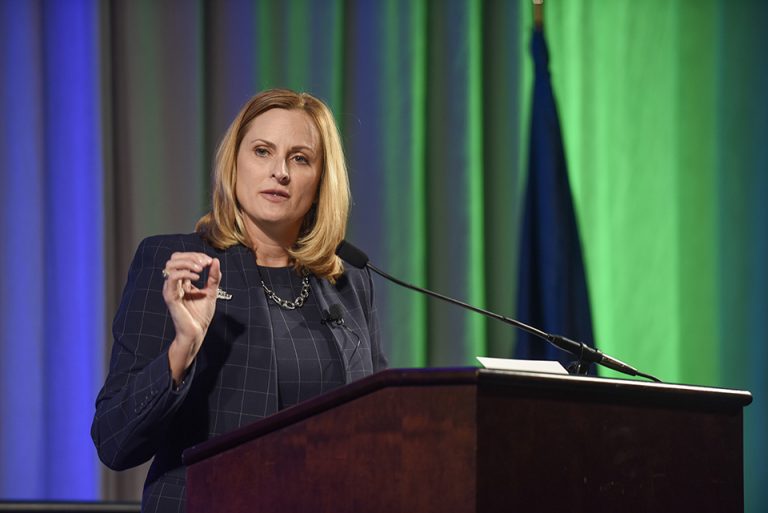
Christian outlined key short- and long-term strategies to capitalise on current momentum and to create opportunities in the future. In the address titled “Opportunity Calls, We Answer,” Christian attributed the successes to collaboration and partnerships, while emphasising there is more work to be done. “Because of your efforts, our collective efforts, your Port of New Orleans is thriving. But I am here to tell you we can achieve much more together,” Christian said. “Opportunity is calling. Actually, opportunity is not just calling, it is banging at the door and demanding that we answer.” Christian announced continued momentum across all four business lines: cargo, rail, industrial real estate and cruise.
Port NOLA moved more containers in fiscal year 2019 than at any time in its history at its Napoleon Avenue Container Terminal – totaling 619,353 TEUs, up 12% from the previous year. Port NOLA has now seen double-digit growth in total container volumes for two consecutive years, led by loaded import growth which was up 7.3% in fiscal year 2019. Christian announced that this growth also led to Port NOLA attracting a new direct-Asia container service. MSC’s Lone Star Express service will call weekly at Port NOLA later this month. The new service further strengthens New Orleans’ direct connectivity with Far East markets and offers more options to the Port’s customers. This will be the second direct-Asia service via New Orleans in addition to CMA CGM’s PEX 3 service. Maersk and ZIM will both partner on the new service, which will appeal to resin producers and traders, furniture and other retail importers, as well as temperature sensitive goods – especially frozen poultry because of fast export transit times, such as 25 days from Busan, Korea and 32 days to Busan. “Asia is our fastest-growing containerized trade lane, and we appreciate the commitment from MSC, Maersk and ZIM to Port NOLA and our shippers,” said Christian.
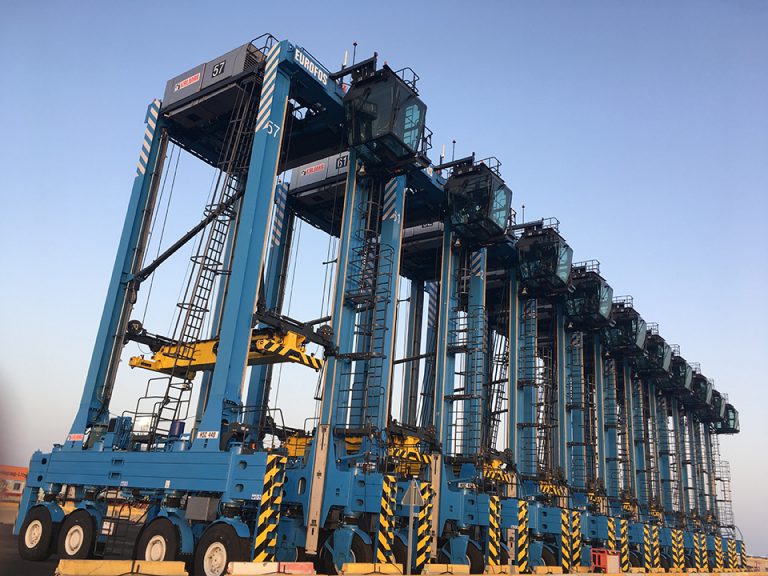
To effectively manage growing container volumes, Port NOLA has embarked on a USD100 million expansion plan that includes the order of four new 100-foot gauge container gantry cranes that can more efficiently work larger ships in the 8,000 to 9,500-TEU range.
“These cranes will be Louisiana state assets that produce jobs, provide economic output and keep Louisiana among the most competitive seaports in the United States,” said Christian. She cited an impact study that determined with just two new cranes capable of handling larger vessels, Port NOLA stands to gain 200,000 to 250,000 TEUs within five years. The impacts are estimated to be an increase of 1,147 total jobs and USD3.6 million in Louisiana tax revenues. Contributing to this significant announcement, the Army Corps of Engineers has authorised 50-foot dredging for the Mississippi River and the State of Louisiana has identified required State funds to match the Federal commitment. The Lower Mississippi River could reach 50-foot depths in the near future. Christian said Port NOLA and New Orleans Public Belt Railroad (NOPB) alignment and synergy is the single biggest accomplishment during the past year and is the foundation for the future. Intermodal growth was up 22.7% in fiscal year 2019, fueled by the new Kansas City Southern direct service between New Orleans and Dallas.
NOPB has hired experienced rail executives with strong operational backgrounds led by Mike Stolzman, who joined the team as General Manager in May 2019, which Christian said has resulted in significant and visible results.
“When we move cargo quickly, everyone benefits – our customers, the Class I railroads and the Belt,” said Christian. Dwell time has been reduced from 19 hours to 14 hours with 24 hours being an industry standard. As these operations improve, so does NOPB’s operating ratio, which was at a high of 98% down to 84%. That is a significant reduction of operating expenses and an increase in operating margins. Looking to other wins, container-on-barge volumes grew 87% from fiscal year 2017 to 2019. Port NOLA started the container-on-barge service during fiscal year 2017 in partnership with Seacor, CMA CGM and the Port of Greater Baton Rouge. It quickly became the largest in the country and has grown to a twice-weekly service. This year, Port NOLA expects to handle close to 30,000 TEUs and is working with partners to further expand the service. Breakbulk cargo remains a critical contributor to Port NOLA’s diverse cargo profile. Port NOLA has seen a 10% decline in breakbulk cargo volumes from traditional levels as a result of steel tariffs. However, there is continued optimism as there has been an uptick in wind energy-related cargo due to the production and investment tax credits for wind energy, as well as nonferrous metals and natural rubber. Christian said the same petrochemical boom in Southeast Louisiana that is fueling container exports of plastic resins is also contributing to project cargo volumes from the petrochemical expansion projects up the Mississippi River.
She also noted increased opportunity for industrial real estate throughout the Port NOLA jurisdiction, and said a broader lens is being used to examine new freight-related businesses and grow current ones in all three parishes. “We cannot be a gateway if we do not have space to acco
mmodate value-add businesses, distribution centers, warehouses and the accompanying transportation infrastructure,” said Christian. “We are identifying parcels on port, Belt and private property with water access and existing or potential rail service so we can share the info with firms that might want to bring on distribution and logistics businesses.” Port NOLA supports expansion of current tenants, such as New Orleans Cold Storage’s planned expansion at the Jourdan Road facility. Also on the Inner Harbour Canal, Port NOLA, the City of New Orleans, the EPA and a wide range of stakeholders are working on Port NOLA’s Port Inner Harbour Economic Revitalisation Plan (PIER Plan), with the goal of developing a new economic vision for the corridor. This planning project will pave the way for new jobs and business development in New Orleans East.
To propel the growth and opportunity, Christian highlighted Port NOLA’s intent to build a second container terminal downriver. “The combination of Napoleon and downriver container terminals would broaden our market options to serve small to large carriers and shippers and provide ample space for value-added logistics services,” Christian said. “Unrestricted air and water draught will put Louisiana in the best position of any port in the Gulf, and that is why our ocean carriers and operators are willing to invest with us – it is ours to lose by not answering that call.” Port NOLA’s cruise business also saw all-time high cruise volumes in fiscal year 2019 with 246 ship calls,1.2 million passenger movements and river cruise business up 15%. Port NOLA is on trend to surpass 1.4 million passenger movements in 2020. “Cruise is our business that synergizes with our region’s other great economic engine, hospitality and strengthens our shipping industry from pilots to tug operators to longshoremen,” said Christian. Royal Caribbean will be homeported year-round in 2020 with the Majesty of the Seas, and Port NOLA will welcome the Disney Wonder in February 2020. In addition, Carnival is bringing larger year-round vessels with the Valor and Glory, and Norwegian brought its largest ship to-date, the Breakaway. On the river cruise side, business is also booming, as Port NOLA welcomed American Cruise Line’s new Harmony vessel in August 2019, and in 2020 it will welcome two new additional river cruise ships, American Cruise Line’s Jazz and American Queen’s Countess. On the paddle wheelers business side, the Louis Armstrong and the City of New Orleans will begin sailings soon.
Christian said this growing demand for cruising from Port NOLA is set to trigger the need to invest in a new cruise terminal. “As part of our Master Plan, we decided to take a step back to assess multiple locations that could meet the needs of the industry, but also could allow cruise to serve as a transformational economic development catalyst,” said Christian. “We are looking beyond just a third cruise terminal in isolation, but at how a terminal development can ignite further investment into a needed community and bring our hospitality industry’s reach into new areas of our jurisdiction.” She closed by stating that Port NOLA’s success is measured by jobs – the 21,700 Louisiana jobs supported by the Port and its tenants. Also sharing that all present were united in a common purpose, to attract more freight and cruise activity to create more jobs. “Growing operations and infrastructure is expensive and does not happen overnight,” said Christian. “That is why we must plant the stake in the ground now, embrace our private partners and answer the call. I truly believe this is our time, the time for the reemergence of the Greater New Orleans Gateway. It is absolutely ours to lose, so we must answer the call. Port NOLA cannot and will not be able to do that without commitment and alignment from each of you.”