Monday, December 15, 2025
spot_img
Home Blog Page 93

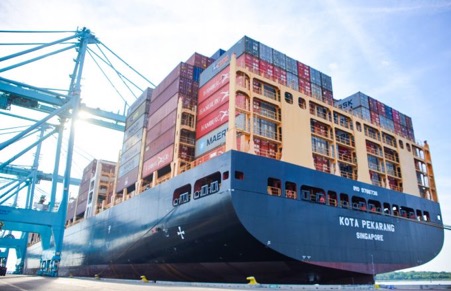
JAXPORT on pace for record container and auto volumes

0

JAXPORT’s fiscal year began Oct. 1, 2018. Through May 2019, JAXPORT facilities have handled: 896,795 TEUs, an 8 percent increase over the same period last year; and

482,388 auto units, also an 8 percent increase over the same period in FY17-18. 

The container numbers represent a port record through the first eight months of its fiscal year, and JAXPORT is on pace to break the volume record of 1.27 million TEUs set in FY17-18. The auto figures through eight months also put JAXPORT in position to achieve a new FY record with the number of auto units handled.

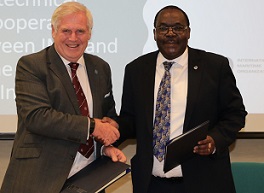
NI signs MoU with IMO Technical Cooperation Division

0

The NI has agreed to lend its expertise in professional development as part of the IMO’s Integrated Technical Cooperation Programme (ITCP) which seeks to build the capacity of Member States in complying with maritime safety, security and marine environment protection laws and standards.

Activities undertaken as part of the ITCP may include: seminars, workshops and training courses, needs assessment advisory missions, mentoring, twinning, secondment and exchange programmes, as well as professional leadership development.

Captain John Lloyd, chief executive of the NI, said: “We are delighted to offer our support to the IMO’s ITCP. We are passionate believers in the value of professional development and its role in helping to make the maritime community a better and safer place in which to work.”

“Our worldwide network of branches means the NI is ideally placed to support the work of the ITCP at the local level, particularly through the provision of volunteer experts.”

As a not-for-profit professional body the NI has a long history of supporting partnerships that promote professional development, transfer of skills and knowledge and is an active participant at the IMO.

thyssenkrupp aims to be climate neutral by 2050 – 30 percent emissions reduction planned for 2030

0

thyssenkrupp CEO Guido Kerkhoff: “The threats posed by climate change affect us all. As an industrial company with operations around the globe we are in a particularly good position to reduce greenhouse gas emissions through sustainable products and processes. We take this responsibility very seriously and have received several awards for this in recent years. Now we are setting ourselves clear targets for 2030 and 2050 as the next logical step.”

In February thyssenkrupp was named as a global leader in climate protection for the third year in a row by the non-governmental organisation CDP, which assesses whether companies have formulated a coherent strategy on how to further improve their own environmental performance as well as that of customers and suppliers. thyssenkrupp once again achieved the highest score possible and was placed on CDP’s global “A List”. The list includes roughly 130 businesses worldwide and only five DAX companies.

The targets now announced take in thyssenkrupp’s own production operations, the energy it purchases and its products. In steel production, for example, thyssenkrupp is currently pursuing two approaches to reducing CO2 emissions: The Carbon2Chem project, which is expected to be available on an industrial scale before 2030, and the so-called hydrogen route, which should take full effect by 2050 and make the biggest contribution to directly avoiding CO2. Carbon2Chem converts steel mill emission gases, including the CO2 they contain, into valuable chemicals. thyssenkrupp’s hydrogen route involves replacing coal with “green” hydrogen as the reducing agent for blast furnaces so that in the long term no CO2 is created in the production of steel. These technologies are being funded by the German federal government and the state of North Rhine-Westphalia.

Under its Climate Action Program for Sustainable Solutions (CAPS) thyssenkrupp will also systematically work to make its products carbon neutral. The Group already offers a technology for the cement industry that permits CO2 emissions from the combustion processes to be captured for subsequent storage or processing. In the area of sustainable mobility
thyssenkrupp is working with European partners to produce fuel from biomass. These fuels reduce CO2 emissions by up to 90 percent compared with conventional fuels.

Other key areas include the e-mobility sector, where thyssenkrupp supplies battery production lines and special steels for electric motors. The Group is also actively involved in the development of energy storage solutions, for example with electrolysis systems that convert electricity into hydrogen. These storage systems allow a constant supply of electricity from renewables regardless of the weather. Dr. Donatus Kaufmann, thyssenkrupp Board member responsible for technology, innovation, sustainability, legal and compliance: “Our goals are ambitious but achievable. Our strategy for our steel operations alone will cut production-related emissions there by 80 percent by 2050. But if we are to achieve our climate targets we need to make significantly more use of renewable energies. Also, there are no internationally harmonized financial incentives for investments in CO2 abatement technologies. These are basic requirements for making a real change.”

OOCL to stow its whole container vessel fleet with Navis stowage planning software StowMan

0

Hong-Kong-based OOCL currently operates a fleet of 100+ container vessels ranging between 21,400 and 2,900 TEUs that are planned by stowage planners who are based in strategic planning regions. With the advanced multifunctional stowage operation system of StowMan, vessel planners will be able to optimise the stowage planning results for fleet utilisation based on improved visibility and efficiency.

StowMan is capable of utilising the results of the stability and stress calculations, slot definitions and lashing rules as well as dangerous goods segregation and stowage rules produced by the onboard loading computer MACS3, which parts of the OOCL fleet are equipped with. Planners share the same view on stowage-relevant key performance indicators as the crew on board helps to optimise the cargo load and trim based on accurate vessel profile information.

Currently, more than 50 carriers and logistics providers including a third of the top ten ocean carriers with 3,000+ users worldwide, stow their vessels with StowMan. Since it has been established, the MACS3’s library has increased to more than 6,000 vessel profiles. MACS3 incorporates a comprehensive scope of latest updates of cargo securing rules of classification societies, IMDG stowage guidelines and segregation codes to ensure the highest possible safety standards.

“We are encouraged by the growing momentum of ocean carriers leveraging our technology,” said Bruce Jacquemard, Chief Customer Officer at Navis. “Customers using StowMan have been able to achieve record stows, proving the value our product development strategy promises. Based on accurate vessel profile information, a comprehensive scope of relevant planning functionalities and the incorporation of latest regulation updates, users will be able to achieve the next level of productivity.”

In February 2019, with the help of StowMan, ONE has broken the last reported world record for the largest amount of cargo ever stowed, carrying over 19,100 TEUs onboard the MOL Tribute. The record load surpasses the record previously announced by Maersk at 19,038 TEUs, achieved in August 2018.